

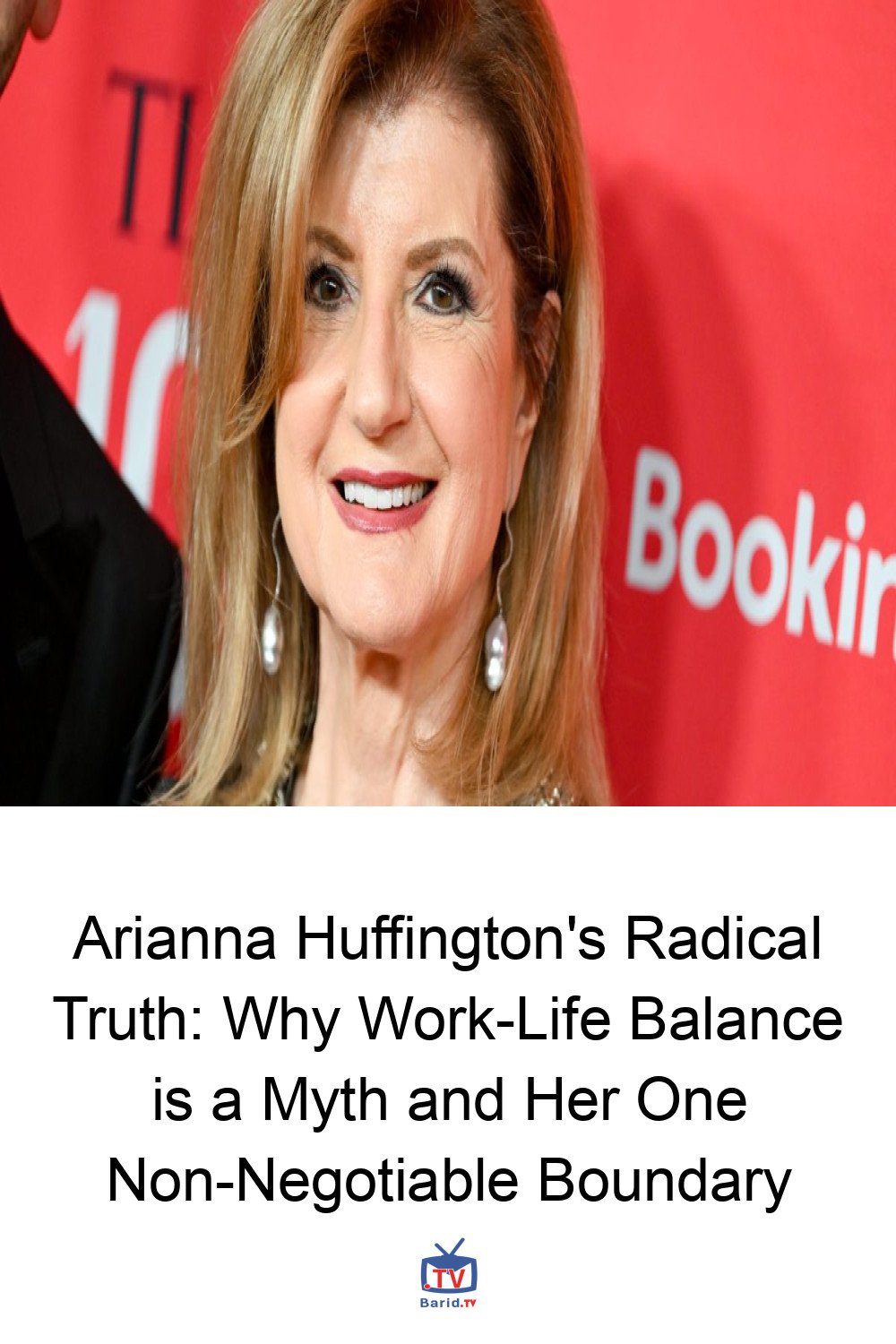
Arianna Huffington, the formidable founder of The Huffington Post, built her media empire on the back of relentless 18-hour workdays—a pace that famously led to her collapse from exhaustion. Now, at 75, a multi-millionaire, and at the helm of her wellness startup, Thrive Global, she continues to challenge conventional wisdom, particularly the elusive concept of “work-life balance.” Her stance is clear: balance is a myth, and true well-being hinges on one crucial boundary.
The Myth of Work-Life Balance, According to Huffington
“I don’t like the word balance, because there is no balance,” Huffington candidly shared with Fortune. She argues that life is inherently dynamic, with certain days demanding complete focus on work, while others necessitate prioritizing personal matters, like a sick child. This perspective is particularly striking given her continued drive; while many her age enjoy retirement, Huffington remains deeply engaged, leading Thrive Global after selling her namesake publication to AOL for $315 million in 2011.
Her current venture still entails long days and an ever-present to-do list. “For you, or me, or most people with interesting jobs, there is never a time when you have a natural ending to the day,” she acknowledges, having made peace with work bleeding into evenings and tasks carrying over to the next morning.
The Non-Negotiable Boundary: Your Phone Stays Out of the Bedroom
Despite the fluid nature of her workday, Huffington maintains one unwavering boundary that signals its conclusion: her phone. “I have a very clear boundary, which is not always the same time but I consider this the end of my working day—and I mark that by taking my phone and charging it outside my bedroom,” she reveals.
This isn’t merely a habit; it’s a strategic separation. Huffington views our phones as “the repository of every problem and every project and every source of stress.” To truly prepare for restorative sleep, she asserts, one must physically disconnect from this digital hub of demands.
Micro Steps for Macro Impact
At Thrive Global, this practice is championed as a “micro step”—a small, repeatable ritual that doesn’t require a complete life overhaul but yields significant cumulative benefits. The company even offers charming “phone beds” (charging stations with tiny blankets) to encourage the habit, emphasizing the visual reminder’s importance, especially for children and teenagers learning “phone hygiene” from their parents. “The phone doesn’t sleep with you,” Huffington stresses.
A Leader’s Endorsement: Ralph Lauren’s CHRO Adopts the Habit
The efficacy of this simple boundary resonates far beyond Thrive Global. Huffington recently recounted an encounter with a senior executive at Ralph Lauren, a brand that has partnered with Thrive for five years. While she didn’t name the individual, it’s known that Roseann Lynch serves as the company’s Chief People Officer. “I was doing this event with the CHRO at Ralph Lauren, and she said that this is her most important micro step now,” Huffington shared, highlighting the widespread applicability and impact of this seemingly minor adjustment.
Reclaiming Your Morning: The 60-Second Rule
Beyond promoting better sleep, keeping your phone out of the bedroom addresses another pervasive modern challenge: the immediate morning scroll. Many of us reach for our devices before even a conscious thought, plunging into emails, news, or social media’s dopamine trap. Huffington advocates for reclaiming just a minute before engaging with the digital world.
“Another important micro step is when you wake up, take 60 seconds before you go to your phone, take some conscious breaths, remember what your intentions are for the day, what you’re grateful for,” she advises. This brief pause, she argues, is crucial for preparing oneself mentally and emotionally for the day ahead, rather than immediately reacting to external stimuli.
Beyond Balance: Embracing Boundaries for Well-being
Arianna Huffington’s philosophy isn’t about achieving an unattainable equilibrium, but rather about establishing clear, practical boundaries that foster genuine well-being. By simply putting your phone to bed outside your bedroom and reclaiming a minute of mindful presence each morning, she offers powerful “micro steps” for anyone seeking to navigate the demands of modern work life with greater intention and less stress. It’s a testament to the idea that sometimes, the most profound changes come from the simplest, most consistent habits.
For more details, visit our website.
Source: Link