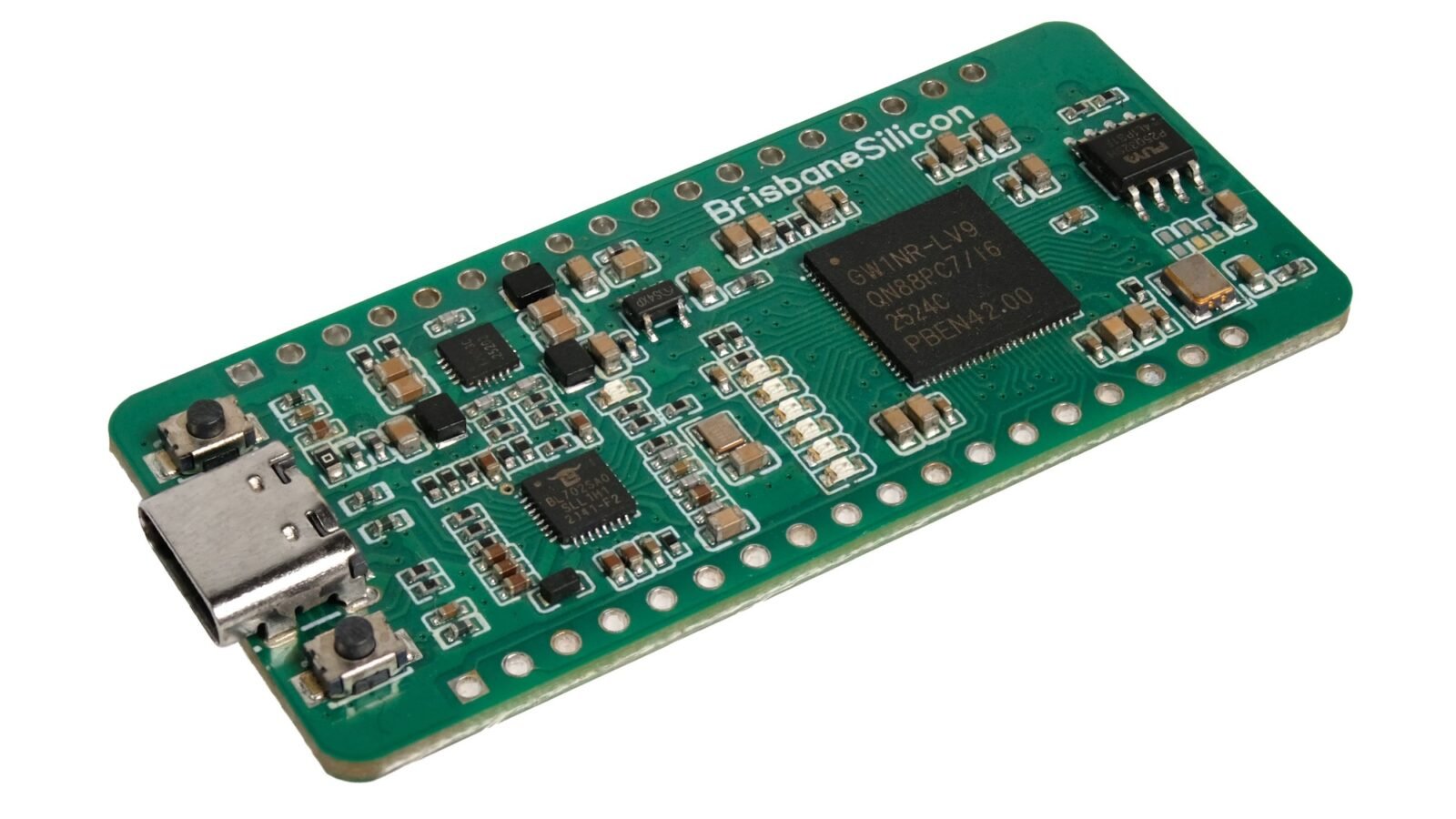

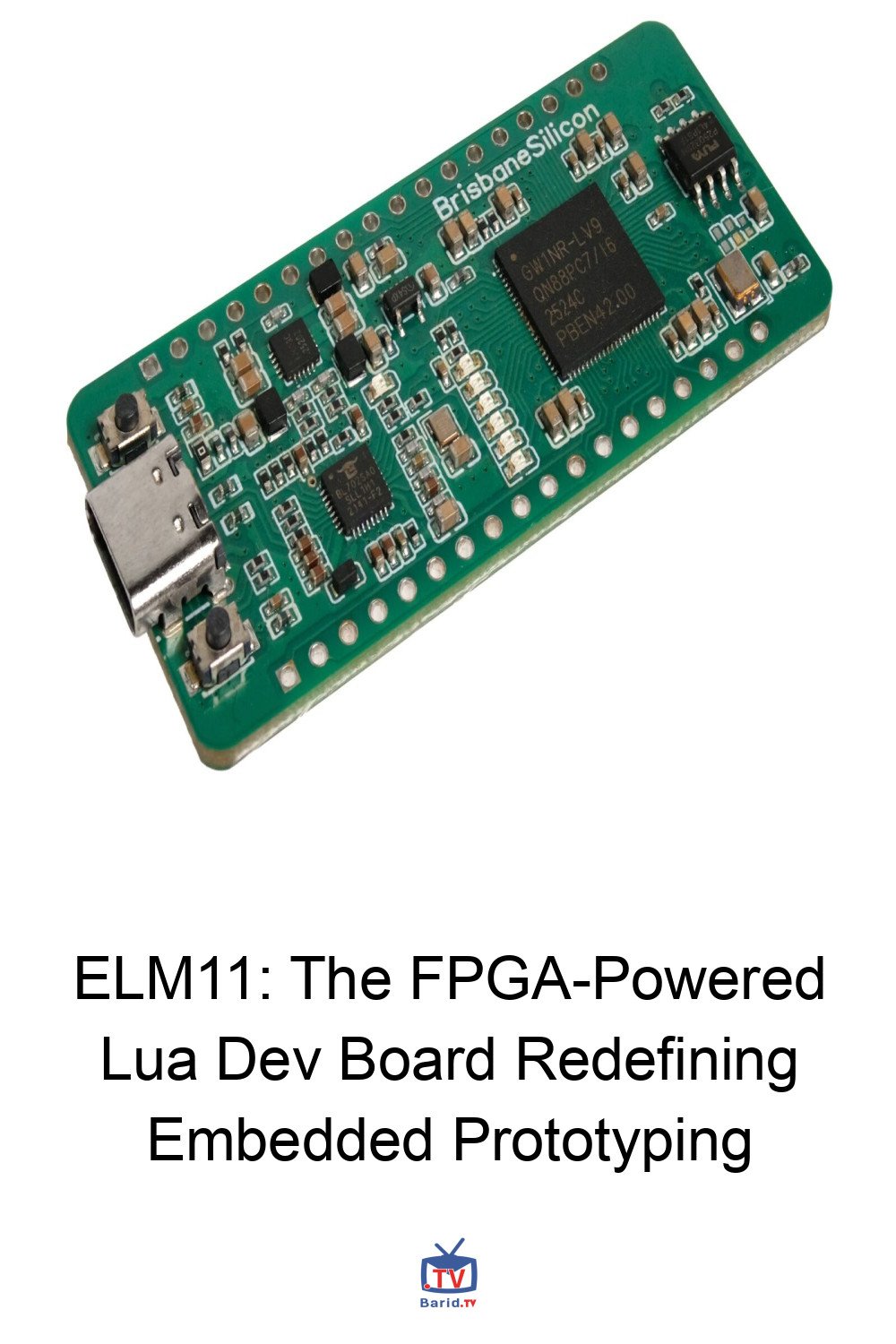
In the bustling world of embedded systems, where innovation often clashes with complexity, the ELM11 emerges as a surprisingly polished and highly capable development board. Crafted by BrisbaneSilicon, this “Embedded Lua Machine” (ELM) platform, in its familiar feather form factor, promises a streamlined and efficient developer experience, particularly for those leveraging the power of Lua.
Unpacking the ELM11: A Fusion of Efficiency and Control
At its core, the ELM11 is a Lua-based platform, immediately setting it apart from the more common Python-centric boards. Lua’s inherent efficiency makes it an ideal choice for embedded applications, offering a performance edge without sacrificing readability. But the ELM11’s true innovation lies beneath the surface: it’s powered by a GOWIN FPGA.
This FPGA integration is a game-changer, enabling unparalleled low-level control through multiple hardware overlays. These overlays allow developers to dynamically reconfigure the board’s underlying hardware, customizing everything from CPU frequency and pinout configurations to LED indicator behavior. This flexibility transforms the ELM11 into a highly adaptable tool, capable of meeting diverse project requirements.
A Developer’s Dream: Polished Toolchains and Intuitive Interaction
Despite being a relatively new entrant, the ELM11 ecosystem already boasts a remarkably polished developer experience. The accompanying IDE offers a comprehensive and user-friendly environment. However, for those who relish direct interaction, the board’s REPL (Read-Eval-Print Loop) and higher-level CLI (Command Line Interface) provide a satisfyingly robust alternative.
Interacting with the device state, configurations, and even onboard documentation is a breeze through the CLI (accessible via cmd or command in the REPL). Its auto-paginated and well-formatted output ensures clarity, making deep dives into the board’s functionality both efficient and enjoyable. BrisbaneSilicon’s commitment to developer support is further evidenced by its generally efficient and accessible online documentation.
Navigating the Nuances of EMBLua
While the overall experience is smooth, Lua aficionados might note a specific dialect — EMBLua — which introduces an explicit import syntax for libraries. For instance, to utilize a standard library function like string.sub, one must explicitly call import("string", "sub")
. This minor deviation is a small learning curve for the power it unlocks.
The system BrisbaneSilicon has engineered truly showcases Lua’s aptitude for the embedded world. The ability to seamlessly switch between the Lua runtime and hardware via uploadable overlays and modules underscores the platform’s advanced design and potential for highly customized solutions.
Lua’s Resurgence and the ELM11’s Future
A decade ago, Lua might have been considered a niche language. However, with its prominent role in platforms like NeoVim and Roblox, a new generation of developers is increasingly familiar and comfortable with Lua. This growing user base positions the ELM11 perfectly to capitalize on Lua’s resurgence.
Many developers have encountered poorly supported or documented boards, leading to frustration and abandoned projects. BrisbaneSilicon’s proactive approach to documentation and developer experience is a refreshing change, directly addressing these common pain points. While the long-term support remains to be seen, the initial commitment is highly promising.
Priced at an accessible $15, and backed by BrisbaneSilicon’s evident dedication to quality, the ELM11 is poised to make a significant impact. Its versatility and ease of use make it an ideal candidate for educational initiatives, rapid prototyping, and a wide array of embedded projects. If BrisbaneSilicon can maintain its current trajectory and navigate potential supply chain challenges, the ELM11 could well become a staple in the embedded development community.
Discover more about the ELM11 by following its journey on Crowd Supply.
For more details, visit our website.
Source: Link