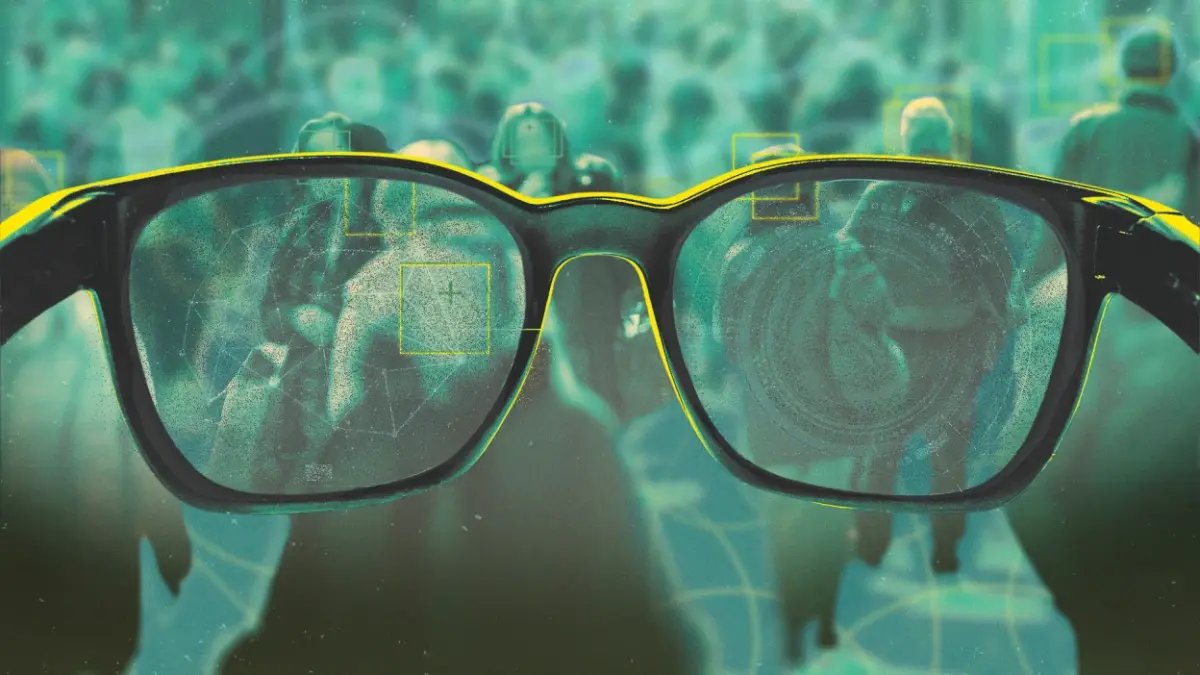

In a move that has ignited a fresh wave of privacy concerns, Meta has reportedly been integrating facial recognition technology into its Ray-Ban Meta and Oakley Meta smart glasses for several months. Dubbed “NameTag” internally, this feature, if activated, promises to transform everyday interactions into potential data collection points, raising serious questions about the future of public privacy.
Meta’s ‘NameTag’: A Glimpse into Ubiquitous Surveillance?
According to a detailed report from Wired, Meta’s “NameTag” system is designed to leverage AI to identify individuals captured by the smart glasses’ cameras. Once a person is recognized, the wearer is alerted, and a biometric “faceprint” is stored locally on their Meta AI mobile app. This creates a personal, localized database of everyone the wearer encounters.
How ‘NameTag’ Operates
While the software remains inactive for consumers, its underlying mechanics are already in place. Images captured by the glasses are processed by Meta’s AI app, converting faces into unique biometric faceprints. These are then cross-referenced against a database stored on the user’s phone. A match triggers a notification; an unmatched faceprint is indexed in a “pending” folder, essentially creating a waiting list for identification. As Cooper Quintin, a security researcher at the Electronic Frontier Foundation’s Threat Lab, starkly put it to Wired: “Despite the billions of reasons not to, Meta seems to have created the capacity to turn their customers into a distributed surveillance machine.”
A Pattern of Disregard: Meta’s History and Strategy
This quiet rollout is not an isolated incident but rather fits into a broader pattern of Meta’s approach to controversial technologies. Documents obtained by the New York Times earlier this year revealed Meta’s internal deliberations over the “safety and privacy risks” of adding facial recognition to its smart glasses. Despite public assurances in April of a “very thoughtful approach,” the first components of this software were installed in January, well before consumers were made aware.
Exploiting Political Climate for Rollout
More disturbingly, a leaked company memo suggested a cynical strategy: to launch facial recognition “during a dynamic political environment where many civil society groups that we would expect to attack us would have their resources focused on other concerns.” This implies a calculated attempt to sidestep anticipated public and activist backlash, underscoring Meta’s awareness of the technology’s contentious nature.
Public Outcry and Meta’s Past Encounters
The public’s apprehension regarding facial recognition in smart glasses is far from new. In response to the New York Times’ revelations, a coalition of over 70 organizations, including the ACLU, vehemently demanded Meta halt its “NameTag” plans. Their open letter warned that such technology in “inconspicuous consumer eyewear represents a serious threat to privacy and civil liberties for every member of our society.”
A History of Retreat and Re-engagement
Meta, formerly Facebook, has a long and complicated relationship with facial recognition. The company famously identified and tagged people on its social media platforms as early as 2010, only to discontinue the feature in 2021, citing “many concerns about the place of facial recognition technology in society” – a decision likely influenced by a hefty $650 million class-action settlement. Meta even debated including facial recognition in the first generation of its Ray-Ban smart glasses in 2021 but ultimately decided against it due to privacy concerns. This history makes the current quiet implementation all the more perplexing and concerning.
Meta’s Defense: Exploration or Evasion?
Meta spokesperson Ryan Daniels offered a familiar defense, stating, “Regardless of any sensational reporting, the facts are simple: We’ve said before we’re exploring these types of features, and what you’re seeing is just evidence of that exploration.” He emphasized that “Nothing has shipped to consumers and no final decision has been made.” Daniels also promised a “thoughtful approach” with “full transparency” if a rollout occurs, explicitly denying the creation of “a central face database.”
The Nuance of ‘No Central Database’
However, critics argue that while Meta may not be building a central database, it is effectively laying the groundwork for millions of private face databases, all administered and controlled by Meta. This distinction, they contend, offers little comfort to those concerned about widespread surveillance capabilities.
Beyond Dystopia: The Accessibility Argument
While the dystopian implications of widespread facial recognition are stark, it’s important to acknowledge potential non-nefarious applications. Organizations like Vision Aid advocate for facial recognition as a matter of accessibility and social equity for the blind. For individuals with visual impairments, the ability to recognize faces could be a transformative tool, a privilege sighted people often take for granted. They argue that privacy concerns, while valid, could potentially be addressed through robust legislation, rather than outright denying a technology that could significantly enhance the lives of the visually impaired.
As Meta continues its “exploration,” the debate intensifies: where do we draw the line between technological innovation, personal privacy, and societal well-being?
For more details, visit our website.
Source: Link