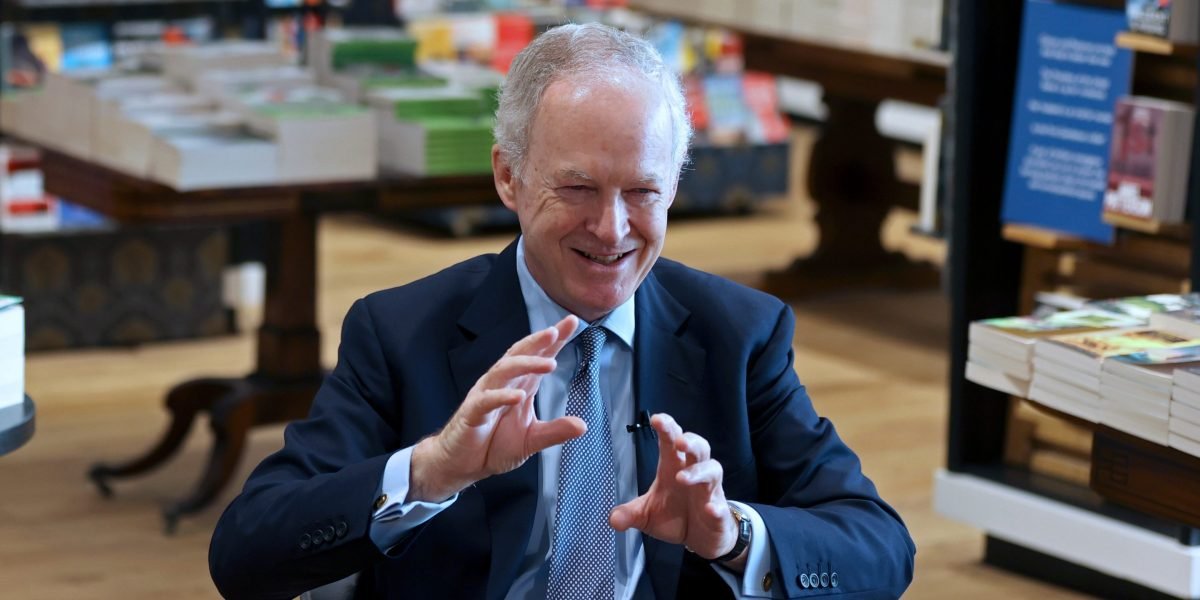

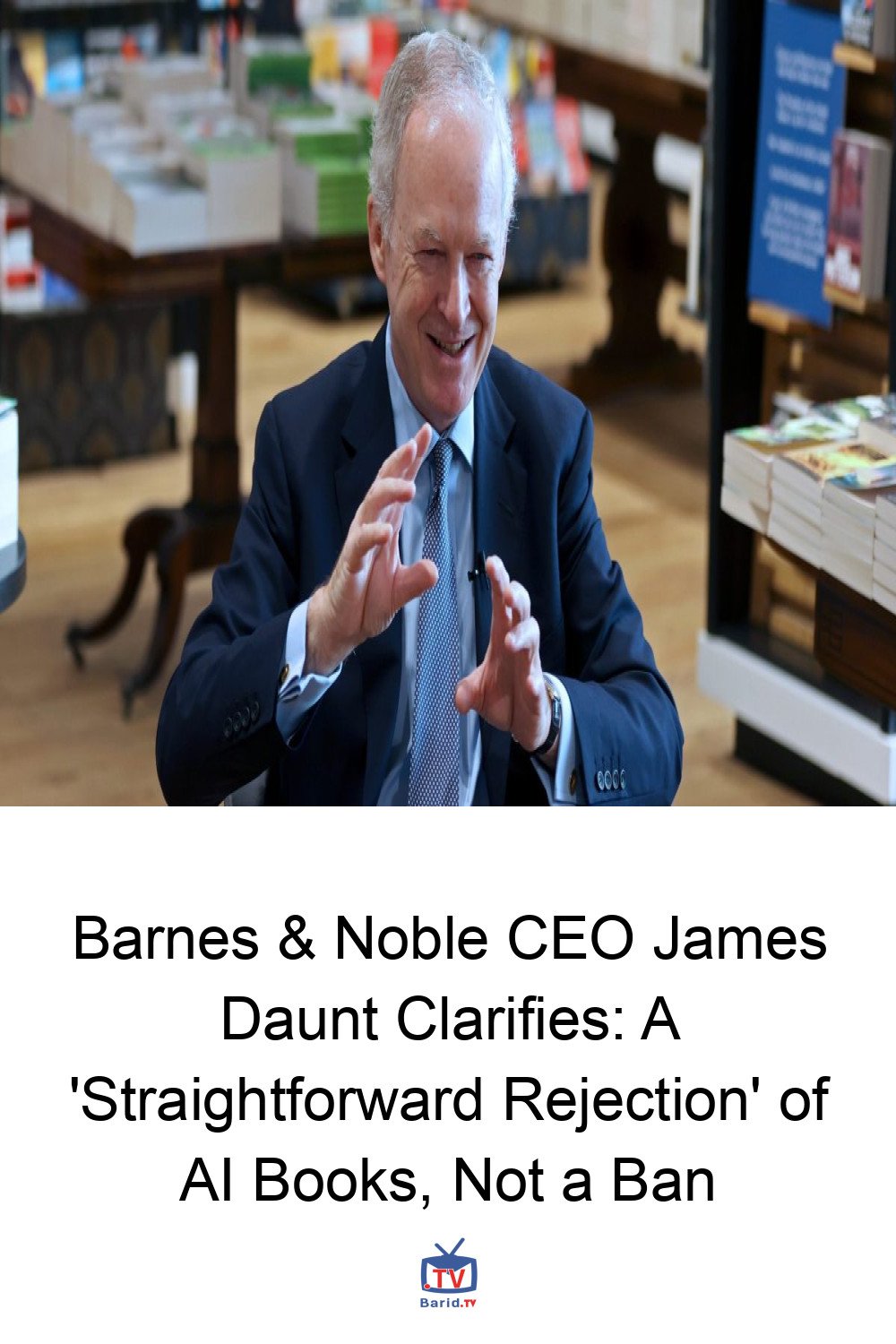
Barnes & Noble CEO James Daunt has stepped forward to clarify the bookseller’s intricate position on AI-generated literature, following a wave of public backlash. What initially appeared to be a refusal to outright ban AI-written books has now been reframed as a “straightforward rejection” of such content, underscoring a nuanced approach to a rapidly evolving industry challenge.
The Initial Spark: A Misunderstood Stance
Earlier this week, an interview with NBC News saw Daunt state that Barnes & Noble would not “outright ban” the sales of books penned by artificial intelligence. His rationale, rooted in the company’s post-2019 turnaround strategy—which empowered individual stores to curate their selections based on local demand—suggested a pragmatic openness. “I have actually no problem selling any book, as long as it doesn’t masquerade or pretend to be something that it isn’t, and that it has an essential quality to it, and that the customer, the reader, wants it,” Daunt told Today’s Jenna Bush Hager. He added that if an AI-written book was clearly labeled and desired by customers, it would be stocked.
This initial commentary, however, ignited a firestorm on social media, with calls for boycotts echoing a broader public apprehension towards AI technology, evident even in instances like college graduates booing commencement speakers who invoked AI.
Barnes & Noble’s True Policy: Active Exclusion, Not Passive Acceptance
Daunt quickly moved to correct the public perception, clarifying in an email to Fortune that his earlier remarks were far from an endorsement of AI-authored manuscripts. Instead, he detailed Barnes & Noble’s proactive measures to prevent the sale of content generated by large language models, even without an explicit, overarching ban.
Why Not an Outright Ban?
Daunt explained that imposing a ban on a specific subset of books could lead down a “slippery slope” in the complex debate surrounding the responsibility for restricting AI content. He highlighted that reputable publishers are unlikely to release AI-generated books, thereby naturally limiting their presence on Barnes & Noble shelves. Furthermore, he emphasized the bookseller’s active role:
“Our position is that we do not sell AI books, as far as we are aware; we take active measures to exclude all AI-generated books from our online catalogue and never knowingly order any for stocking in our stores; and we demand that publishers label any books that are AI-generated. This is a straightforward rejection of AI books.”
This statement clarifies that while a formal “ban” might be avoided for philosophical or practical reasons, the company’s operational policy is one of active exclusion and stringent labeling demands on publishers.
Industry Grapples with AI Proliferation
The challenges faced by Barnes & Noble are not isolated. The broader bookselling and publishing industries are increasingly confronting the proliferation of AI-generated products. In March, Hachette Book Group notably withdrew the UK edition of a horror novel, “Shy Girl,” due to suspected AI involvement. More recently, “The Serpent in the Grove,” a short story that won the Commonwealth Short Story Prize, came under scrutiny for similar allegations, prompting an investigation by its publisher, Granta.
The Broader Debate: Who Regulates AI Content?
Daunt’s reluctance to impose a ban stems from a desire to avoid entanglement in the contentious discourse around book censorship. He argued that defining and enforcing standards for AI-generated books—such as distinguishing between 100% AI-written content versus 50% AI-assisted—would be exceedingly difficult. He firmly believes the onus for identifying and labeling AI-generated content lies with publishers, not booksellers.
He also acknowledged a future where consumer demand for AI-generated content might emerge, citing technical manuals as a potential example. For Barnes & Noble, he concluded, a prescriptive policy on AI books is not their role, suggesting a “common sense” approach is more appropriate than wading into a “days-long conference” on the matter.
Beyond the bookstore, the debate over AI content regulation extends into broader discussions on free speech and information control. David Inserra of the Cato Institute, a libertarian think tank, argued in a 2024 briefing that regulating AI could infringe upon free speech, advocating for a “risk-based approach” where AI applications, especially those involving expression, are “innocent until proven guilty.”
Conversely, a 2023 report by Freedom House highlighted AI’s dual capacity: as a tool for controlling online information and for distributing misinformation. The report recommended developing reliable detection software for AI-generated content to protect free speech, noting that “AI can be used to supercharge” the spread of both information and disinformation.
Barnes & Noble’s position, therefore, reflects a complex balancing act: navigating public sentiment, industry pressures, and the philosophical implications of technology, all while maintaining its core business of selling books that readers genuinely desire.
For more details, visit our website.
Source: Link