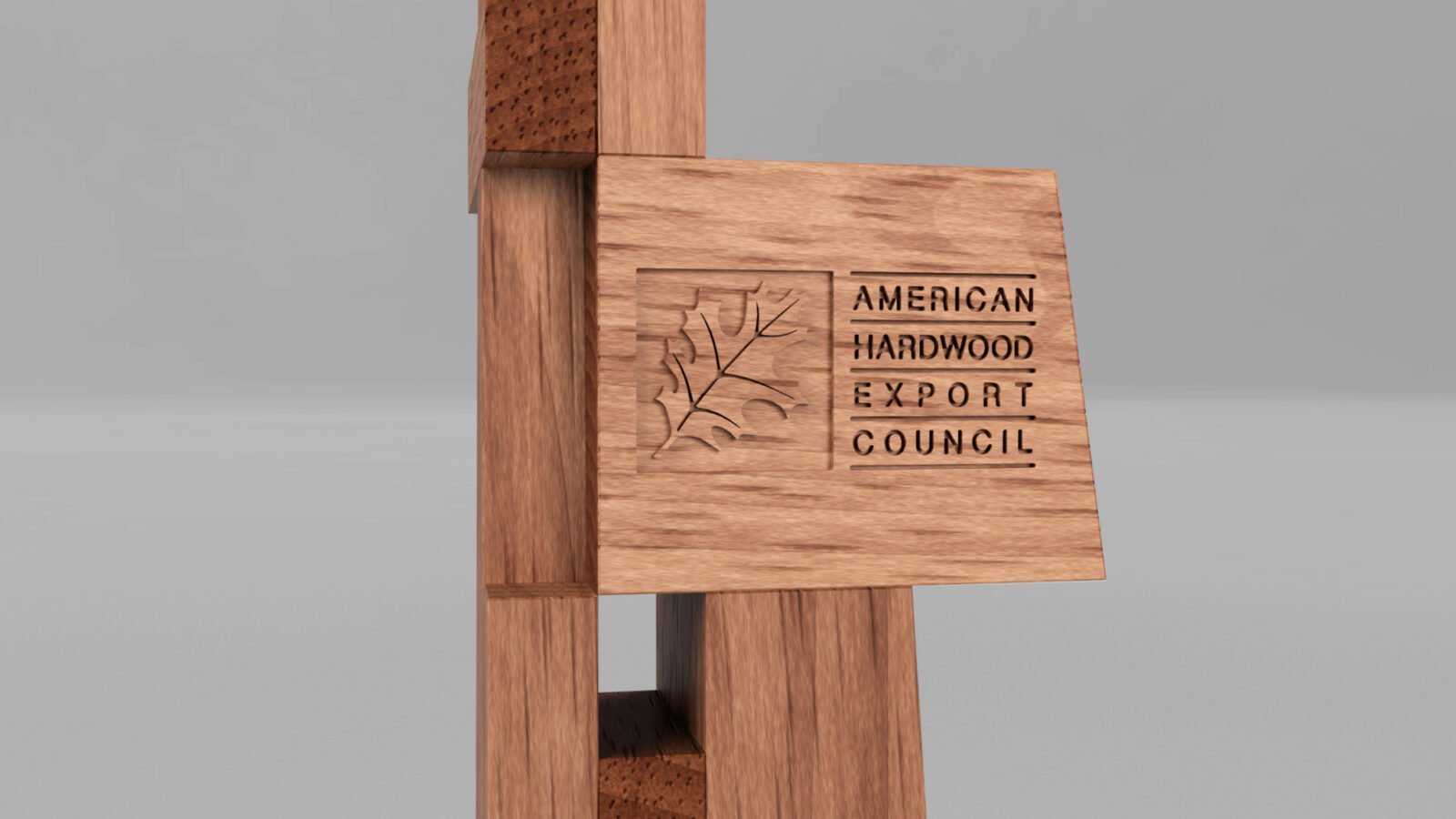

In an era where design often grapples with the complexities of sustainability, overproduction, and the true meaning of innovation, the latest Clerkenwell Design Week (CDW) Award emerges as a refreshing testament to grounded craftsmanship. This isn’t just a trophy; it’s a sculptural narrative, meticulously shaped by process, material intelligence, and the quiet poetry inherent in the act of making. Conceived by the visionary Henry Marks, this award, crafted from exquisite American cherry wood, elevates craft to an aesthetic language, a philosophy as much as a practice.
A Personal Return to the Workbench
For Henry Marks, whose distinguished career spans exhibition design and fine woodworking, this project was more than an assignment – it was a profound personal renaissance. After nearly two decades immersed in designing museum, exhibition, and commercial environments across the UK and internationally, the founder of Marks Design found himself at a crossroads. The dual impact of a global pandemic and the loss of his father prompted a deep reevaluation of his creative relationship.
From Desk to Dimension
“After years of predominantly desk-based work, I wanted to reconnect with the physical and hands-on side of the creative process,” Marks reveals. This yearning led him to London’s Building Crafts College, where he is currently pursuing a Fine Woodwork, Furniture Design & Making Diploma. Here, Marks has cultivated a materially driven practice, allowing the very act of making to dictate form and function. His approach to the CDW award eschewed conventional trophy design, transforming it instead into an intimate exploration of woodworking principles.
The Geometry of Craft: Interlock, Offset, Receive
The final form of the award is a sophisticated interplay of three fundamental woodworking gestures: interlock, offset, and receive. Each element is a direct descendant of the physical logic inherent in joinery and timber construction. Marks describes a pivotal “ah-ha” moment: “It came when I stopped thinking about the object as a traditional trophy and instead approached it as a sculptural response to woodworking processes.”
Authenticity Through Process
He elaborates, “Once I allowed the geometry to be shaped by machining, offsets, rebates and voids created through making, the design became much more resolved and authentic to the material.” This profound material-first philosophy resonated deeply with the American Hardwood Export Council (AHEC), who championed the initiative as part of their ongoing advocacy for responsible, materially literate design.
Celebrating Nature’s Inconsistencies
David Venables, European Director of AHEC, underscores the partnership’s core objective: fostering dialogue. “We’re not interested in branding,” he states, “We want to talk about a material.” The American cherry wood, supplied by AHEC, is intentionally showcased with all its natural nuances – tonal shifts, knots, and grain variations that are often meticulously removed in commercial production. Marks embraced these ‘inconsistencies’ not as flaws, but as defining characteristics.
The Beauty of Variation
“I was interested in exposing both long grain and end grain within the final form,” Marks explains, “allowing tonal variation and texture to become defining visual features of the object.” Venables echoes this sentiment, seeing the embrace of variation as a crucial tenet for the future of responsible design. “Nature doesn’t do consistency,” he asserts. “Every single piece of wood is different… that’s the celebration.”
In an age saturated with engineered surfaces and synthetic imitations, Marks’ award proudly foregrounds the sensory and emotional richness that only genuine wood can offer. The collaborative production process, involving maker Moe Reddish, further reinforced these values. Discussions around timber movement, grain direction, and lamination techniques weren’t mere technicalities; they were integral to the design’s evolution.
“Rather than treating production as a separate stage,” Marks concludes, “the workshop processes became the driving force behind the object’s geometry, character, and meaning.” The result is more than an award; it’s a living material story, destined to deepen in tone and character over time, forever bearing the indelible marks of its creation, touch, and purpose.
For more details, visit our website.
Source: Link