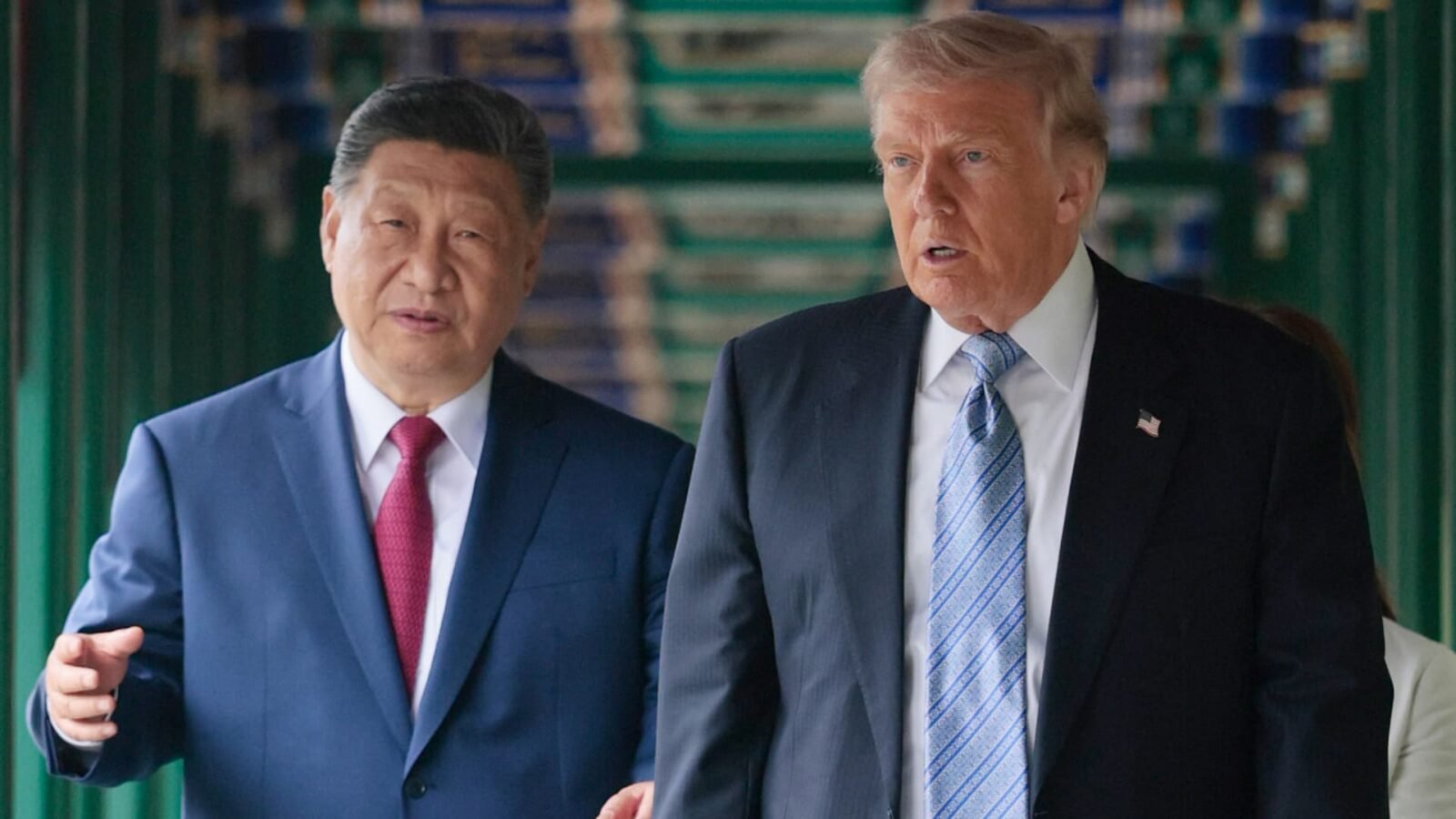

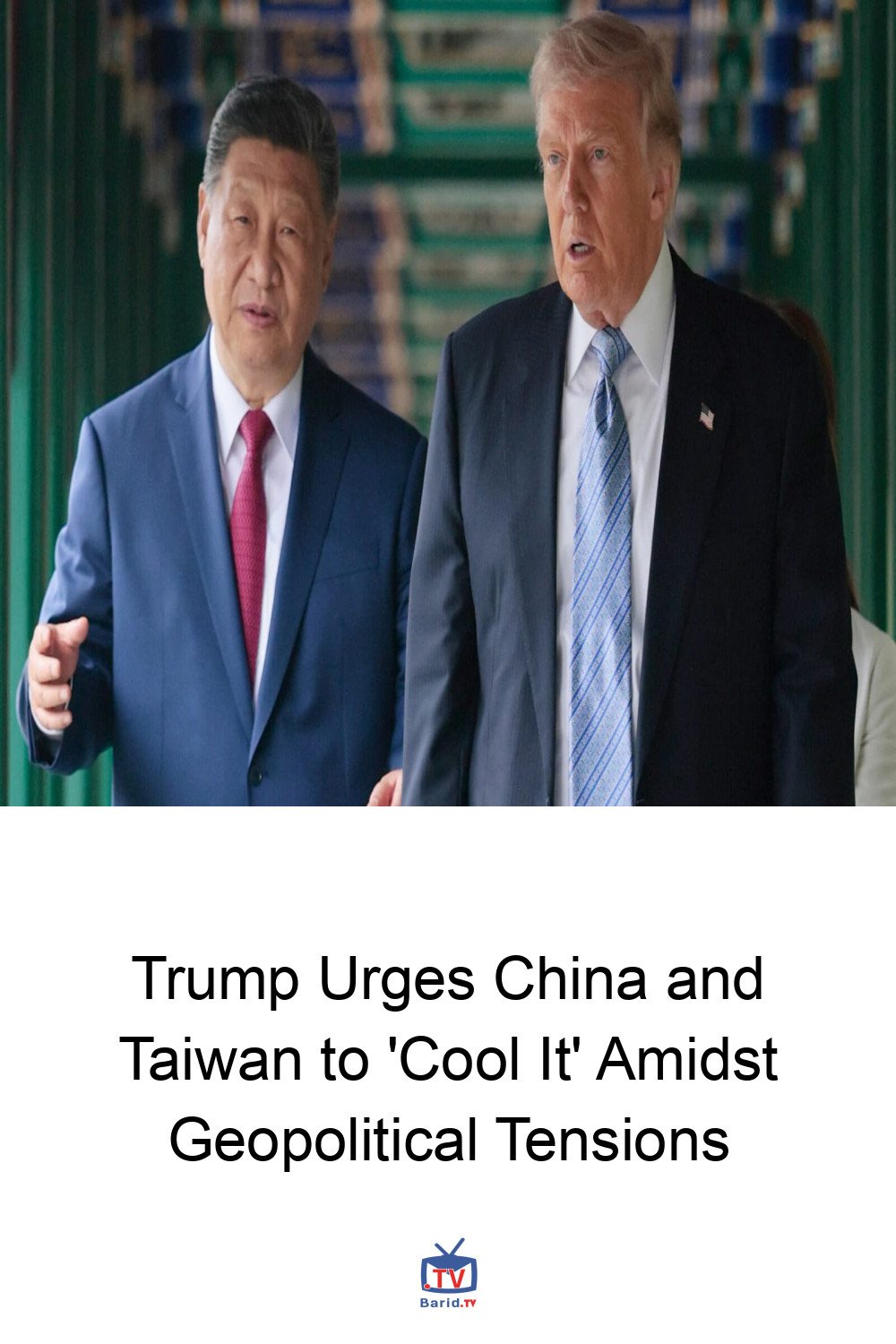
In a candid assessment following his high-stakes summit with Chinese President Xi Jinping, then-President Donald Trump urged both China and Taiwan to “cool it,” signaling a nuanced approach to the long-standing geopolitical flashpoint. Trump’s remarks, made aboard Air Force One, underscored the delicate balance of U.S. foreign policy in the Indo-Pacific region, particularly concerning Taiwan’s sovereignty and China’s territorial claims.
Trump’s Evasive Stance on Taiwan’s Defense
During his two-day visit to Beijing, President Trump faced a direct query from President Xi Jinping regarding the United States’ potential military intervention should China attack Taiwan. Trump’s response was notably non-committal. “That question was asked to me today by President Xi. I said I don’t talk about that,” Trump recounted to reporters, maintaining a posture of strategic ambiguity that has long defined U.S. policy.
A Call for De-escalation
The former president reiterated his desire for calm in the region, stating, “I’m not looking to have somebody go independent, and you know, we’re supposed to travel 9,500 miles to fight a war. I’m not looking for that. I want them to cool down, I want China to cool down.” He further advised, “Taiwan would be very smart to cool it a little bit. China would be very smart to cool it a little bit. They ought to both cool it.” This sentiment highlights a pragmatic, if somewhat detached, view of potential military entanglements far from U.S. shores.
Strategic Ambiguity Under Scrutiny
Trump’s refusal to explicitly state whether the U.S. would defend Taiwan aligns with the “One China” policy, which acknowledges Beijing’s claim over Taiwan but leaves the island’s status undefined. This approach of “strategic ambiguity” intentionally leaves open the question of Washington’s response to a Chinese attack, aiming to deter both Chinese aggression and Taiwanese declarations of independence.
The Arms Deal Dilemma
Adding another layer of complexity, Trump also addressed a pending large-scale arms sale to Taiwan. “I may do it, I may not do it,” he stated, indicating that a decision was still forthcoming. He cautioned against Taiwan pursuing independence solely on the premise of U.S. backing, remarking, “We’re not looking to have somebody say ‘Let’s go independent because the United States is backing us.'” This suggests a desire to avoid inadvertently provoking China while still holding leverage.
Geopolitical Currents and Regional Stability
The discussions on Taiwan occurred against a backdrop of heightened regional tensions, exacerbated by the U.S. military’s engagement in the Iran war. Analysts, including Seth G. Jones of the Center for Strategic and International Studies, have raised concerns that the redeployment of U.S. Navy carriers to the Middle East and the depletion of munitions could embolden China to act against Taiwan. Jones warned that deficiencies in the U.S. defense industrial base, if not addressed, could lead to a “hard lesson” in the Indo-Pacific.
China’s Silence Speaks Volumes
Notably, Chinese state media, otherwise effusive in its praise for Trump during the summit, made no mention of the Taiwan discussions. This omission, according to analysts, strongly suggests that the Chinese leadership was displeased with the outcomes or the U.S. position on the matter. Secretary of State Marco Rubio, however, affirmed that “U.S. policy on the issue of Taiwan is unchanged as of today,” despite the sensitive nature of the talks.
Xi’s Stern Warning and the Path Forward
The Taiwan issue took center stage early in the summit, with President Xi Jinping delivering a “surprisingly stern message.” Xi reportedly warned Trump that the U.S. and China “will have clashes and even conflicts” if the long-standing issue of Taiwan’s independence is mishandled. This stark warning underscores the critical importance Beijing places on its claim over Taiwan and the potential for severe repercussions if the status quo is disrupted.
As the U.S. navigates its complex relationship with both China and Taiwan, Trump’s “cool it” directive serves as a reminder of the delicate diplomatic tightrope walked by global powers in maintaining regional stability amidst competing national interests.
For more details, visit our website.
Source: Link