
Quantum Dots vs. RGB LED: The TV Tech Showdown You Need to See
While RGB LED technology might be capturing headlines as the next big thing in television displays for 2026, a recent demonstration suggests that quantum-dot (QD) TVs could still hold a significant edge. At Display Week, an annual business-to-business convention for display technology, Nanosys — a prominent manufacturer of quantum dots — presented a compelling side-by-side comparison that aimed to highlight the potential shortcomings of RGB LED backlights when pitted against their Super Quantum Dot (SQD) technology.
The Contenders: RGB LED vs. Super Quantum Dot
The stage was set at the Los Angeles Convention Center, where two 85-inch televisions stood side-by-side in the Nanosys meeting room. One was a mini-LED panel featuring Nanosys’s Super Quantum Dots, utilizing a blue LED backlight. The other was an RGB LED TV, representing what many perceive as the year’s hottest display trend. Both screens simultaneously displayed identical content, creating a direct visual comparison designed to underscore the differences between the two technologies.
For context, RGB LED TVs employ red, green, and blue LEDs, grouped into zones, to generate a colored backlight that dynamically adapts to the on-screen image. The theoretical advantage is a broader spectrum of vibrant and saturated colors without solely relying on quantum dots. However, this approach introduces a critical potential flaw: color crosstalk. This occurs when colored light from one zone bleeds into adjacent pixels or zones of a different color, potentially distorting the intended image.
In contrast, Super Quantum Dot (SQD) technology, as demonstrated by Nanosys, uses a blue LED backlight in conjunction with quantum dots to achieve its color reproduction. Nanosys, the company behind the quantum dots in the first TV, was keen to showcase how their solution might offer a more refined and consistent color experience.
A Revealing Side-by-Side Showdown
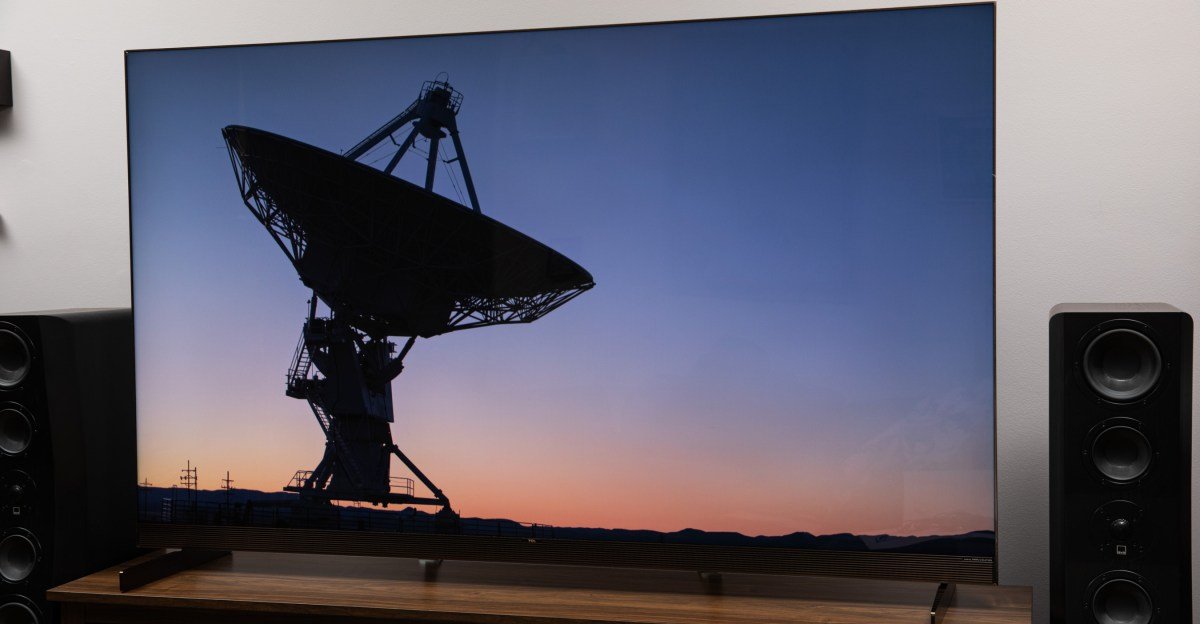
The Quantum Dot TV in the demonstration was identified as a TCL X11L, easily recognizable by its distinctive lower grille. While Nanosys refrained from confirming the identity of the RGB LED counterpart, it was strongly implied to be a TCL RM9L, based on an expert’s familiarity with other major brands’ RGB LED offerings. Both TVs were meticulously set to Filmmaker Mode, with color configured to native settings to ensure the widest possible color gamut for each.
The Achilles’ Heel: Color Crosstalk in Action
The demonstration vividly illustrated the primary issue with RGB LED backlights: color crosstalk. One segment of the demo featured a slide with rows of primary and secondary colored boxes, alongside a row of thin white crosses on a black background. As a white cross was introduced into the top row of colored boxes on the RGB LED TV, a noticeable shift in color intensity occurred in the surrounding areas. The colors appeared lighter and less saturated.
Crucially, the color crosstalk wasn’t confined to a single row; color from the middle row of boxes visibly bled into the bottom row of crosses. This phenomenon was further substantiated by BT.2020 color gamut measurements, which showed a measurable reduction in overall coverage on the RGB LED TV when the white cross was present, particularly impacting the blue and green color points.
Real-World Impact: Skin Tones and Visual Fidelity
While technical measurements are vital, the practical implications for everyday viewing are arguably more important. The demo extended beyond abstract color blocks to scenarios that resonate with human perception, such as skin tones. Still images of a woman’s face against various colored backgrounds revealed a distinct shift in her skin tone on the RGB LED TV, subtly adopting the hue of the background color.
To ensure this observation wasn’t a subjective optical illusion, a scope was used to isolate and focus on a small portion of the woman’s face, blocking out the surrounding background. Even under this controlled scrutiny, the change in skin hue corresponding to the background color remained evident on the RGB LED display. In stark contrast, the SQD TV maintained consistent BT.2020 measurements and did not exhibit any color crosstalk or color bleeding, ensuring accurate and stable skin tones regardless of the surrounding content.
Quantum Dots: A Consistent Performer
The Nanosys demonstration at Display Week served as a powerful reminder that while new technologies emerge, established solutions like Super Quantum Dots continue to offer compelling advantages. The consistent performance of the SQD TV, free from the color crosstalk and contrast issues observed in its RGB LED counterpart, makes a strong case for its continued relevance and potential superiority in delivering accurate and vibrant visuals. As the TV market evolves, consumers will undoubtedly benefit from a deeper understanding of these nuanced technological differences.
For more details, visit our website.
Source: Link