
The tech world is buzzing, and for good reason: Qualcomm’s Snapdragon X2 Elite Extreme has landed, making its grand debut in the new Asus Zenbook A16 (2026). This isn’t just another incremental update; it’s a bold statement from Qualcomm, aiming to redefine the laptop landscape. But while the A16 promises breathtaking performance and a stunning OLED display, it arrives wrapped in a rather uninspired package, forcing users to “savor the power” while perhaps “ignoring the beige.”
Unleashing Extreme Performance: The Snapdragon X2 Elite’s Roar
Qualcomm has unequivocally shifted its strategy. No longer content to be a budget-friendly alternative, the Snapdragon X2 Elite Extreme series is positioned as a top-tier contender, touted as “the fastest, most powerful and efficient processors for Windows PCs.” Our rigorous testing of the Zenbook A16 largely validates these ambitious claims.
Benchmark Brilliance
In the demanding arenas of Geekbench 6 and Cinebench 2024, the X2 Elite Extreme truly shines. The A16 delivered a staggering 50 to 100 percent performance boost over comparable systems from Intel and AMD on Geekbench. It even outpaced the Apple MacBook M4 Pro in this specific metric, a testament to Qualcomm’s engineering prowess. While the M4 Pro still holds a slight edge in Cinebench, the Zenbook A16 now firmly secures a formidable second place in our testing archives.
A Graphics Renaissance
One of the most significant improvements comes in graphics performance. Previous generations of Snapdragon X chips often fell short here, but the X2 Elite Extreme marks a dramatic turnaround. We observed frame rates quadrupling on average across various tests. While the A16 won’t replace a dedicated gaming rig, this substantial upgrade makes less taxing games and graphics-intensive workloads not just tolerable, but genuinely workable. This leap forward addresses a crucial weakness and broadens the appeal of the Snapdragon platform.
Compatibility and AI: Progress and Ponderings
Qualcomm has also made strides in application compatibility, with a growing number of apps now running natively on the platform, reducing reliance on emulation. This is a vital step towards a seamless user experience. However, the promise of powerful onboard AI features remains somewhat theoretical. While Snapdragon systems were early certified by Microsoft for AI tasks, most significant AI workloads continue to reside in the cloud, leaving the full potential of local AI largely untapped for now.
Design Dilemmas: The Beige Elephant in the Room
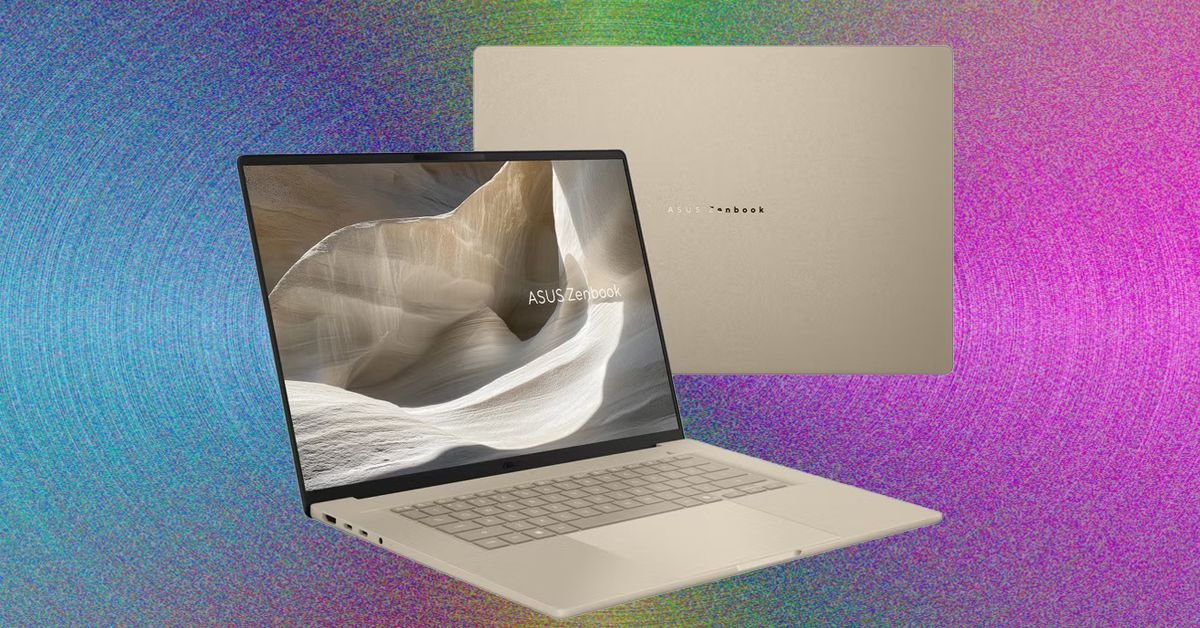
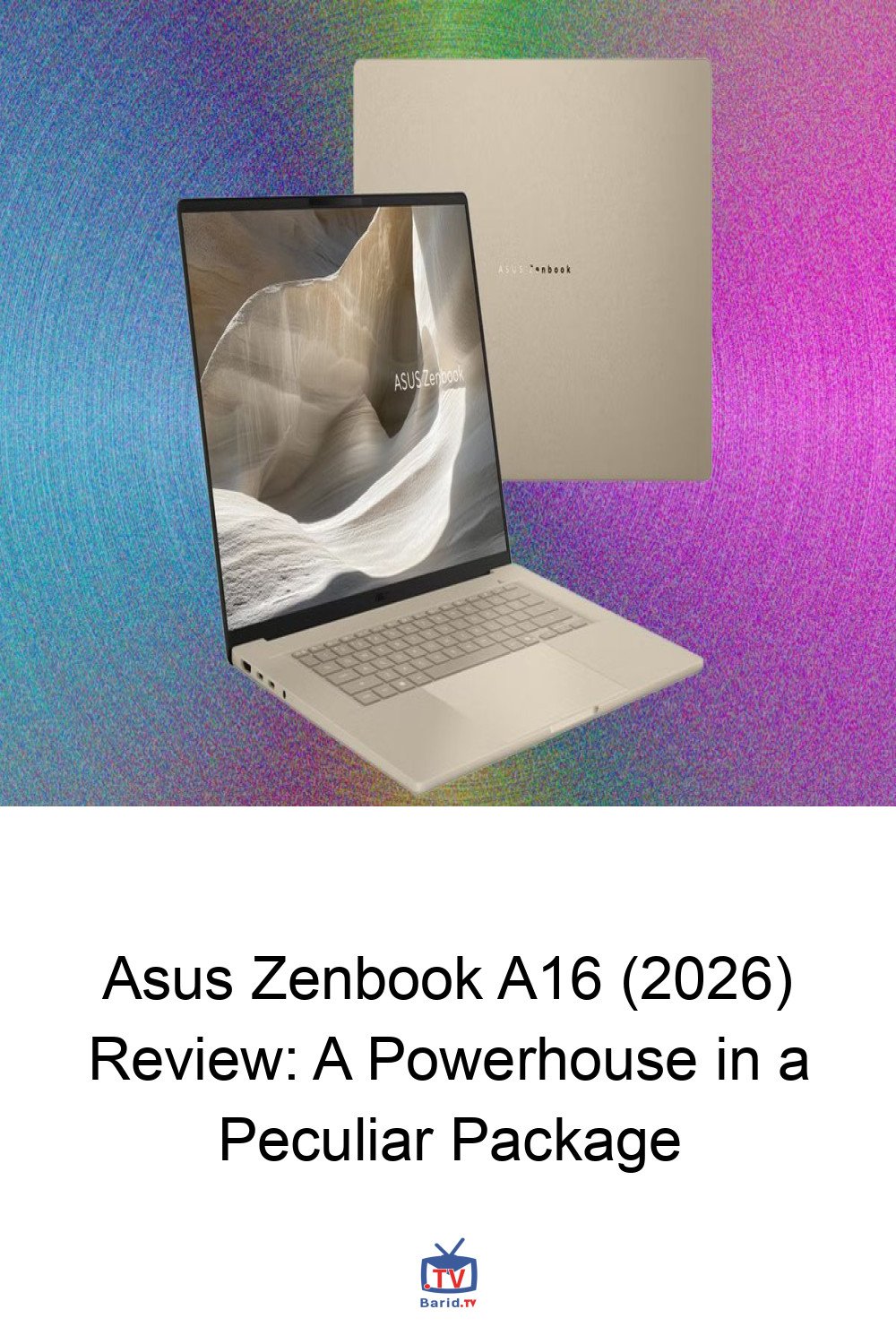
While the internal hardware sings, the Zenbook A16’s exterior offers a more muted tune. Asus’s Ceraluminum technology, now enhanced with magnesium, contributes to the laptop’s impressive thinness (0.65 inches at its thickest) and light weight (2.9 pounds for a 16-inch machine). Yet, this material choice, combined with the sole “Zabriskie Beige” color option, gives the A16 a decidedly plasticky and, frankly, uninspiring aesthetic. It’s a subjective point, but many will likely long for a more professional or striking finish.
Display and Portability
Beyond the color, the 16-inch touchscreen is a highlight, boasting a crisp 2880 x 1800-pixel resolution and exceptional brightness. Its svelte profile ensures excellent portability for a laptop of its size. However, the screen did exhibit more wobble than expected when adjusted, a minor but noticeable flaw.
Input Woes: Keyboard and Touchpad
Unfortunately, the user input experience falls short. The keyboard features keys with minimal travel, making touch-typing a less-than-enjoyable affair. Compounding this is an enormous touchpad that consumes a significant portion of the palm rest. Its sheer size often led to accidental palm inputs, requiring an awkward hand position to type comfortably.
Connectivity
Port selection is adequate, featuring two USB-C ports (supporting USB 4), a USB-A port, a full-size HDMI jack, and a convenient SD card reader. One USB-C port is dedicated to charging via the impressively compact 130-watt adapter. While slower chargers can be used, we observed no performance degradation when doing so.
The Battery Life Trade-Off
The pursuit of extreme performance, however, comes at a cost. The Zenbook A16’s battery life has taken a significant hit compared to its predecessors. While the first-generation Snapdragon X was lauded for its stellar endurance, the X2 Elite Extreme, in its quest for raw power, demands more energy. This trade-off is crucial for potential buyers to consider, as it impacts the laptop’s all-day usability away from a power outlet.
Verdict: A Powerful Performer for the Practical User
The Asus Zenbook A16 (2026) is a fascinating paradox. Internally, it’s a technological marvel, showcasing Qualcomm’s Snapdragon X2 Elite Extreme as a genuine powerhouse capable of challenging the industry’s titans. Its breathtaking performance, vastly improved graphics, and stunning OLED display make it a compelling choice for users prioritizing raw computing muscle and a brilliant visual experience.
However, the A16 demands compromise. Its dated, “Zabriskie Beige” aesthetic, coupled with a weak keyboard and an unwieldy touchpad, detract from the overall user experience. More critically, the significant reduction in battery life means sacrificing one of Snapdragon’s historical strengths for newfound speed.
Ultimately, the Zenbook A16 is for the user who craves cutting-edge performance and a superb screen above all else, and is willing to overlook its design quirks and reduced endurance. It’s a laptop that delivers on its promise of power, but perhaps not on the holistic premium experience its price point might suggest.
For more details, visit our website.
Source: Link