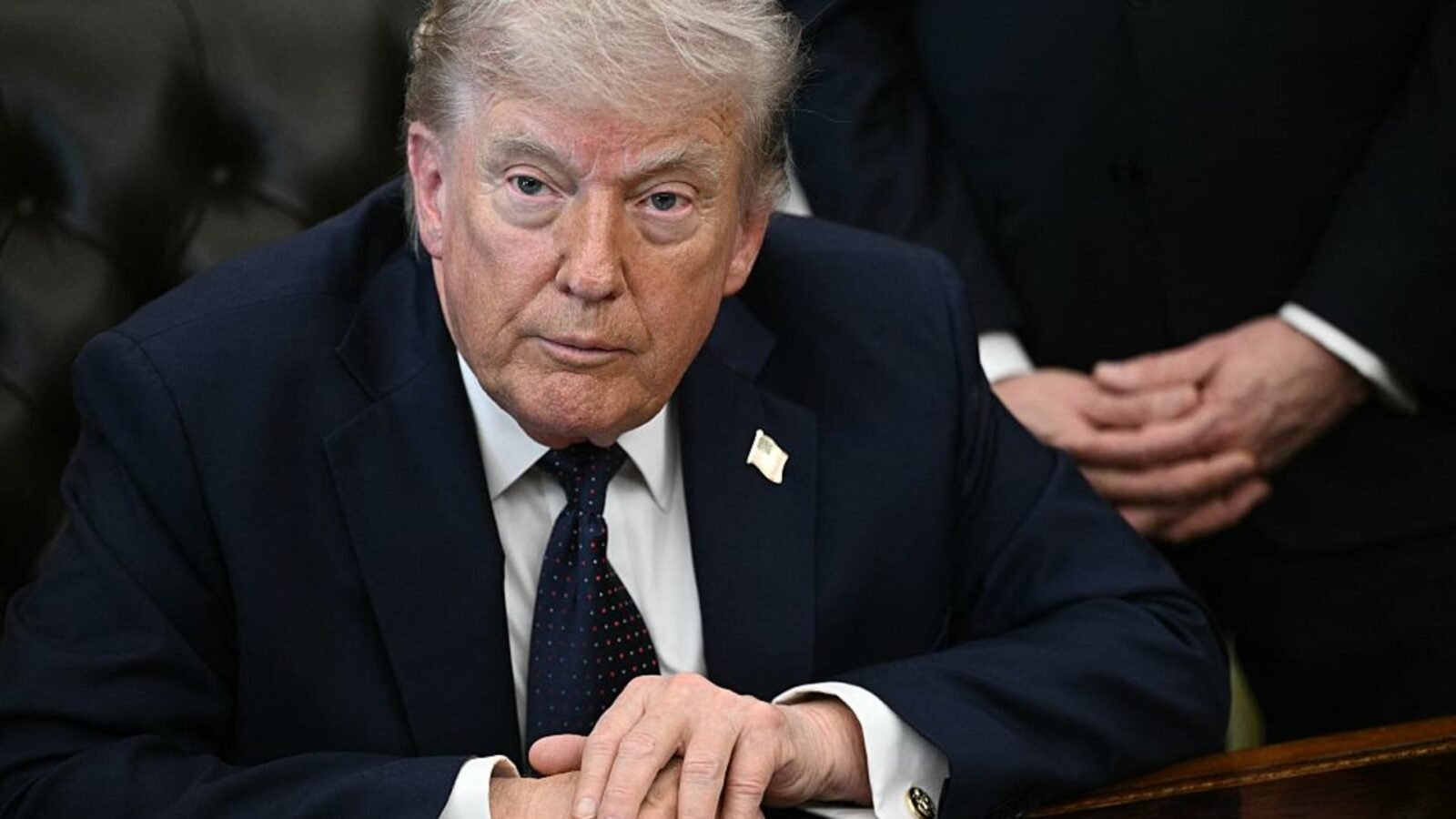

In a dramatic turn of events, President Donald Trump has abruptly canceled a planned diplomatic mission to Pakistan, where U.S. envoys were slated to engage in crucial negotiations with Iranian officials. The decision, announced via Truth Social, underscores the deep-seated mistrust and strategic posturing defining the fraught relationship between Washington and Tehran, particularly amidst a fragile ceasefire and escalating economic pressures.
Diplomatic Deadlock: A Canceled Summit
President Trump confirmed on Saturday that he had called off the trip for U.S. special envoy Steve Witkoff and his son-in-law, Jared Kushner, who were scheduled to travel to Islamabad for “direct talks” with Iranian counterparts. Trump cited “too much time wasted on traveling, too much work!” as a primary reason, but quickly pivoted to a more pointed critique of Iran’s internal dynamics.
“Besides which, there is tremendous infighting and confusion within their ‘leadership‘,” Trump wrote, adding, “Nobody knows who is in charge, including them. Also, we have all the cards, they have none! If they want to talk, all they have to do is call!!!”
The White House had previously indicated the delegation’s intent to head to Pakistan earlier in the day. However, Iran’s Foreign Ministry spokesperson Esmaeil Baqaei had already dismissed the prospect of a U.S.-Iran meeting, stating late Friday, “No meeting is planned to take place between Iran and the U.S. Iran’s observations would be conveyed to Pakistan.” This sentiment was reinforced by two Pakistani government sources cited by Reuters, who reported the Iranian delegation had already departed the country by Saturday.
Iran’s Stance and Regional Engagements
Iranian Foreign Minister Abbas Araghchi, who met with Pakistan’s military chief Asim Munir in Islamabad, used his platform on X to praise Pakistani leaders while subtly rebuffing the notion of direct talks with the Americans. “Very fruitful visit to Pakistan, whose good offices and brotherly efforts to bring back peace to our region we very much value,” Araghchi posted. He further elaborated, “Shared Iran’s position concerning workable framework to permanently end the war on Iran. Have yet to see if the U.S. is truly serious about diplomacy.”
Araghchi’s visit to Islamabad was part of a broader “timely tour” that also included Muscat and Moscow, aimed at coordinating with regional partners on bilateral matters and consulting on regional developments. His public statements consistently avoided any mention of a planned meeting with U.S. officials, reinforcing Tehran’s public position.
The Shadow of the Strait of Hormuz
The diplomatic stalemate unfolds against a backdrop of heightened tensions in the Strait of Hormuz, a critical global oil-shipping route. The region has seen traffic significantly disrupted by Iranian threats and a retaliatory U.S. naval blockade implemented last week. This strategic choke point remains a flashpoint, with both sides asserting dominance and control.
President Trump reiterated to Reuters that the U.S. would maintain its blockade of Iranian ports until a comprehensive deal with Iran is finalized, signaling a firm stance that economic pressure will not be eased without significant concessions from Tehran.
Economic Levers: Sanctions and Waivers
Beyond the naval blockade, Washington continues to exert considerable economic pressure on Iran. Treasury Secretary Scott Bessent confirmed to The Associated Press that the U.S. has no intention of renewing a one-time waiver that previously allowed the purchase of Iranian oil at sea. “Not the Iranians,” Bessent stated emphatically. “We have the blockade, and there’s no oil coming out.” He predicted that Iran would be forced to “start shuttering production” within days, a move he believes would severely impact their oil wells.
In a related development, Bessent also indicated that a similar waiver for the purchase of Russian oil and petroleum products currently at sea would not be renewed. Furthermore, the U.S. has sanctioned Hengli Petrochemical (Dalian) Refinery, a Chinese “teapot” refinery, for its continued acquisition of Iranian oil products. The Treasury Department highlighted Hengli as “one of Iran’s largest customers for crude oil and other petroleum products, having purchased billions of dollars’ worth of Iranian petroleum,” underscoring China’s vital role in sustaining Iran’s oil economy.
A Fragile Ceasefire and Uncertain Future
These escalating tensions further strain an already precarious ceasefire, which was announced on April 7 following President Trump’s stark warning that Iran’s “whole civilization will die” unless a deal is reached. Previous peace talks, led by Vice President JD Vance two weeks prior in Islamabad, concluded without a resolution. A subsequent U.S. delegation trip, also involving Vance, was delayed earlier this week after Iranian officials reportedly declined to attend.
With President Trump’s latest cancellation and Iran’s consistent refusal for direct talks, the path to de-escalation remains fraught with uncertainty. The ball, according to Trump, is now squarely in Iran’s court, awaiting a direct call to the White House.
For more details, visit our website.
Source: Link