
Bitcoin’s journey has been a rollercoaster, and the past few months have been no exception. Despite a tantalizing glimpse above the crucial $76,000 mark, the world’s largest cryptocurrency quickly retreated, extending a two-month struggle for a definitive breakout. Yet, beneath this apparent setback, a rare and historically significant signal is emerging, hinting that a major market bottom might be closer than many anticipate.
The Elusive $76,000 Breakout
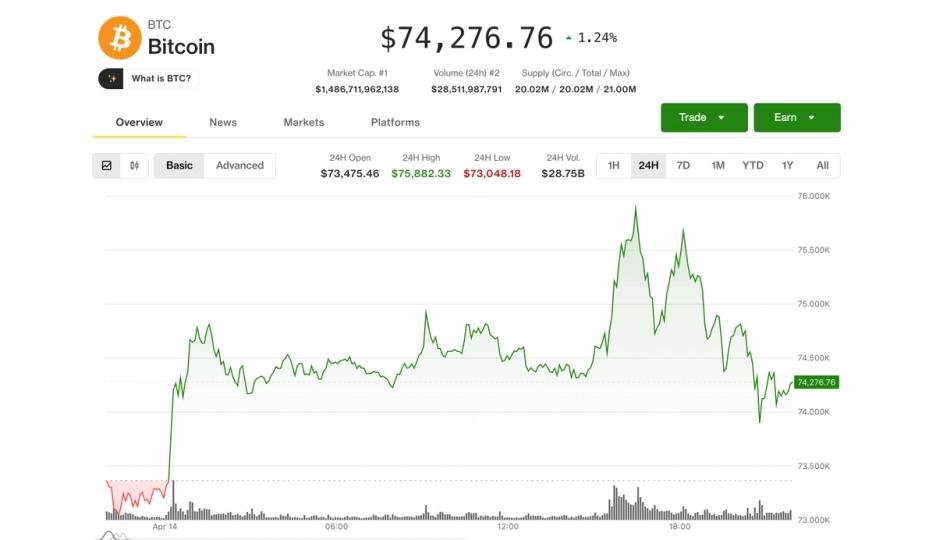
The crypto market held its breath as Bitcoin briefly pierced the $76,000 resistance level. Hopes for a sustained rally were high, but the momentum proved fleeting. BTC swiftly reversed course, slipping back below $74,000 later in the session, settling near $74,300 with a modest 1.3% gain over 24 hours. This mirrors a pattern seen over the past two months, where significant upward moves have consistently met a “brick wall” of resistance.
In contrast, traditional markets painted a rosier picture. The Nasdaq closed at a session high, up 2%, while the S&P 500 climbed 1.2%, nearing a new record. This divergence highlights Bitcoin’s current position, still approximately 40% below its all-time high of $126,000, underscoring the unique challenges and opportunities within the crypto sphere.
A Rare Signal: 46 Days of Negative Funding Rates
While the spot market grapples with resistance, a powerful indicator from the derivatives market is flashing a potentially bullish sign. According to Vetle Lunde, head of research at K33 Research, funding rates on Binance’s Bitcoin perpetuals have remained negative for an astonishing 46 consecutive days. This extended period of negative funding rates, coupled with rising open interest, paints a compelling picture of persistent bearish positioning among traders.
What Do Negative Funding Rates Mean?
Funding rates are periodic payments exchanged between long and short traders in perpetual futures contracts. A negative funding rate indicates that short sellers are paying long holders, suggesting that the majority of traders are betting on a price decline. When this occurs for an extended period, especially as open interest (the total number of outstanding contracts) increases, it signifies a market crowded with short positions.
Historical Echoes: Precursor to Major Bottoms
This isn’t the first time the crypto market has witnessed such an extended “risk-off regime.” Lunde points out that a similar 46-day streak of negative funding rates was observed following the dramatic FTX crash in late 2022, a period widely recognized as the bottom of that year’s crypto winter. Another comparable instance occurred during the mid-2021 bear market, triggered by China’s ban on Bitcoin mining.
“Comparable risk-off regimes have historically been attractive entry points for BTC,” Lunde stated. The rationale is simple: when a market becomes overly saturated with short positions, it creates fertile ground for a “short squeeze.” As prices begin to tick up, short sellers are forced to buy back their positions to cover potential losses, further fueling the upward momentum and leading to sharp, rapid price increases.
The Road Ahead: A Squeeze Higher?
Despite Tuesday’s failed breakout, the underlying conditions suggest that a significant upside move for Bitcoin might be on the horizon. The persistent bearish sentiment, as evidenced by the prolonged negative funding rates and rising open interest, could be setting the stage for a powerful reversal. While the immediate price action may seem discouraging, history suggests that these periods of crowded shorting often precede some of the most attractive entry points for long-term investors.
As the crypto market navigates its current consolidation phase, all eyes will be on whether this rare signal can once again herald a major market bottom and propel Bitcoin towards new highs, unwinding the bearish bets that have accumulated over the past weeks.
For more details, visit our website.
Source: Link