



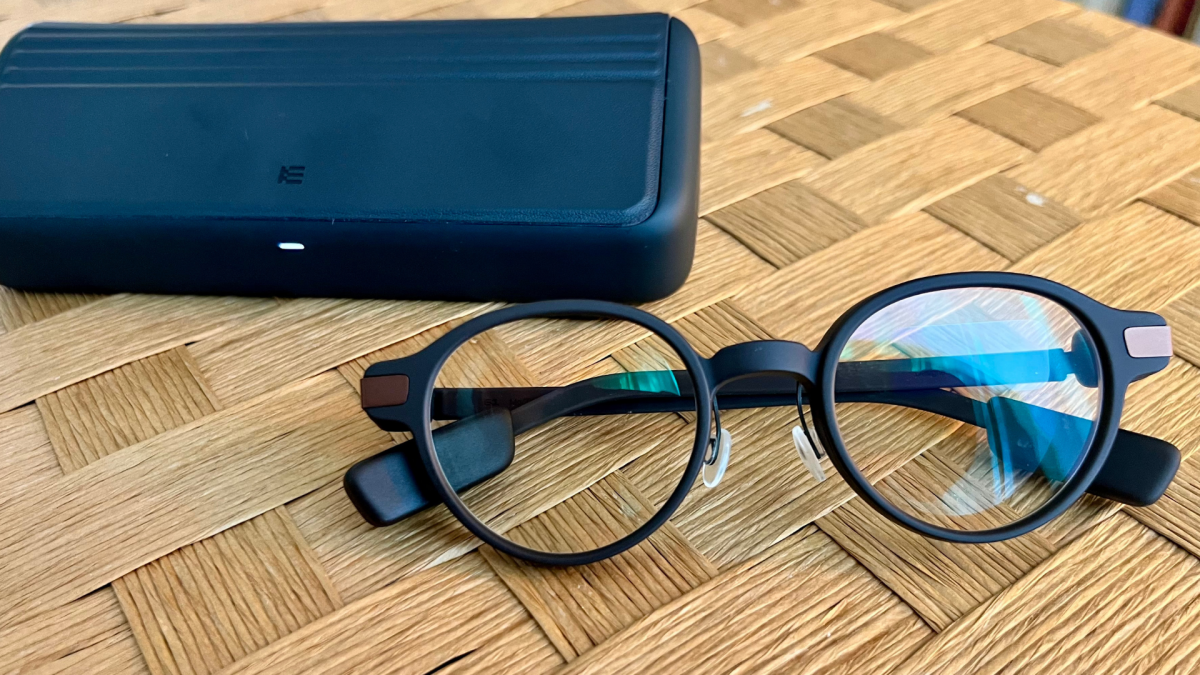

The burgeoning world of smart glasses just witnessed a pivotal moment. This morning, the ambitious upstart, Even Realities, unveiled ‘Even Hub’ – an open app store and developer platform designed for its G2 line of display-style smart glasses. This launch isn’t merely a product release; it’s the opening salvo in what promises to be a defining battle for the future of augmented reality: the war between open and closed platforms.
Goliath vs. David: Meta’s Dominion Meets Even Realities’ Ambition
On one side stands Meta, the undisputed Goliath of the smart glasses market. With its Ray-Ban and Oakley smart glasses commanding an estimated 82% market share and a staggering $1.47 trillion market capitalization, Meta has, until now, maintained a staunchly closed approach to its Display glasses. Users are presented with a highly curated experience, where Meta dictates functionalities and app access, leaving little room for third-party innovation or user customization.
Enter Even Realities, the audacious David in this narrative. A boutique tech firm valued at a modest $10 million, Even Realities has just launched a storefront boasting over 50 applications from independent developers. This move empowers G2 users to choose what they install and what they ignore, a stark contrast to Meta’s ‘my way or the highway’ philosophy.
Divergent Strategies, Similar Niche
While Meta’s overall market dominance is undeniable, within the specific niche of display-integrated smart glasses, the playing field is surprisingly level. Estimates for 2025-2026 suggest Meta has sold around 20,000 of its high-end Ray-Ban Display glasses, a figure comparable to Even Realities’ G2 sales, which range between 10,000 and 25,000 units.
Their product philosophies, however, couldn’t be more different. Meta’s $799 Display spectacles aim to integrate seamlessly with its popular non-display counterparts, offering full-color video and a distinctive Ray-Ban aesthetic. Even Realities’ G2 glasses, priced at $599, take a more understated approach. Lacking an onboard camera or audio, their mono-color display is housed in a discreet frame, designed to be fashionable, functional, everyday glasses that can subtly project information like maps or even assist in social interactions.
The Software Divide: Curated Experiences vs. Open Choice
The most profound difference between these two companies lies in their approach to software. Technology exists on a spectrum between ‘open’ and ‘closed,’ and Meta’s smart glasses firmly occupy the restricted end. Whether you own Display glasses or Ray-Ban Metas, your ‘face computer’ experience is meticulously controlled by Meta. You don’t download apps; you toggle ‘experiences’ on and off. Want to listen to music on a new third-party platform? Not an option. Want to delete core features you don’t use? Impossible. Even changing the AI’s wake-up command from “Hey, Meta” is off-limits.
Even Realities, conversely, embraces a semi-open model, akin to Apple’s App Store. While not the ‘anything goes’ freedom of Linux, it offers users a curated library of approved apps. Need an in-glasses EPUB Reader, a Chess game, or a Tesla charge indicator? You can choose to install them. Crucially, Even Realities also allows users to remove core features they don’t utilize, granting a level of control Meta users can only dream of.
Meta’s Future: Will the Walled Garden Open?
It’s important to acknowledge that Meta isn’t inherently against third-party development. Its Meta Horizon Store for the Quest VR headsets is a thriving marketplace, brimming with everything from AAA games to niche tools. Meta has even scaled back its first-party VR development to support indie creators. This suggests a potential future where Meta might open a more expansive store for its smart glasses, perhaps by integrating a ‘Display’ section into the existing Horizon Store, once the hardware matures.
The Nuance of Openness: Not Always a Panacea
While the immediate inclination might be to champion the freedom offered by an open system, history shows that ‘open’ isn’t always synonymous with ‘better.’ Nintendo’s dominance in 1980s video gaming stemmed from its strict quality controls over NES titles, often outperforming more ‘open’ competitors. Similarly, Adobe Flash reigned supreme over the ‘open web’ in the early 2000s, only to be dethroned by Apple’s relatively closed iPhone ecosystem, which famously refused to support it. Apple’s iOS devices themselves are a testament to the success of a tightly controlled yet highly functional platform.
The Stakes for the Augmented Future
As smart glasses transition from niche gadgets to potential mainstream devices, the platform strategy adopted by companies like Meta and Even Realities will profoundly impact user autonomy. The choice between a meticulously curated, controlled experience and a more open, customizable one will define not just how we interact with our augmented realities, but who ultimately holds the reins of our digital futures. The battle for the smart glasses platform has just begun, and its outcome will shape a significant frontier in personal technology.
For more details, visit our website.
Source: Link






Leave a comment