



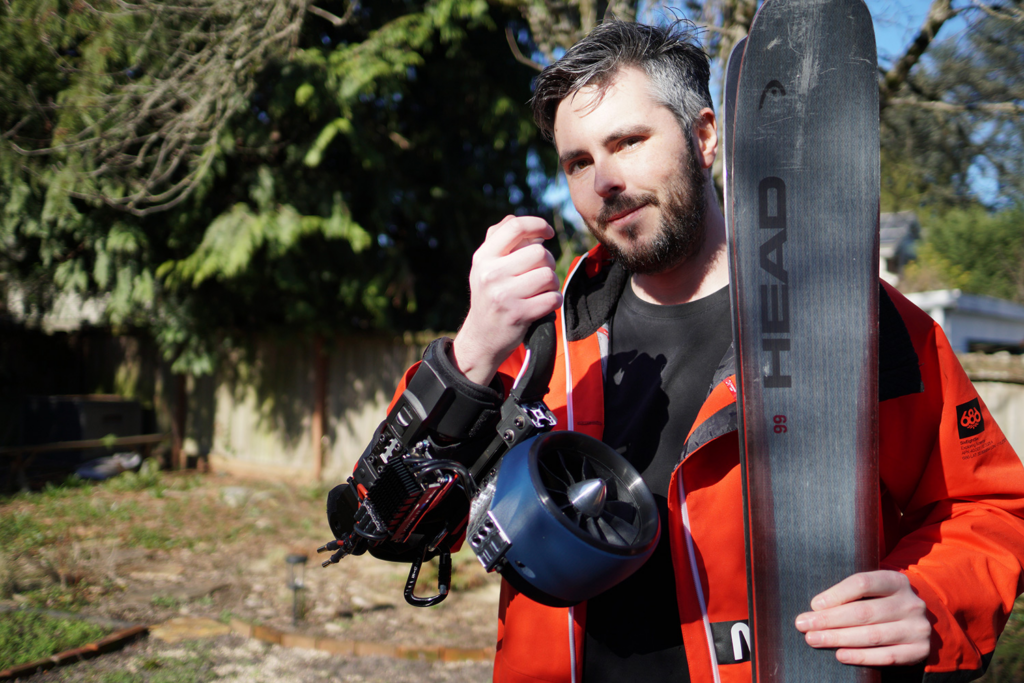

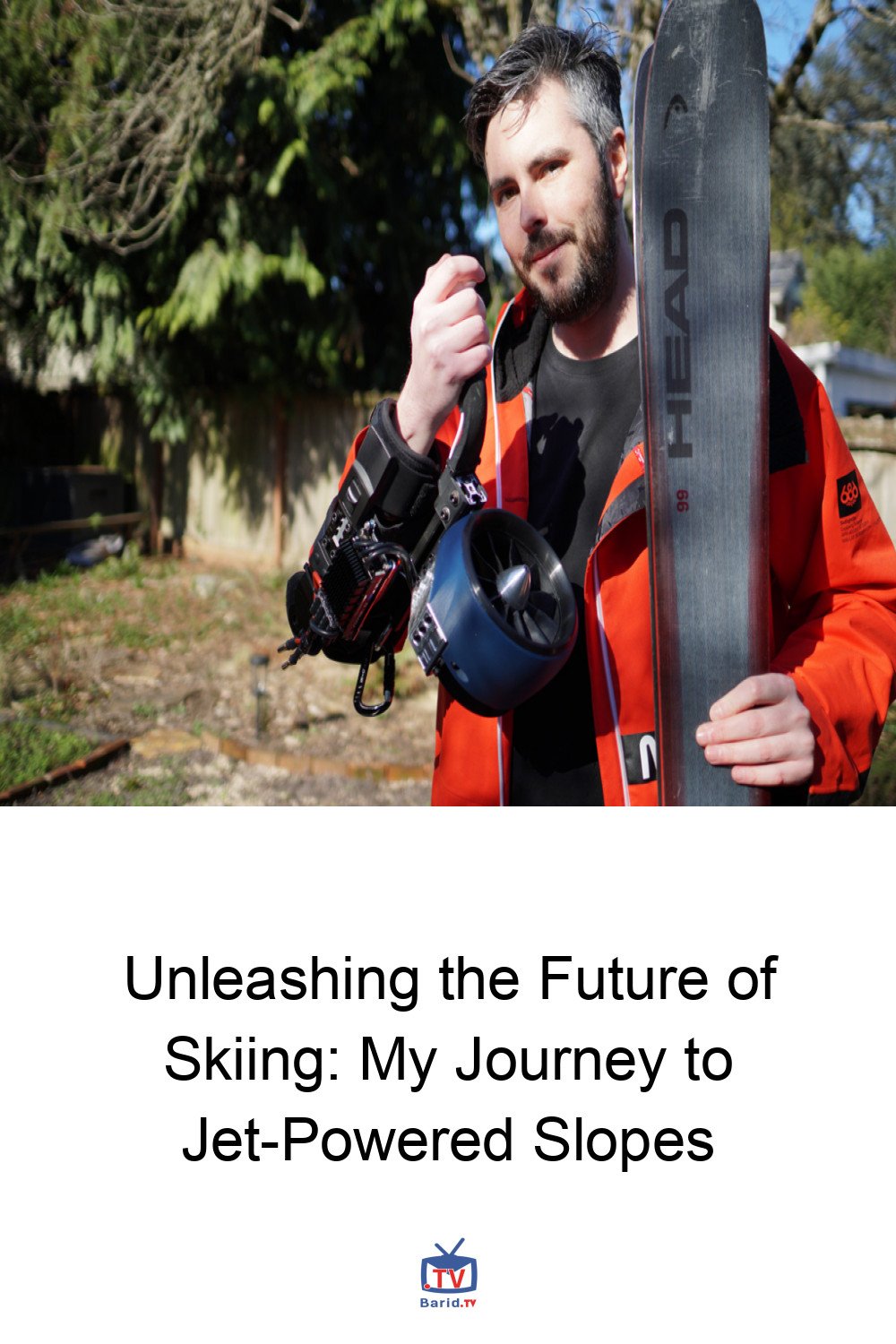
The sensation was unlike anything before. No explosive roar, no violent lurch, just a smooth, relentless surge forward. In an instant, I was effortlessly gliding past fellow skiers, the snow a blur beneath me. Strapped to my arms, 16 kilowatts of pure electric jet thrust propelled me, turning a long-held dream into an exhilarating reality.
From Childhood Dreams to High-Speed Reality
Like many aspiring inventors, my imagination was fueled by the likes of Colin Furze, who famously pushed the boundaries of engineering by attaching jet engines to the most unexpected objects. This fascination with speed, with taking the ordinary and transforming it into the extraordinary, has always been a driving force. For years, the thought lingered: how could I revolutionize skiing, pushing the limits of speed on the slopes?
The idea of jet-powered skis seemed a logical, albeit audacious, leap. Yet, the practicalities always seemed insurmountable. Could it truly be done? The question gnawed at me until one day, I decided to move from contemplation to concrete investigation.
The Research Odyssey: From Fossil Fuels to Electric Dreams
Initial Hurdles: The Perils of Traditional Jet Engines
Every ambitious project begins with rigorous research, and mine was no exception. My initial focus landed on JetCat micro jets – miniature, fossil-fuel-powered thrust producers. However, a closer look at their feasibility quickly revealed a host of impracticalities and significant safety concerns.
- Foreign Object Ingestion:
Mounted close to the ground on skis, these engines would inevitably ingest snow, ice, and other debris, leading to potential catastrophic failure.
- Extreme Heat: The immense heat generated by traditional jet engines posed a direct burn risk, making proximity to the body highly dangerous.
- Complex Auxiliary Systems: Fuel lines and high-voltage ignition wires would need to be routed across my body, exposed and vulnerable to snagging. The thought of flammable liquids leaking near exposed high-voltage wires, especially in a conductive environment like melting snow, painted a clear picture of a safety nightmare.
It was clear: a different approach was needed.
Embracing Electric Ducted Fans (EDFs): A Safer, Smarter Solution
My search led me to Electric Ducted Fans (EDFs). While my past experience with smaller EDFs left me underwhelmed, a deep dive into online specifications revealed their true potential. My previous perceptions were skewed by projects using undersized units and limited-output batteries. Modern EDFs, I discovered, offered a wide spectrum of power and efficiency.
The advantages of EDFs were compelling:
- Reduced Complexity: Eliminating fuel lines, ignition systems, and extreme heat simplified the design immensely.
- Optimal Mounting: Mounting the EDFs on my arms kept them clear of ground-level debris, mitigating the foreign object ingestion risk.
- Preserved Skiing Technique: Crucially, with thrust applied to the upper body rather than directly to the skis, the fundamental mechanics of skiing remained unchanged. This meant no need to “re-learn” how to turn or stop, preserving years of muscle memory – a monumental benefit.
Engineering the Thrill: Selecting the Right Powerhouse
To pinpoint the ideal EDF, I meticulously compiled a spreadsheet of the largest 120mm diameter units available. Going larger would mean venturing into aircraft-grade engines, incurring prohibitive costs due to certification requirements. My selection criteria were clear: optimal thrust per dollar and thrust per watt. A motor might be cheap, but if it demands an expensive, oversized battery, the initial cost saving quickly vanishes.
The choice ultimately fell upon the Ejets Jetfan-120 ECO, paired with a HET 800-74-590 motor. This formidable combination promised 20.5 lbs (9.3 kg) of thrust at 53.9 volts and 124 amps, translating to approximately 6.7 kW of power. Factoring in the peak voltage of my planned battery, this surged to 58.8V and 135A – a staggering 8 kW per motor! That’s nearly 11 horsepower per EDF, akin to strapping a Honda Grom motorcycle under each arm. This was the power I envisioned!
The Numbers Game: Proving the Concept
With the hardware selected, it was time to validate my intuition with hard data. I delved into research papers, extracting coefficients of friction for skis on snow. Plugging these values into equations, I aimed to predict my velocity after 10 seconds and assess the holding power…
For more details, visit our website.
Source: Link








Leave a comment