
New York is poised to become a national leader in AI regulation, with its state legislature actively considering a pair of groundbreaking bills. These proposals aim to address the burgeoning challenges posed by artificial intelligence, from the authenticity of digital content to the immense energy demands of the industry’s infrastructure. As AI’s influence expands across society, Albany’s proactive stance signals a growing recognition of the need for thoughtful governance.
The NY FAIR News Act: Ensuring Truth in the Age of AI
One of the cornerstone pieces of legislation, the New York Fundamental Artificial Intelligence Requirements in News Act (NY FAIR News Act), directly confronts the rise of AI-generated content in journalism. This bill mandates that any news “substantially composed, authored, or created through the use of generative artificial intelligence” must carry a clear disclaimer, alerting readers to its synthetic origins.
Beyond mere labeling, the NY FAIR News Act introduces a critical human element: it requires that all AI-created content undergo review and approval by a human with “editorial control” before publication. This provision seeks to uphold journalistic integrity and prevent the unchecked dissemination of potentially misleading or inaccurate information. Furthermore, the bill compels organizations to transparently disclose to newsroom employees how and when AI tools are being utilized, fostering an environment of accountability. Crucially, it also calls for robust safeguards to protect confidential information, particularly concerning sources, from being accessed or compromised by AI systems.
Powering the Future, Pausing the Present: The Data Center Moratorium
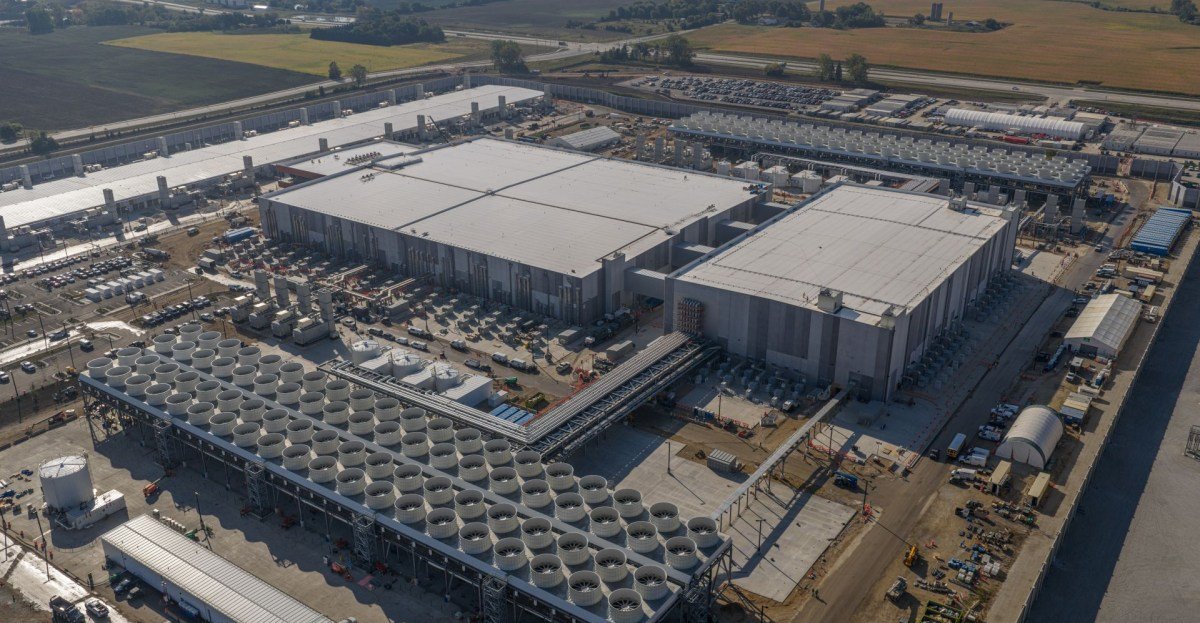
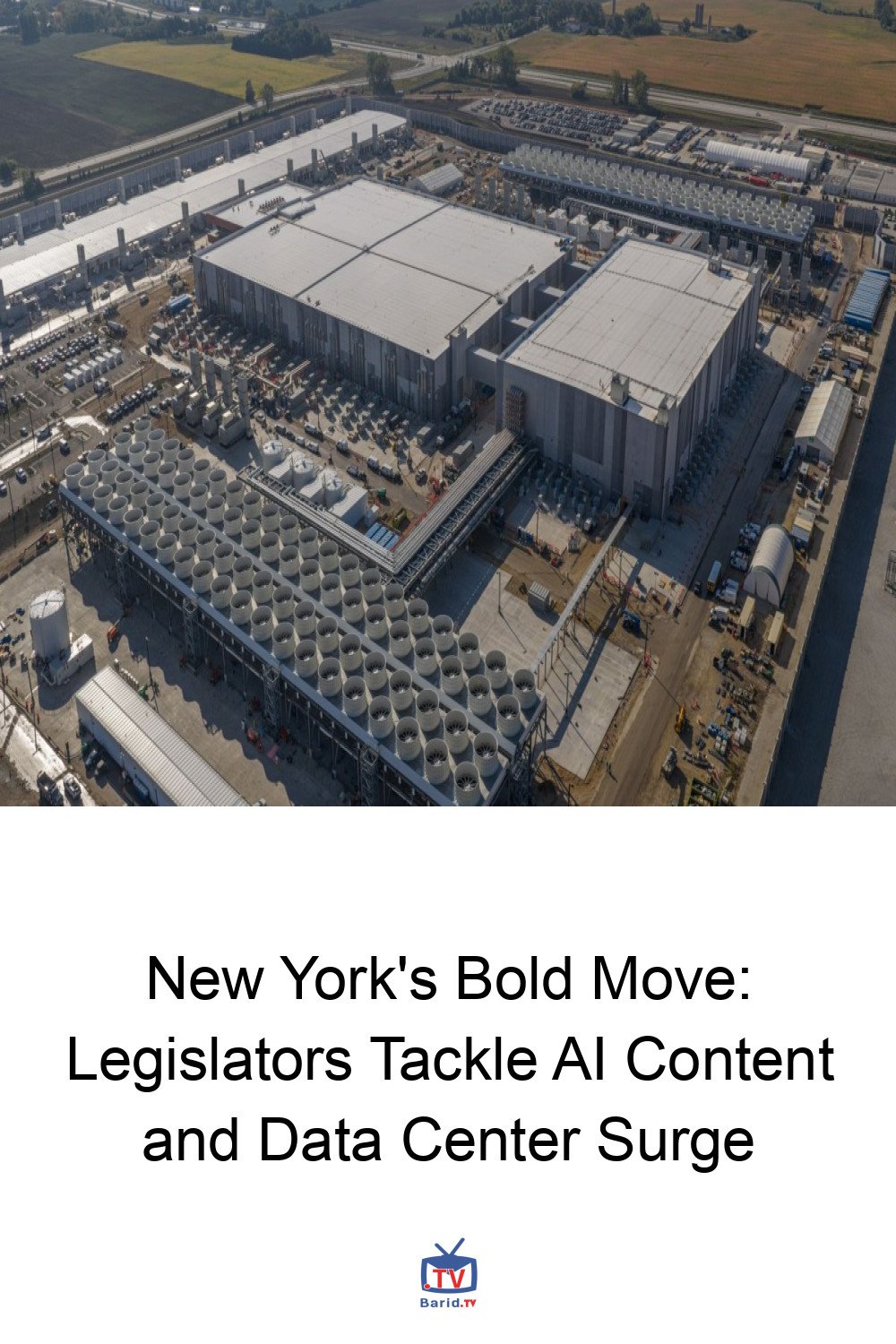
Simultaneously, the legislature is grappling with the physical footprint of the AI revolution through Senate Bill S9144. This bill proposes a significant three-year moratorium on the issuance of permits for new data centers across the state. The rationale behind this pause is rooted in escalating concerns over energy consumption and its direct impact on New York residents and businesses.
The legislative text highlights the strain on the state’s energy grid, citing a dramatic increase in electric and gas rates for residential, commercial, and industrial customers. National Grid New York has reported a staggering threefold increase in requests for “large load” connections within just one year, projecting an additional 10 gigawatts of demand over the next five years. With over 130 data centers already operational in New York, according to Data Center Map, the cumulative energy burden is undeniable. The recent approval of a 9-percent rate hike for Con Edison customers over the next three years underscores the urgency of addressing this burgeoning energy crisis, a phenomenon mirrored by soaring electric bills nationwide as data centers exert immense pressure on utility grids.
A Bipartisan Concern: Balancing Innovation and Infrastructure
These two bills, while addressing distinct facets of the AI landscape, collectively represent a comprehensive effort by New York lawmakers to navigate the complexities of this transformative technology. The NY FAIR News Act seeks to preserve trust and transparency in information, while S9144 aims to manage the environmental and economic consequences of AI’s physical infrastructure. The bipartisan nature of the concern surrounding AI data centers, as noted in the original reporting, emphasizes the broad societal impact of these issues.
As New York deliberates these landmark proposals, the outcomes could set a precedent for other states and nations grappling with similar challenges. The legislative efforts in Albany underscore a critical contemporary debate: how to harness the immense potential of artificial intelligence while mitigating its inherent risks and ensuring a sustainable, equitable future.
For more details, visit our website.
Source: Link