
The Icy Conundrum: Mastering Physics to Escape a Frozen Trap
Imagine being placed inside a giant, perfectly carved ice bowl – smooth, slick, and deceptively challenging. The higher you try to climb, the steeper and more treacherous the icy surface becomes. It’s a bizarre, almost whimsical scenario, yet it presents a profound physics problem. Forget the terror of an icy sidewalk; this is an uphill battle against the very laws of motion. So, how do you get out? The answer, surprisingly, lies in a deep dive into the mechanics of movement and friction.
Unpacking the Fundamentals: How We Walk
Most of us take walking for granted. From our first wobbly steps as toddlers, the intricate dance of balance and propulsion becomes second nature. But for physicists, even the simplest stroll to the mailbox is a complex interplay of forces. At its heart, walking is an act of controlled acceleration, and as Newton’s Second Law reminds us (F = ma), acceleration requires a net force.
When you push off the ground with your back foot, your muscles exert a backward force on the Earth. And here’s the magic: Newton’s Third Law dictates an equal and opposite reaction. The Earth pushes back on you with a forward-pointing force, which we call frictional force. This is the invisible hand that propels you forward.
The Elusive Nature of Friction
Friction, our unsung hero (or villain, depending on the surface), is quantified by two main factors:
- The Coefficient of Friction (μ): A number, typically between 0 and 1, that describes the ‘grippiness’ between two surfaces. A lower value means more slipperiness.
- The Normal Force (N): This is perhaps the most counter-intuitive for newcomers. ‘Normal’ means perpendicular to the contact surface. It’s the force that prevents you from sinking through the ground, acting directly opposite to the force pushing the surfaces together (often gravity). On flat ground, the normal force perfectly counteracts your weight.
It’s also crucial to distinguish between two types of friction:
- Static Friction (μs): This is the force that resists the *start* of motion. Think of trying to push a heavy box; you need to overcome static friction before it budges.
- Kinetic Friction (μk): Once the object is moving, kinetic friction is the force that resists its continued motion. It’s generally lower than static friction, meaning it’s easier to keep something moving than to get it started.
For walking, static friction is paramount. Your foot needs to grip the ground to push off effectively. The maximum static frictional force (Ffs) you can exert before slipping is given by Ffs ≤ μsN. This inequality is key: there’s a limit to how much force you can apply before losing traction. This is why accelerating too quickly in a car on ice results in spinning tires – you’ve exceeded the maximum static friction.
Walking on Ice: A Delicate Balance
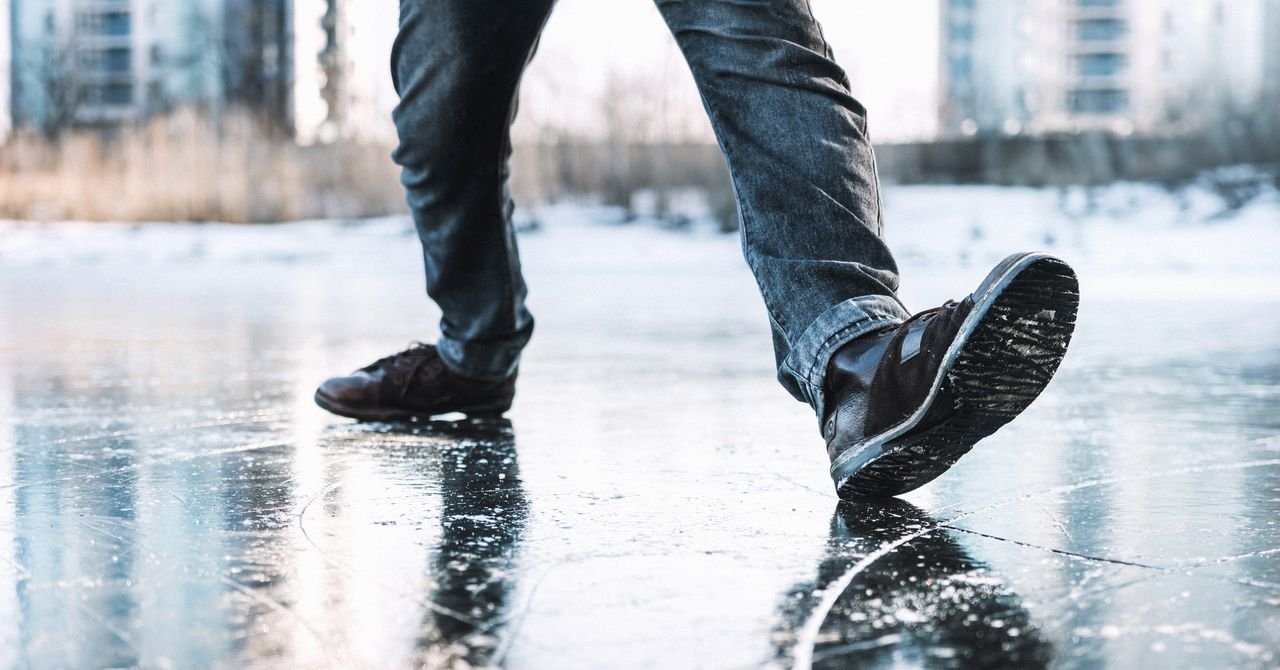
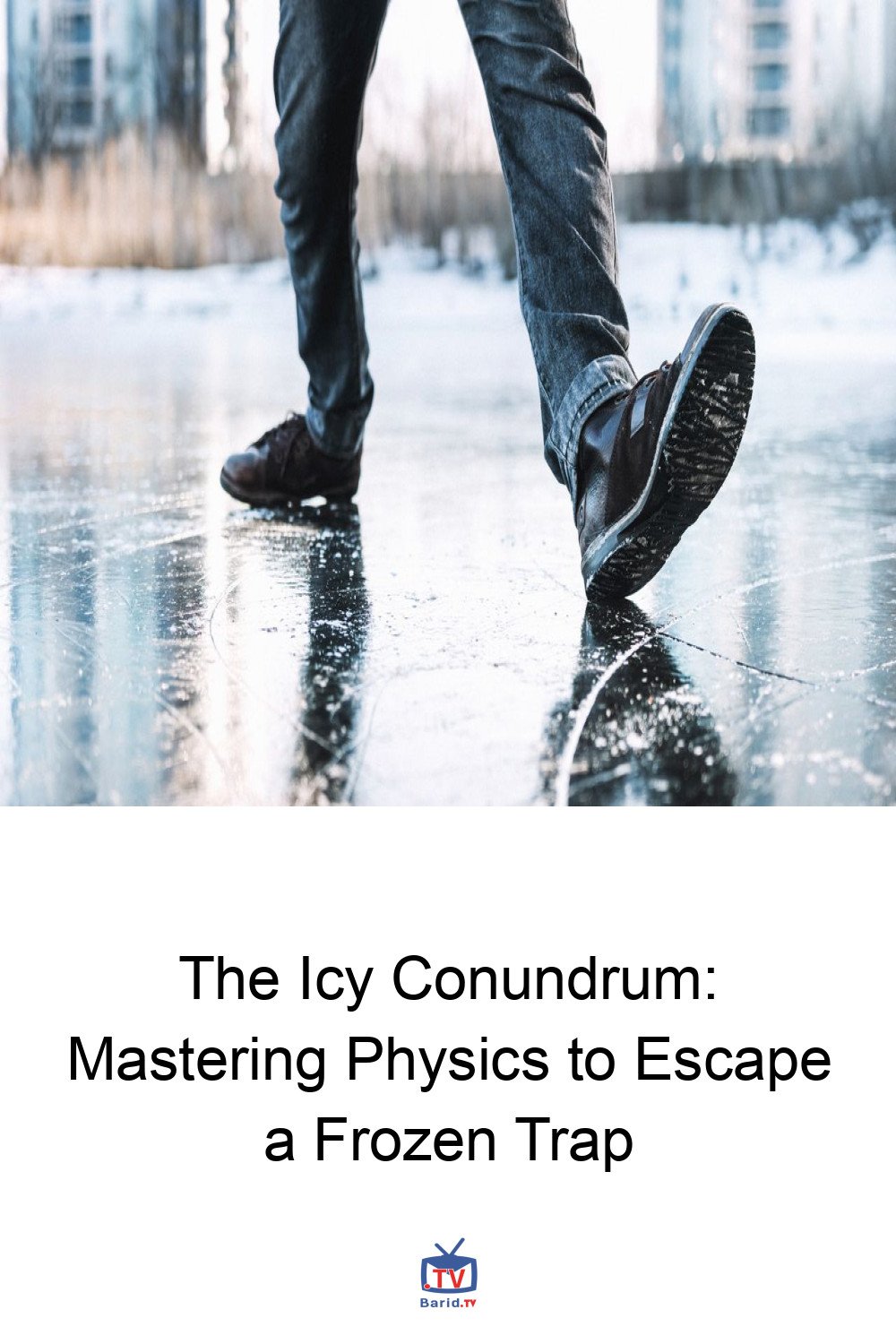
Now, let’s introduce ice into the equation. While rubber soles on asphalt boast a static friction coefficient of around 0.9, on ice, that number plummets to a mere 0.1 – practically zero. This drastic reduction explains why we shuffle gingerly on icy patches. Any sudden, forceful movement is an open invitation to a painful fall.
Interestingly, the very reason ice is slippery remains a subject of debate among physicists and chemists. The consensus points to a thin, liquid-like layer on its surface, even below freezing. But *why* this layer exists is a centuries-old mystery still being unraveled.
The Challenge of the Slope: When Normal Force Changes
Walking uphill adds another layer of complexity. On an incline, the normal force (N) no longer directly opposes your full weight. As the angle of the slope (θ) increases, the normal force decreases because a component of gravity now acts parallel to the surface, pulling you down the slope. This reduction in normal force directly impacts the maximum static friction available to you. This is why climbing a vertical wall is impossible without specialized equipment – the normal force approaches zero, eliminating any frictional grip.
Cracking the Ice Bowl Escape
Bringing it all back to our icy predicament: the ice bowl combines the low friction of ice with the diminishing normal force of a steep incline. The higher you climb, the less grip you have. The key to escape, then, lies in manipulating these fundamental physics principles. While the original text hinted at three escape plans, the core strategies would involve:
- Maximizing Normal Force: Can you press down harder on the ice in a way that increases the perpendicular force, even momentarily? Perhaps by changing your body posture or distributing your weight strategically.
- Minimizing the Effective Slope: Is there a way to reduce the effective angle of the incline you’re trying to climb? This might involve finding a flatter section, or perhaps using a technique that ‘steps’ rather than ‘slides’ up the curve.
- Leveraging Momentum (Carefully):
While static friction is crucial for starting, a controlled use of momentum, perhaps by rocking or generating a small initial push, might be part of a dynamic escape strategy, though this is inherently risky on ice.
Ultimately, escaping the ice bowl isn’t about brute strength; it’s about understanding and exploiting the subtle dance between friction, gravity, and the normal force. It’s a testament to how even the most whimsical challenges can be broken down and solved with the elegant power of physics.
For more details, visit our website.
Source: Link