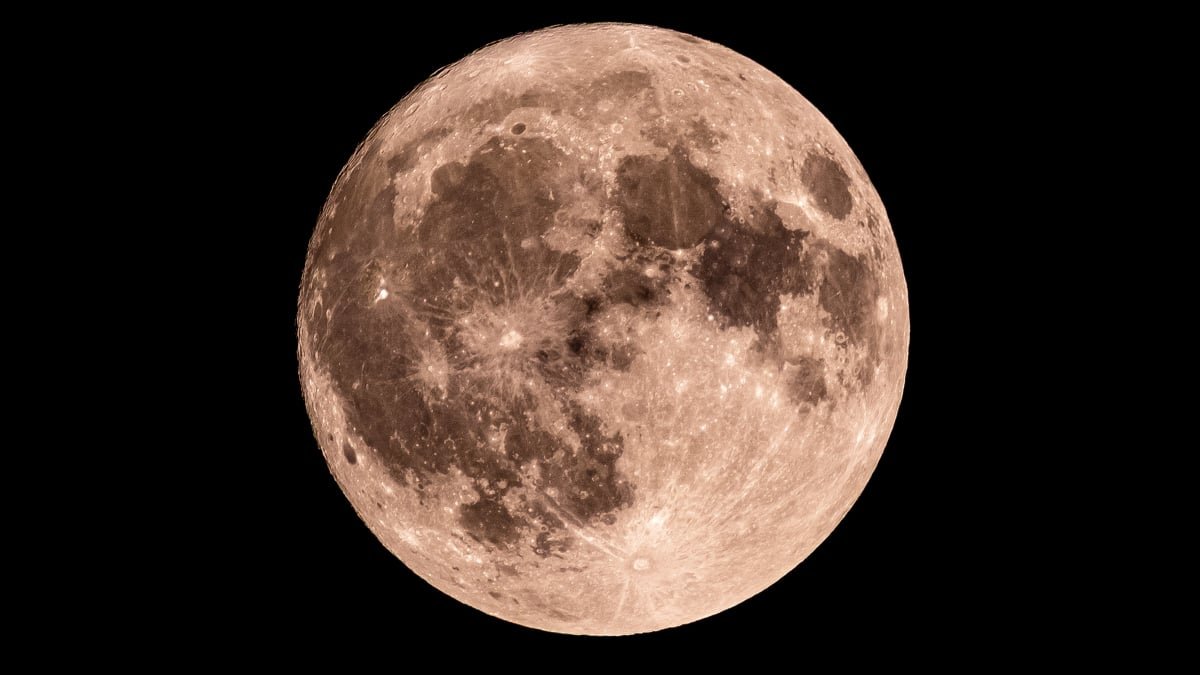

As the calendar turned to January 3rd, sky-gazers were treated to a celestial spectacle: a magnificent Full Moon, traditionally known as the ‘Wolf Moon’. This wasn’t just any full moon; it marked the fourth consecutive supermoon, gracing our night skies with its amplified brilliance.
The January 3rd Full Moon: A Super Wolf Moon
On this particular Saturday, the lunar disc was fully illuminated, presenting a breathtaking display as 100% of its surface reflected the sun’s light back to Earth. This phenomenon, a Full Moon, occurs when the Moon is positioned directly opposite the Sun, with Earth in between, allowing us to see its entire sunlit face.
What is a Supermoon?
The term ‘supermoon’ refers to a Full Moon (or New Moon) that occurs when the Moon is at its closest point to Earth in its elliptical orbit, known as perigee. When a Full Moon coincides with perigee, it appears slightly larger and brighter than an average Full Moon, offering an even more impressive visual treat.
The Lore of the Wolf Moon
January’s Full Moon carries the evocative name ‘Wolf Moon’, a tradition rooted in Native American and early colonial folklore. It’s believed to be named after the hungry wolves that would howl outside villages during the cold, deep winter nights of January, their cries echoing under the bright, full moon.
Understanding the Lunar Cycle: A Celestial Dance
The Moon’s appearance in our sky is a constantly changing ballet, governed by its orbit around Earth. This complete journey, known as the lunar cycle, spans approximately 29.5 days. During this period, the Moon transitions through eight distinct phases, each determined by the varying angles at which we view its sunlit surface.
While the same side of the Moon perpetually faces our planet, the amount of that side illuminated by the Sun changes, creating the illusion of a waxing and waning orb.
The Eight Phases of the Moon Explained
- New Moon: This is the invisible phase. The Moon is positioned between the Earth and the Sun, meaning the side facing us is completely dark.
- Waxing Crescent: A delicate sliver of light emerges on the right side of the Moon (for observers in the Northern Hemisphere) as it begins its journey towards fullness.
- First Quarter: Appearing as a perfect half-moon, the right half of the lunar disc is now illuminated.
- Waxing Gibbous: More than half of the Moon is lit, but it hasn’t yet reached its full illumination. It continues to grow larger each night.
- Full Moon: The zenith of the cycle, where the entire face of the Moon is bathed in sunlight and fully visible from Earth.
- Waning Gibbous: Post-Full Moon, the illumination begins to recede from the right side (Northern Hemisphere), though still more than half is lit.
- Third Quarter (or Last Quarter): Another half-moon, but this time it’s the left side that is illuminated.
- Waning Crescent: A final, thin sliver of light remains on the left side before the Moon once again disappears into the New Moon phase, completing its cycle.
Mark Your Calendars: The Next Full Moon
For those who missed the January spectacle, the next opportunity to witness a Full Moon will arrive on February 1st. Keep an eye on the night sky for another chance to marvel at our celestial neighbour.
For more details, visit our website.
Source: Link