




The End of an Era: Warren Buffett Steps Down as Berkshire Hathaway CEO
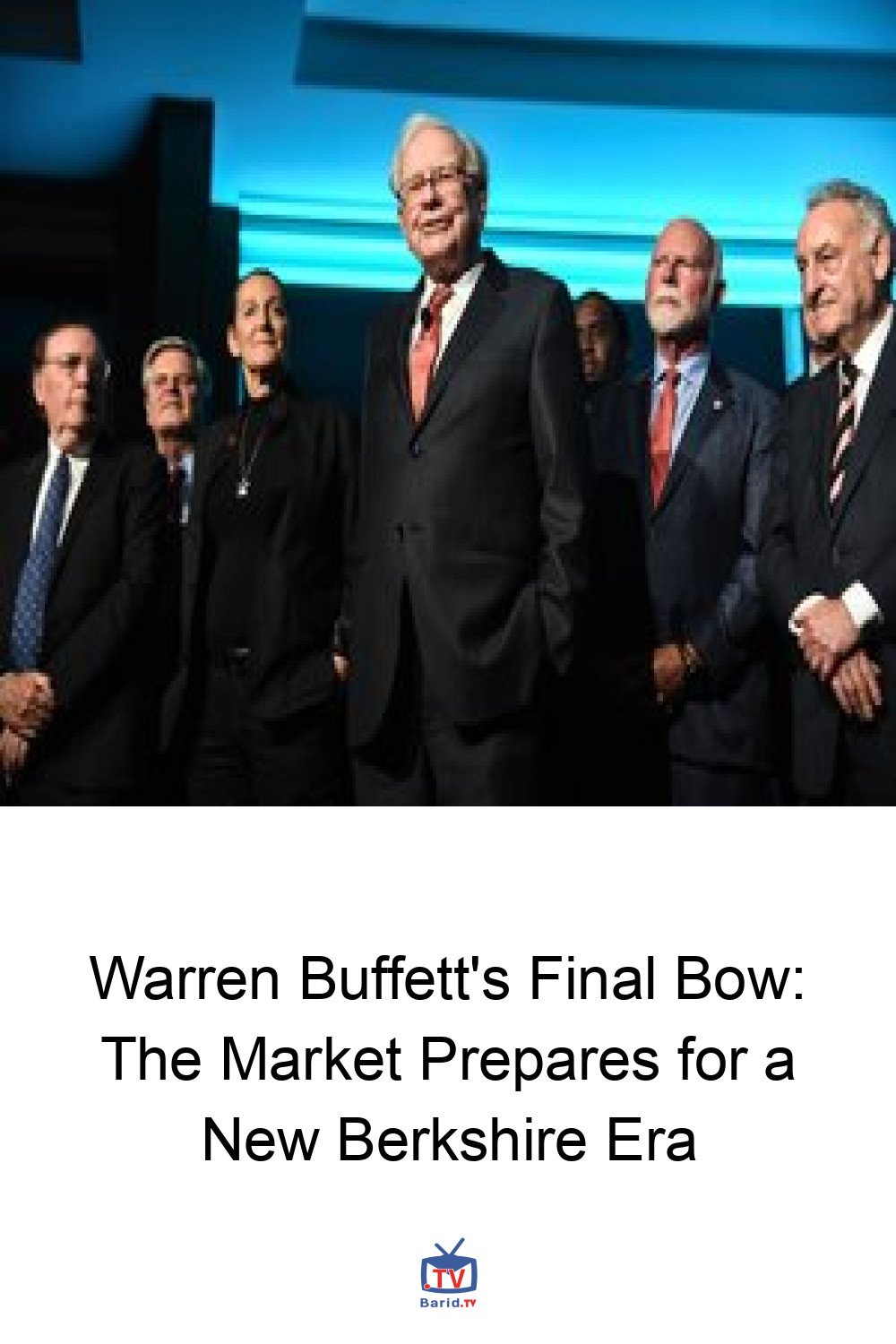
December 31, 2025, marks a pivotal moment in financial history: Warren Buffett, the legendary “Oracle of Omaha,” concludes his tenure as CEO of Berkshire Hathaway. For decades, this trillion-dollar conglomerate has defied conventional wisdom, operating less like a typical public company and more like a one-man central bank, imbued with Buffett’s folksy wisdom and unparalleled confidence. His departure isn’t just a change in leadership; it’s the first true stress test for a market that has long priced in the intangible premium of his presence at the helm.
Buffett didn’t merely compound money; he compounded trust. His steady hand, even amidst market turmoil, reassured investors that a level-headed authority was always in control. As he clocks out, the financial world grapples with a fundamental question: How much of Berkshire’s extraordinary edge was embedded in its robust processes, and how much resided in the unique authority of a man who could publicly, loudly, and patiently sit on his hands for years, yet still command respect as the ultimate adult in the room?
The Oracle’s Last Day: A Market Stress Test
The mechanics of this transition are straightforward. Tomorrow, Greg Abel assumes the role of CEO, with Buffett remaining as Chairman. He’ll be close enough to cast a significant shadow, yet far enough removed to no longer sign the checks. The real challenge, however, lies in quantifying the unquantifiable: the “Buffett Premium.” Markets have historically struggled to price such intangible assets, and now they must determine how much of Berkshire’s value was tied to its iconic leader.
While the myth of the one-man show may be clocking out, the machine itself remains. Berkshire Hathaway will continue to hum. Its diverse businesses will keep generating revenue, and its formidable balance sheet will maintain its composure. The company, in essence, doesn’t cease to be Berkshire at the stroke of midnight.
From Textile Mill to Compounding Machine: Buffett’s Legacy
Buffett’s journey with Berkshire began in the mid-1960s, transforming a failing textile mill into one of the most durable outperformers in market history. He strategically shifted its core from looms to insurance, leveraging the “float” – the capital held between premiums collected and claims paid – as the perpetual fuel for its expansion. This ingenious model allowed Berkshire to acquire entire businesses, invest in significant stakes, and maintain a permanent reserve, ready to capitalize when market panics presented bargains.
Berkshire evolved into a unique federation: a robust insurance core, a vast railroad, an enormous utilities and energy division, and a diverse collection of consumer and industrial companies, largely operating autonomously. Buffett’s investment portfolio itself became a corporate biography, featuring long-held stakes in giants like Coca-Cola and American Express, strategic forays into banking, and Apple as a modern tentpole. Crucially, he always ensured the company remained liquid enough to act decisively when opportunities arose. This blend of decentralized operations and centralized capital allocation means Buffett’s final day as CEO feels simultaneously like a momentous ending and a seamless non-event.
Over his remarkable tenure, Berkshire compounded at nearly double the S&P 500’s pace (19.9% annually from 1965 to 2024, compared to 10.4% for the S&P 500). Even in 2025, a year marked by market volatility, Berkshire’s stock has continued its upward trajectory.
The Abel Era: Maintaining the Machine
Berkshire has meticulously orchestrated this transition from Buffett to Abel to appear deliberately uneventful. The company shuns flashy integrations, grand “strategy refreshes,” or new-leader rebrands. Its operational philosophy is rooted in autonomy, strong incentives, and a headquarters that views micromanagement as a contagion. The supporting cast, however, is already seeing shifts; Abel recently announced leadership changes following Todd Combs’ departure and CFO Marc Hamburg’s retirement. Adam Johnson, NetJets CEO, will now oversee a new consumer, service, and retail grouping, creating a third oversight bucket under the CEO. Even Berkshire’s famously stable machine has its moving parts.
Abel inherits a structure designed to keep the Omaha headquarters lean and the operating companies proud. Berkshire’s model, simple in concept but maddeningly difficult to execute, is clear: acquire excellent businesses, retain their proven managers, and allow the insurance operations to generate investable capital. Headquarters focuses on capital allocation and culture, not day-to-day meddling. Buffett himself ingrained this culture into a governance principle, famously warning that “if you start fooling your shareholders, you will soon believe your own baloney and be fooling yourself as well.” This humorous quip underscores a profound truth: candor is a competitive advantage in a world where honesty is often treated as a liability.
Buffett’s Farewell Gift: A Mountain of Capital
As of the third quarter of 2025, Berkshire’s cash pile has swelled to a staggering $381.7 billion. This isn’t merely a few billion in checking; it’s a colossal mountain of liquidity, a running character in the narrative of Buffett’s finale, providing Abel with immense strategic flexibility as he takes the reins.
For more details, visit our website.
Source: Link





Comments are closed.