





The Echo in the Nursery: How My Child’s Voice Revealed My Own Unfinished Business
“Children are not things to be molded, but people to be unfolded.” ~Jess Lair
Throughout my formative years, I found myself instinctively drawn to the quiet strength of soft-spoken, gentle classmates. Their apparent calm was a stark contrast to the tempest brewing within me – a temper that ignited at the slightest provocation. I yearned for peace, a commodity conspicuously absent from my own home. As a child, I couldn’t articulate this deep craving, but the profound understanding would arrive years later, with the advent of parenthood.
The Unseen Scars of Childhood
My childhood home was anything but serene. Marked by heavy drinking and nightly parental disputes, it was an environment that, unbeknownst to us at the time, was slowly fracturing something vital within my siblings and me. This insidious tension forged a child who matured into an adult burdened by an excess of anger and irritability. The label “short-tempered” became an accepted part of my identity, a characteristic I never paused to question or explore its origins.
It was only through the lens of parenthood that a crucial truth emerged: a child’s foundational development begins not with formal lessons, but within the emotional landscape of their home. If our aspiration is to raise successful, kind, and grounded individuals, we must first cultivate a stable emotional bedrock. Much like a tree that yields good fruit only when its roots are nurtured from inception, a child thrives on a secure emotional beginning.
My parents, lacking formal education, likely never comprehended the profound impact their domestic strife had on us. Perhaps this explains why, even as adults, my siblings and I continue to carry the indelible imprints of that early environment.
A Partner’s Calm, A Personal Revelation
My life began a significant recalibration with marriage. The adage “opposites attract” proved remarkably true for my partner and me. Where I was prone to swift anger, he embodied calm, patience, and an unwavering steadiness. His military upbringing had instilled in him a remarkable even-temperament, and his presence slowly began to reshape my self-perception. A revelation dawned: not every minor inconvenience warranted an outburst. The self-inflicted wounds of irritation, I realized, harmed me as much as those around me.
Yet, recognizing old patterns is one thing; dissolving them is another entirely. My partner remained a beacon of calm, while my quick temper persisted. Unconsciously, I found myself replicating the very parenting style I had endured.
The Day My Child Became My Mirror
In my child’s early years, my sharp reactions and raised voice were met with silent acceptance. I mistook this for effective discipline, believing it was how I maintained order. I was oblivious to the deeper damage I was inflicting. Far from teaching discipline, I was cultivating fear, causing my child to associate every small misstep with the dread of my anger. Inevitably, my child began to withdraw from me, gravitating instead towards my partner, whose patient explanations and calm demeanor offered a stark contrast to my own.
The full weight of my actions didn’t truly hit me until a fateful day when my own behavior was unmistakably reflected back. While tidying, I accidentally tore a page from my child’s school notebook. The response was immediate, sharp, and chillingly familiar:
“Don’t you realize this is my school notebook? It’s not your property—you can’t just tear pages out whenever you feel like it.”
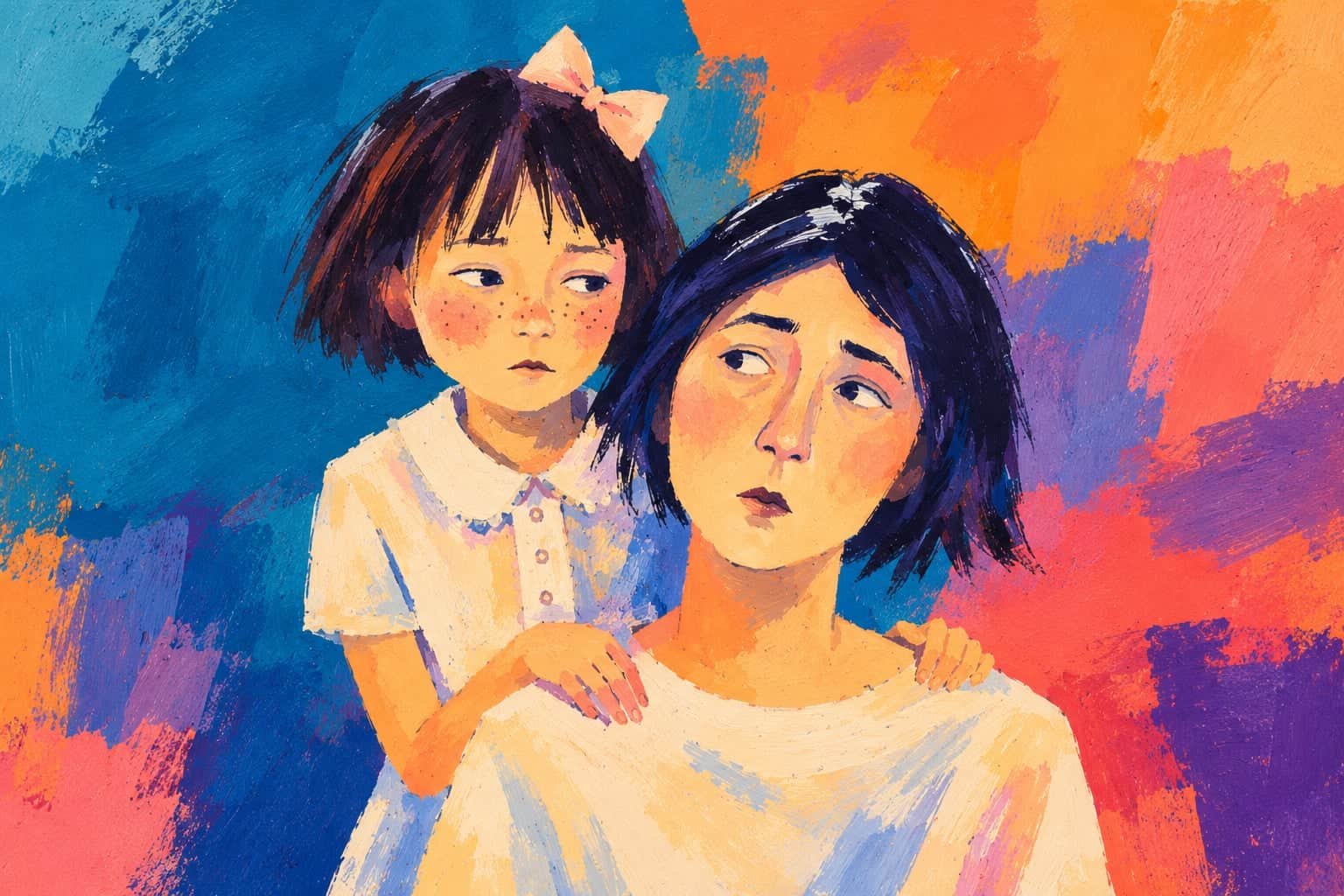
The words themselves were innocuous, but the tone—that unmistakable sharpness, that edge of irritation—was my own. Spoken back to me in my child’s voice. In that singular, frozen moment, I recognized the echo of years of my own behavior. I was finally experiencing what it felt like to be on the receiving end. For the first time, the true nature of my “teaching” at home became terrifyingly clear.
The Decision That Redefined Parenthood
That day marked a profound turning point in my approach to parenting. The realization was stark: if I desired my child to blossom into a secure, emotionally healthy adult, the transformation had to begin with me. Our children are profound mirrors, reflecting back the tones, the patience, the reactions we consistently offer. Who we are as parents manifests in our children, often with an uncomfortable clarity, whether we are ready to confront that reflection or not.
A Journalist’s Plea: The Unseen Legacy
Our children learn far more than what we explicitly tell them. They absorb our very essence, moment by moment, especially in those unguarded instances when we’re not consciously trying to instruct. The environment we cultivate at home becomes the indelible emotional blueprint our children carry throughout their lives, long after they’ve left its physical confines. This is a responsibility far weightier than most of us fully grasp amidst the daily demands of parenting.
For more details, visit our website.
Source: Link








Leave a comment