





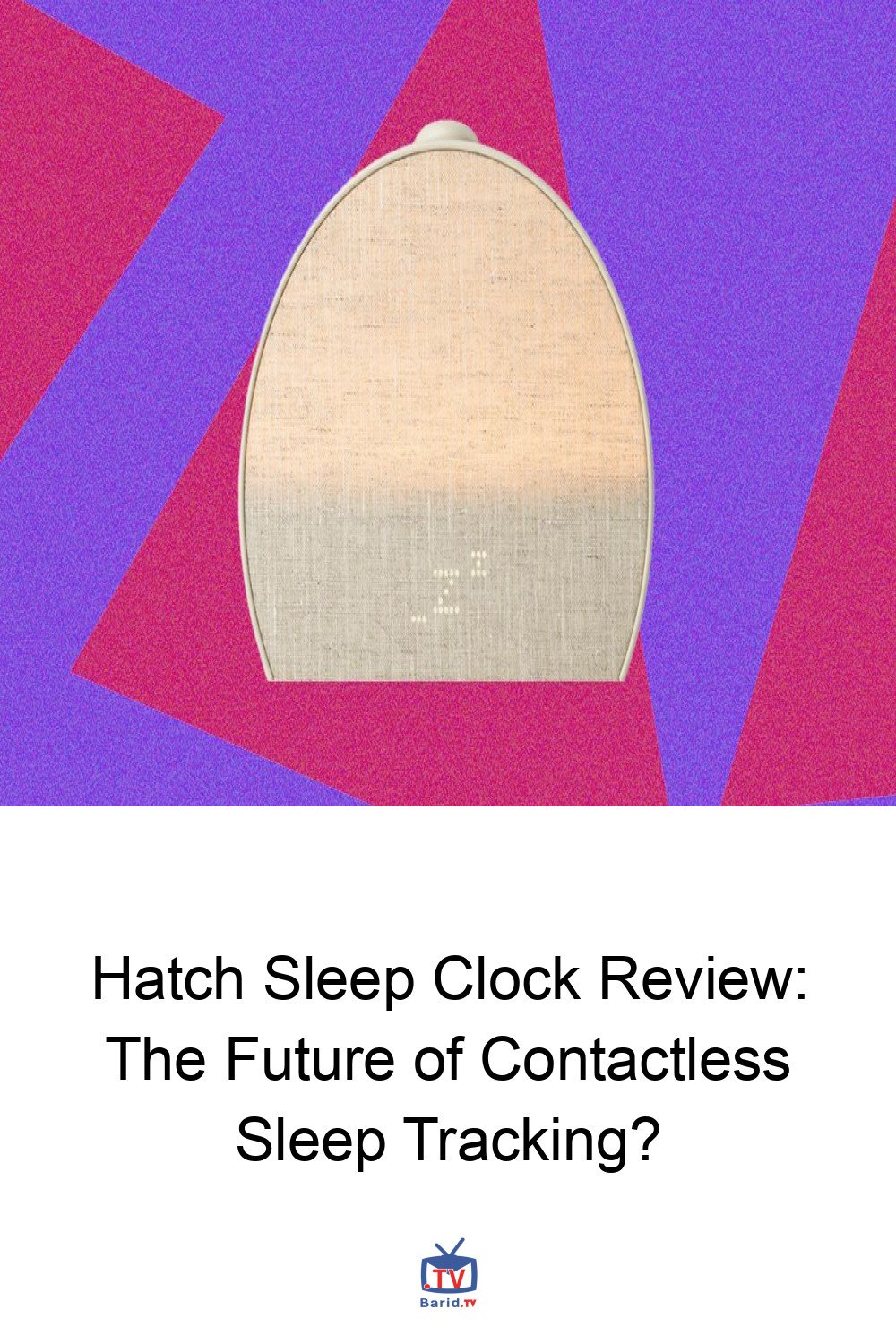
The Quest for Quality Sleep: Is the Hatch Sleep Clock the Answer?
In an age where every aspect of our lives is quantified, sleep remains one of the most elusive metrics. We crave data – how long, how deep, how restorative – yet many of us recoil at the thought of strapping on a smartwatch or smart ring every night. The modern dilemma: optimize sleep without sacrificing comfort or privacy. Enter the Hatch Sleep Clock, a device promising a harmonious blend of bedside utility and contactless sleep tracking, aiming to revolutionize how we monitor our nocturnal hours.
A Multifaceted Bedside Companion
Priced at $249, the Hatch Sleep Clock isn’t just a sleep tracker; it’s a comprehensive bedside ecosystem. Building upon the success of the Hatch Restore 3, this latest iteration integrates a sunrise alarm, a dimmable bedside light, and a sound machine, all within a sleek, unobtrusive design. Its core appeal lies in its ability to offer passive sleep monitoring, meaning no wearables, no contact – just place it on your nightstand, and let it do its work.
While it sits comfortably between more budget-friendly options like the Google Nest Hub ($100) and premium, integrated systems such as Eight Sleep (starting at $1,999), its price point is comparable to an Apple Watch SE 3. However, it’s crucial to note that the Hatch Sleep Clock foregoes the physiological measurements (like heart rate variability or blood oxygen) that wearables provide, focusing instead on motion-based insights.
Contactless Tracking: How It Works (and What It Misses)
The magic of the Sleep Clock lies in its built-in motion sensor, designed to detect subtle micro-movements and breathing patterns throughout the night. This contactless approach is a significant draw for those wary of wearables, offering a sense of freedom and privacy. Crucially, there’s no camera or microphone recording your nights, addressing common privacy concerns associated with smart home devices.
Each morning, the companion Hatch app delivers a concise report detailing your sleep journey: when you got into bed, when you fell asleep, wake-up times, and when you finally rose. It even compares your actual sleep against your planned bedtime routine and visualizes your sleep stages. The reports are commendably clean, interactive, and easy to digest, presenting data without overwhelming the user with excessive metrics.
One notable departure from many consumer sleep trackers is the absence of a “sleep score.” Hatch opts instead for brief nightly notes summarizing patterns and offering actionable tips. While some users might miss the quick snapshot a score provides, this approach encourages a more nuanced interpretation of personal sleep data, allowing users to draw their own conclusions rather than relying on an algorithm’s single number. However, this also means it lacks the sophisticated physiological data that informs more advanced sleep scores from devices like the Oura Ring or Apple Watch.
During testing, sleep duration estimates were generally consistent with data from an Apple Watch Series 12 and Oura Ring 5. However, discrepancies in sleep stage tracking were more apparent. While sleep stages offer valuable context, the precision of minute-by-minute brain activity mapping from a motion-based, non-contact device remains a point of skepticism for many experts.
The Fine Print: Placement and Paywalls
The Hatch Sleep Clock’s contactless nature comes with a significant caveat: its accuracy is heavily dependent on precise placement. Hatch recommends positioning the device on your nightstand, roughly level with your mattress, facing your chest, and within 2 to 4 feet of your body, with no obstructions. This can be a challenge for some, potentially requiring creative solutions like propping it up or even installing a wall shelf if your existing nightstand isn’t ideal. Our reviewer noted that their nightstand was always cluttered with trinkets, highlighting a common practical hurdle.
Another consideration is the Hatch+ subscription ($6 per month). While your core sleep data remains accessible without it – a refreshing change from many competitors – the extensive audio library of soothing sounds and guided meditations is locked behind this paywall. Furthermore, controlling your bedtime routine through a smartphone app, while convenient, can feel counterintuitive for those actively trying to reduce screen time before bed.
The Verdict: A Step Towards Simpler Sleep Tracking?
For individuals seeking a multi-functional bedside device that offers a gentle wake-up, ambient lighting, soundscapes, and basic, contactless sleep tracking without the commitment of a wearable, the Hatch Sleep Clock presents a compelling option. Its clean data presentation and emphasis on user interpretation are commendable.
However, those accustomed to the rich physiological data, advanced insights, and comprehensive sleep scores provided by premium wearables might find its tracking capabilities somewhat limited. The rigid placement requirements and the subscription needed for the full audio experience are also points to consider. Ultimately, while the Hatch Sleep Clock excels as a sunrise alarm and bedside companion, serious sleep data enthusiasts might, like our reviewer, still find themselves reaching for their Oura app for deeper insights.
For more details, visit our website.
Source: Link







Leave a comment