





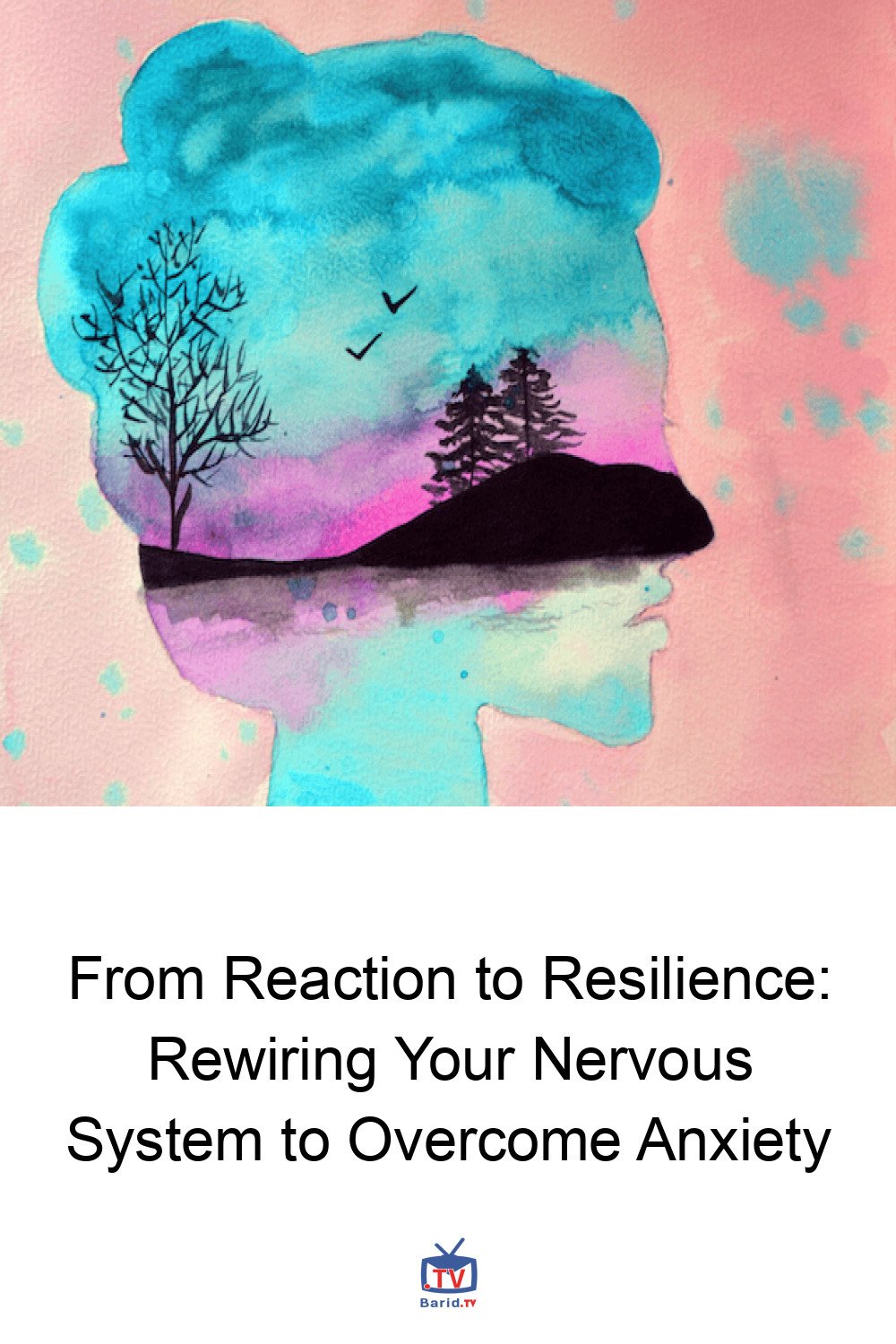
“Physical self-awareness is the first step in releasing the tyranny of the past.” ~ Bessel van der Kolk
For too long, many of us have mistakenly viewed anxiety as a personal failing, a character flaw that could be reasoned away with enough mental effort. We tell ourselves that if we just think harder, analyze more deeply, or apply more willpower, we’ll finally conquer this internal turmoil. Yet, as countless individuals can attest, this intellectual battle often leaves us right back where we started: heart pounding, hands trembling, bracing for a catastrophe that hasn’t even materialized.
The Echoes of the Past: When Your Body Remembers
My own journey with anxiety was a profound lesson in this very truth. In a past marriage, my body developed an uncanny ability to ‘read the room’ long before my conscious mind registered any threat. The subtle sound of a door closing could dictate the emotional landscape of an entire evening. I walked on eggshells, my nervous system constantly on high alert, anticipating conflict. My chest would tighten, my stomach would clench, and I’d instinctively begin to ‘smooth things over,’ often without even knowing what I was trying to fix. I labeled myself ‘sensitive’ or ‘too much,’ never realizing I was experiencing a deep-seated physiological response.
Leaving that marriage, I naively believed the anxiety would vanish with it. It didn’t. Years later, in perfectly safe environments, the familiar tightness would return. A raised voice, a delayed text, a moment of silence during a disagreement – these seemingly innocuous triggers would send my body into a state of perceived danger. My mind would then scramble, trying to rationalize and de-escalate a threat that wasn’t real, exhausting itself in the process.
Unmasking the Root: Nervous System Dysregulation
It wasn’t until I delved into health counseling and attachment theory that the true nature of my anxiety began to unravel. I discovered that my anxiety wasn’t a flaw; it was a nervous system that had learned, through repeated exposure to perceived threats, to stay perpetually braced for impact. It had built an intricate set of automatic reactions designed to keep me safe, firing off long before my conscious thoughts could intervene. This is the essence of anxious attachment and nervous system dysregulation: a body that, at some point, learned to treat ordinary stress as an existential threat, continuously sounding an alarm that no longer serves its original purpose.
Beyond Logic: The Body’s Language of Change
The most challenging realization was that no amount of rational thought could penetrate this deeply ingrained pattern. These reactions resided in a part of my brain far older and faster than logic, a part that had learned its lessons through repetition, raw emotion, and direct bodily experience, long before I had the words to articulate any of it. Our nervous systems respond to these primal inputs—repetition, emotion, and physiology. True change, the formation of new neural pathways, happens when we work new patterns into the body, mirroring how the old ones were established.
Reclaiming Control: The Power of the Pause
My journey to shift this began with a deceptively simple step: paying attention to the reaction as it happened. Even now, in a loving and secure relationship, I sometimes catch it. My partner falls silent for a few minutes, and my chest instinctively tightens. The old questions surface: Is he angry? Did I do something wrong? My body tenses, anticipating a blow that will never come.
But now, I notice. The moment my chest tightens, my shoulders creep up, and my breath hitches, I place a hand on my chest and breathe deeply until the tension softens. I name the physical sensations without judgment: My chest is tight. My shoulders are high. I’m holding my breath. That’s all. Just observing, staying with the sensation, allowing it to move through me. I gently remind myself that silence no longer carries the weight of past danger. I anchor myself in the present, refusing to disappear into old narratives.
Cultivating the Gap: From Reaction to Choice
Over time, this conscious pause grew. The infinitesimal gap between trigger and reaction expanded from nothing to a second, then a few seconds, eventually becoming long enough for me to consciously choose my next action. I began to respond to the reality in front of me, not the echoes of the past. This growing space—this ‘gap’—is where my life truly began to change. In countless small, ordinary moments where I once defaulted to old patterns, a new possibility emerged.
If you’ve spent years believing your anxiety is a personal failing, something you should have ‘fixed’ by now through sheer willpower or endless introspection, please understand this: Your body is doing precisely what it learned to do to keep you safe. It’s still performing that vital role, even when the danger is gone. Healing doesn’t start in the mind’s endless analysis; it begins in the body, by noticing what’s happening there before your mind even has a chance to construct a narrative. Regulating your nervous system can start right where you are, with the simple act of noticing one sensation and staying with it for a few seconds longer than usual. The first step towards freedom is to notice before you narrate. Before your mind jumps to conclusions, simply observe the physical experience.
For more details, visit our website.
Source: Link







Leave a comment