



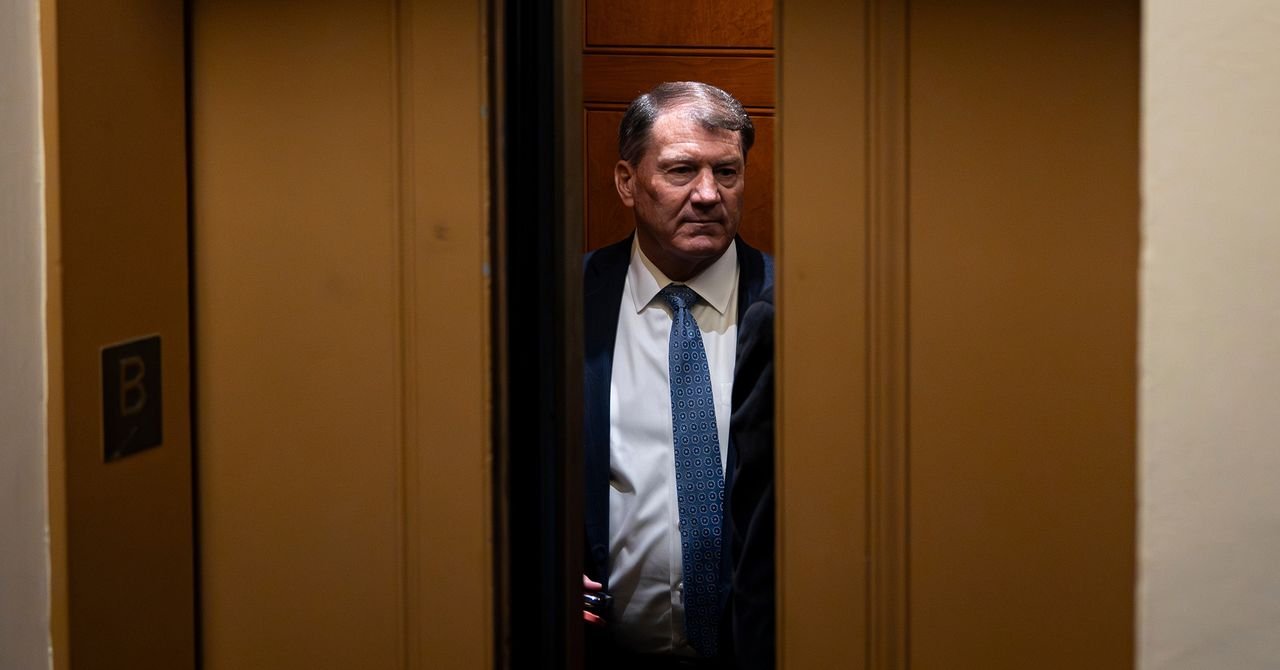

In a political landscape often dominated by high-stakes, tightly contested battles, a seemingly obscure Senate race in South Dakota has quietly become a significant battleground for the burgeoning artificial intelligence industry. Major super PACs, closely linked to prominent AI labs and investors, have injected nearly $1 million into incumbent Republican Mike Rounds’s campaign, a move that raises eyebrows given the race’s noncompetitive nature and the intensifying national debate over AI regulation.
The Unseen Hand of AI in South Dakota Politics
As the midterm elections loom, Senator Mike Rounds holds a comfortable lead against his independent challenger, Brian Beng, following the withdrawal of the Democratic candidate. Yet, this apparent electoral certainty hasn’t deterred powerful AI-affiliated groups from deploying substantial financial resources. This influx of cash signals a strategic, proactive effort by the AI sector to cultivate political allies and shape future legislative outcomes, even in races considered safely won.
A Flood of Funds for Senator Rounds
Rounds has emerged as a prime beneficiary of this strategic spending. Approximately $600,000 has flowed from outside groups, with the lion’s share originating from Defend American Jobs, a super PAC largely funded by a sister PAC financed by the influential venture capital firm Andreessen Horowitz. Beyond this, FEC filings reveal an additional $215,000 directly from employees and super PACs tied to leading AI labs, most notably Anthropic, alongside contributions from tech giants like Google and Microsoft.
Remarkably, Senator Rounds has garnered more financial support from these tech-aligned groups than from donors within his home state of South Dakota. This pattern underscores a deliberate strategy by AI firms to leverage their considerable financial power to influence critical policy discussions surrounding AI development and the vast data centers that fuel it.
Why South Dakota? The Strategic Play for AI Influence
Industry executives reportedly view Senator Rounds as a staunch advocate for the AI sector. This perception is crucial, as the next Congress is widely expected to prioritize AI regulation, making key supporters invaluable. The industry’s focus on securing allies reflects a broader concern: a perceived scarcity of sympathetic voices on Capitol Hill amidst growing public anxiety and a flurry of legislative proposals aimed at addressing AI safety and ethical concerns.
While a spokesperson for Senator Rounds did not respond to requests for comment, the broader intent of AI-related political spending was recently highlighted by Leading the Future. This super PAC, backed by OpenAI president Greg Brockman and investors Ben Horowitz and Marc Andreessen, announced a $2 million commitment to a roster of Senate Republicans supportive of the AI or crypto industries – a list that prominently featured Senator Rounds.
The Data Center Dilemma: A Local Battle with National Implications
The issue of AI regulation is not abstract in South Dakota; it’s already a tangible concern. Earlier this year, the state legislature passed a bill mandating that “hyperscalers” – large data center operators – shoulder a greater portion of the water and energy costs associated with their operations. This legislative action stems from a bitter internal Republican dispute over data centers, which saw lawmakers reject tax breaks for equipment and software, subsequently stalling a planned development by Applied Digital, a data center construction firm.
Senator Rounds ultimately endorsed these restrictions on data centers. This stance, however, exists alongside a notable connection: his senior aide and former chief of staff, Robert Skjonsberg, is a registered lobbyist for Meta, representing the company before the South Dakota legislature. While Meta operates numerous data centers, none are currently located in South Dakota. Rounds’s office, addressing this potential conflict, informed Politico that the Senate ethics committee found no conflict of interest after consultation with their general counsel.
The concerns voiced in South Dakota mirror a national sentiment. A recent Gallup poll revealed that seven out of ten Americans oppose new data center developments, primarily due to their significant consumption of water and energy resources, often subsidized by local communities.
A Harbinger of Future Political Engagements?
The substantial investment by AI-affiliated PACs in a low-profile Senate race serves as a powerful indicator of the industry’s growing political sophistication and its determination to proactively shape the regulatory landscape. As AI technology continues its rapid advancement, the financial influence wielded by its proponents in the halls of power is likely to intensify, making such seemingly minor electoral skirmishes crucial bellwethers for the future of AI governance.
For more details, visit our website.
Source: Link






Leave a comment