
The Universal Microcontroller Dilemma: Running Out of GPIO Pins
Every electronics enthusiast, hobbyist, or professional engineer has faced it: the dreaded moment when your favorite microcontroller, perfectly suited for your project, simply runs out of General Purpose Input/Output (GPIO) pins. It’s a common bottleneck, often emerging when space is at a premium, cost constraints are tight, or the thought of porting existing code to a new chip is simply unpalatable. Sometimes, it’s even an exciting engineering challenge – making more with less.
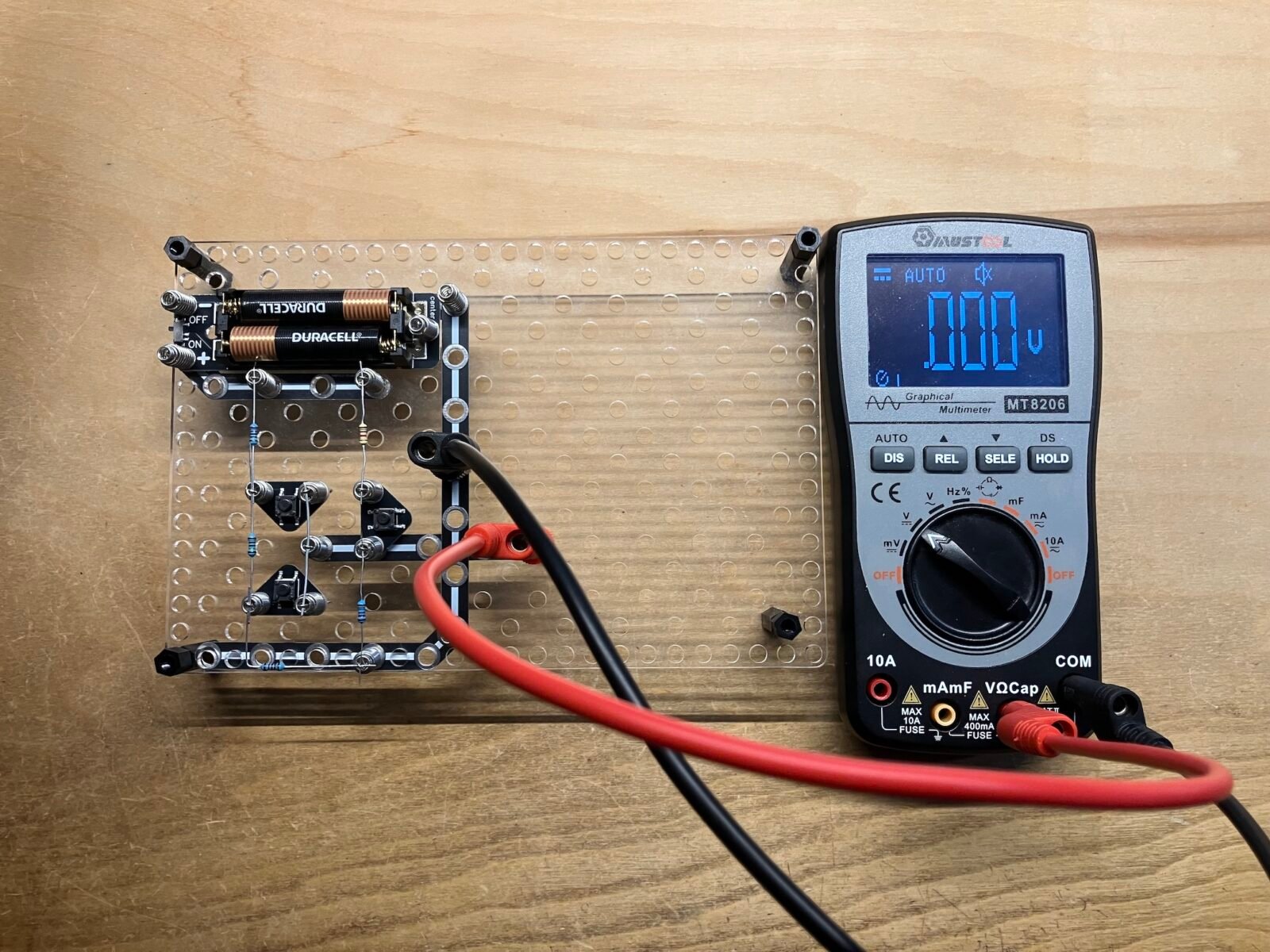
This exact scenario recently presented itself in a handheld device project. The requirement was to integrate six switches, but only two precious GPIO pins remained available. Adding to the complexity, the system needed to differentiate not just single button presses, but also simultaneous two-button combinations. For a device operated by thumbs, detecting diagonal inputs, for instance, by pressing two adjacent buttons on a D-Pad, is a natural and intuitive interaction.
The quest for a solution led to an exploration of existing methods, and ultimately, the discovery of a novel approach that, to my knowledge, hasn’t been widely published. This article will first review the conventional strategies for input multiplexing, highlighting their strengths and weaknesses, before setting the stage for more innovative solutions.
A crucial consideration for this particular application, and many small-scale embedded projects, was the flash memory footprint. Working primarily with compact microcontrollers like the ATtiny series, where flash memory might be as limited as 1KB or 2KB, a solution that conserves memory is always preferable, all other factors being equal.
Navigating Existing Solutions for GPIO Expansion
I2C Port Expanders: The Versatile but Demanding Choice
One of the most common methods for extending GPIO capabilities is through I2C port expander chips, such as the PCF8574 or MCP23008. These chips typically require just two microcontroller pins for the I2C interface, yet they can provide an additional 8, 16, or even more GPIO pins (e.g., MCP23017). Their scalability is impressive, allowing multiple expanders to share the same I2C bus by configuring unique addresses.
However, this versatility comes with trade-offs. An additional physical chip adds to hardware complexity and bill of materials. The I2C bus, while robust, operates at relatively modest speeds (typically 100kHz or 400kHz). Crucially for resource-constrained systems, an I2C library is often required, which can consume a significant amount of flash memory. In my own system, using a software I2C library in BASCOM AVR, reading an 8-bit port expander incurred an overhead of 190 bytes of flash memory. While hardware I2C implementations or existing library usage might mitigate this, for a standalone application needing only a few extra pins, this overhead, coupled with the slower speed and added hardware, proved to be an inefficient choice.
Shift Registers: Balancing Speed and Resource Use
Another popular chip-based solution involves shift registers. Chips like the 74HC165 (for 8 inputs) or 74HC595 (for 8 outputs) are widely used. A key distinction here is that, unlike I2C expanders, shift registers are typically dedicated to either inputs or outputs, not both simultaneously. Multiple chips of the same type can be daisy-chained to expand further.
A standard shift register interface requires three microcontroller pins: one for latching input values, one for the clock signal to shift data out, and one for the data itself. Ingenious techniques exist to reduce this to two pins (combining clock and latch with an RC-delay) or even a single pin (multiplexing the clock/latch line with the data line). Flash memory requirements for shift registers are generally lower than I2C, as there’s no complex protocol overhead – just a simple loop to clock out bits. They also tend to be faster than I2C. However, the 1-pin solution introduces its own complexities, including slower operation and increased code size.
Despite their advantages in speed and potentially lower flash footprint compared to I2C, shift registers still necessitate an additional physical component, a factor I aimed to circumvent if possible.
Matrix Keypads: Chip-Free, but Limited Savings
Forgoing an extra chip, a common approach is to arrange switches in a matrix. By scanning rows and columns, the microcontroller can determine which switches are closed. While this method eliminates the need for an external IC, its efficiency in terms of pin savings diminishes rapidly for a relatively small number of switches. For instance, connecting six switches in a matrix might still require more GPIO pins than desired, especially when considering the need for dual-press detection, which can complicate the scanning logic.
The Path Forward: Seeking Novel Efficiency
While existing solutions offer viable ways to expand GPIO, they often introduce compromises in terms of hardware complexity, speed, or crucial flash memory consumption. For projects with stringent resource limitations and specific input detection needs, a more elegant, chip-free, and memory-lean approach is highly desirable. The following section will delve into a novel solution that addresses these challenges, particularly for scenarios like the six-switch, two-pin, dual-press detection problem.
For more details, visit our website.
Source: Link