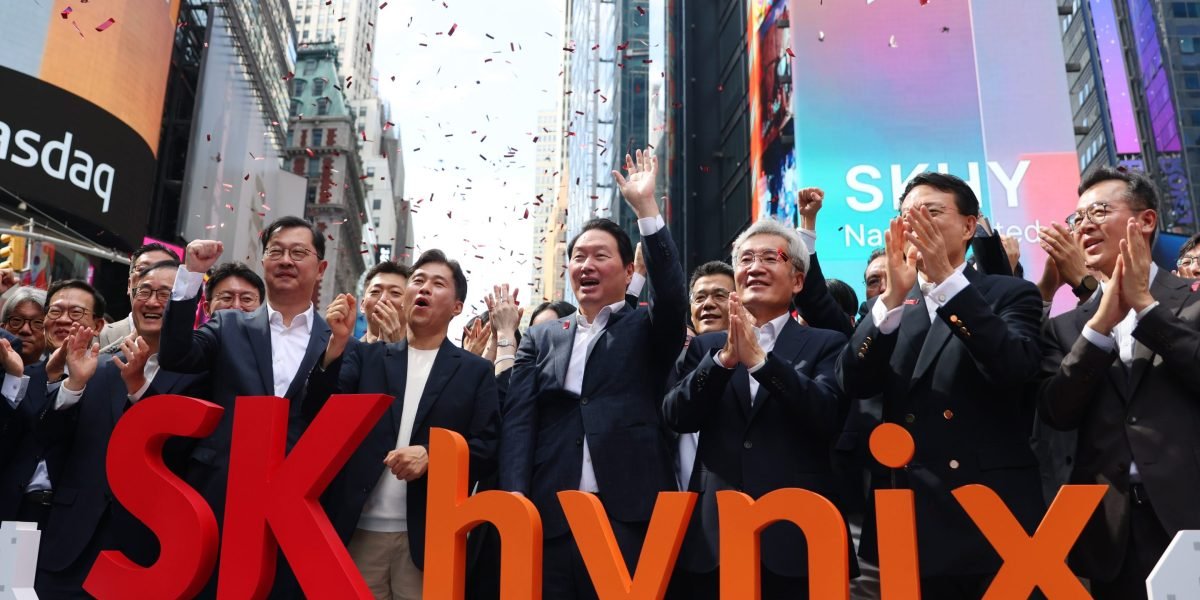

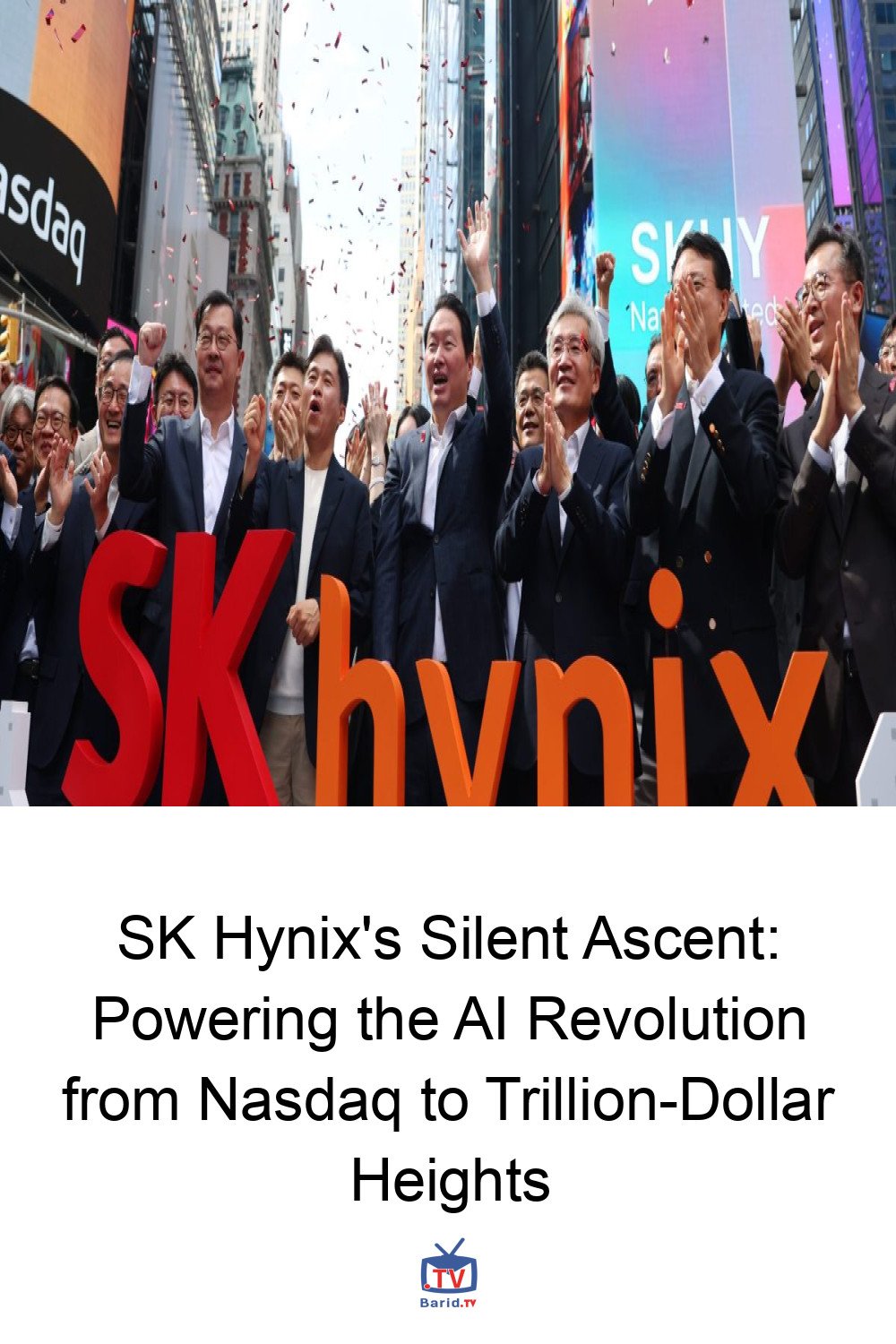
In a move that reverberated across global financial markets, SK Hynix, the world’s leading innovator in high-bandwidth memory (HBM), made a landmark debut on the Nasdaq. The South Korean semiconductor giant raised an astonishing $26.5 billion, marking the largest U.S. listing ever by a foreign company and the second-largest share sale in U.S. history, only surpassed by SpaceX’s recent $86 billion IPO. Shares soared 12.8% on their inaugural trading day, signaling robust investor confidence in a company that has quietly become the indispensable engine behind the burgeoning artificial intelligence boom.
The Unseen Engine of AI: High-Bandwidth Memory
The Nasdaq listing offers U.S. investors direct access to a pivotal player in the AI revolution. SK Hynix specializes in the advanced memory chips that are critical components within virtually every Nvidia processor, now commanding premium prices amidst a severe global shortage. SK Group Chair Chey Tae-won underscored the insatiable demand, telling CNBC, “We’ve announced plans to double production capacity within five years, but every customer says, ‘That’s still not enough—we need more’.” This unprecedented demand has propelled SK Hynix’s Korean-traded shares to a staggering 630% surge over the past year, pushing its market valuation beyond $1 trillion – a milestone only achieved by Samsung Electronics among Korean firms.
From Niche Product to Indispensable Core
The journey to AI dominance was not an overnight success. In 2013, SK Hynix, in collaboration with U.S. chip designer AMD, pioneered the world’s first high-bandwidth memory chip. At the time, HBM was a niche technology, yet SK Hynix demonstrated remarkable foresight, continuing to invest heavily in its development. This decade-long commitment proved prescient when the AI boom took hold, and processor manufacturers realized the critical need for HBM to efficiently train large language models at unprecedented speeds.
A Decade of Foresight: SK Hynix’s HBM Journey
HBM chips offer significantly greater bandwidth than conventional dynamic random-access memory (DRAM), making them perfectly suited for the intense processing demands of AI model training. Today, every major AI processor relies on HBM, with SK Hynix supplying the majority. The company proudly commands approximately 60% of the global HBM market by revenue. Chairman Chey Tae-won articulated this transformation in a recent book: “What I really wanted to accomplish when we acquired Hynix was to transform it from a commodity memory producer into a mainstream semiconductor company whose products are indispensable. If SK Hynix’s HBM is replaced with another product, the AI system may not function properly. What used to be a peripheral component has become a core component.”
Overcoming the “Korea Discount”
Despite its monumental success and profitability, SK Hynix, like many Korean conglomerates, has historically contended with the “Korea Discount.” This phenomenon sees Korean companies’ shares trading at a discount compared to their global counterparts, sometimes even below book value. For instance, U.S. chipmaker Micron Technology boasts a $1.1 trillion valuation, even though SK Hynix is demonstrably more profitable. Analysts often attribute this discount to the corporate governance practices of Korea’s family-controlled “chaebols,” which are perceived to prioritize group cohesion over direct shareholder returns.
A Troubled Past, A Trillion-Dollar Future
SK Hynix’s path to its current stature was fraught with challenges. Founded in 1983 as Hyundai Electronics, it faced severe headwinds during the 1997 Asian Financial Crisis. Forced consolidation led to its merger with LG Semiconductor, forming Hynix, which was burdened with substantial debt. The company endured multiple bailouts from creditors and the Korean government, was spun off by Hyundai in 2003, and operated independently for nearly a decade before being acquired by SK Group in 2012. This turbulent history underscores the remarkable turnaround and strategic vision that led to its present-day dominance.
The Nasdaq Gambit: Unlocking Global Value
SK executives are optimistic that the U.S. listing will help bridge the “Korea Discount” by attracting a broader base of global investors who might otherwise find the Korean market less accessible. HSBC analysts project that the listing of SK Hynix American Depository Receipts could boost the chipmaker’s valuation by up to 20%, reflecting the market’s recognition of its critical role in the global tech ecosystem.
A Pillar of the Korean Economy
SK Hynix’s financial performance is nothing short of spectacular. In 2025, the company reported a record 97.1 trillion won ($64.1 billion) in revenue, a significant increase from the previous year’s record. Its net income reached 42.9 trillion won ($28.3 billion), translating to an impressive 44% net profit margin. Beyond its financial might, SK Hynix has also become a crucial talent incubator for the semiconductor industry, exemplified by Intel’s recent appointment of Lee Seok-hee, SK Hynix’s former CEO, to lead its chipmaking Foundry division.
Driving the KOSPI’s Ascent
The company’s success is a major driver of the South Korean stock market. The KOSPI index has seen an extraordinary 135% rise over the past 12 months, making it one of the world’s top-performing markets. However, this rally is largely concentrated, with SK Hynix and Samsung Electronics together accounting for over half of the KOSPI’s total market capitalization. This concentration also contributes to the market’s inherent volatility, with the exchange’s circuit-breaker mechanism being triggered six times this year alone.
Beyond the Balance Sheet: Talent and Influence
SK Hynix’s influence extends beyond its balance sheet, shaping the future of global technology and demonstrating the power of strategic investment and innovation. Its journey from a struggling entity to an indispensable leader in the AI era serves as a powerful testament to its resilience and foresight.
For more details, visit our website.
Source: Link