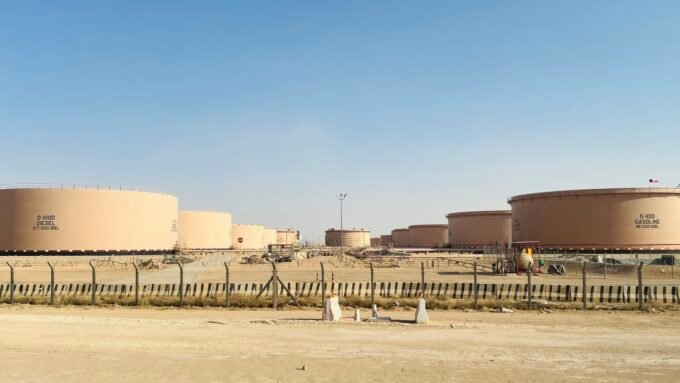

For over 100 days, the Strait of Hormuz, a vital artery for global oil shipments, has been effectively shut down. This unprecedented disruption, which the International Energy Agency has dubbed “the largest supply disruption in the history of the global oil market,” should, by all conventional wisdom, have sent crude prices skyrocketing. Yet, Brent crude hovers around $87.55 per barrel, remarkably close to pre-conflict levels. What explains this perplexing stability in the face of such a monumental blockade? The answer lies in a complex interplay of clandestine operations, strategic reserves, and a surprisingly resilient global market response.
The Shadowy Flow: Unraveling the ‘Dark Trade’
President Donald Trump’s recent assertion of a secret US mission moving 100 million barrels of oil through the blockaded Strait ignited an industry already grappling with a fundamental question: how much oil is truly getting out? The consensus among experts? No one knows for sure. “No one’s experienced this kind of disruption,” explains Matt Stanley, head of market engagement at Kpler, a leading commodity intelligence firm.
The opacity stems from what the industry terms the “dark trade”—vessels operating without their Automatic Identification System (AIS) transponders, navigating under the cover of night, often hugging the Omani border, and sometimes even benefiting from naval escorts. This clandestine activity makes precise tracking a formidable challenge.
Despite the secrecy, glimpses of this illicit flow emerge. Analysts can identify specific crude grades, like the UAE’s Murban, which can be exported via Fujairah, bypassing the Strait. However, the presence of Upper Zakum crude, which cannot, in other markets confirms that oil is indeed moving. The exact volume, however, remains shrouded in mystery. Stanley suggests that 100 million barrels making it through since May is plausible, but contextualizes it: “When you put into context, pre-conflict, it was about 20 million barrels a day that was going through, so five days worth of oil, in a normal traffic environment, and it’s taken over a month. 100 million barrels, it’s a good number, but it’s a relative drop in the ocean, literally, compared to previous traffic.”
Global Buffers: The Unsung Heroes of Price Stability
The real bulwark against an oil price explosion has been the strategic deployment of global reserves and the agility of alternative suppliers. World Trade Organization data paints a stark picture: a 95 percent reduction in crude oil shipments and a 99 percent drop in liquefied natural gas carriers from Arabian Gulf ports. Yet, the market has absorbed this shock.
China’s Strategic Cache
China, a colossal energy consumer, holds approximately 1.3 billion barrels in storage. Stanley notes that while their demand hovered around 7 million barrels a day from May to July, they were drawing down reserves at about a million barrels daily, a stark contrast to their 12.5 million barrels a day purchases in December. This strategic drawdown has significantly cushioned the blow.
New Supply Lines
Beyond China, major producers like the United States, Brazil, and Canada have stepped up, increasing their output to partially fill the void left by the Hormuz blockade. Analysts commend the market’s robust response. “The oil market responded to this outage significantly well in terms of cutting parts of demand,” says Iman Nasseri, managing director, Middle East of FGE NexantECA. He adds, “There is also a significant amount of stock that has come to market, but we doubt that they will continue to do that.”
The Looming Crisis: When Buffers Run Dry
While the market has shown resilience, this stability is not indefinite. Experts warn that these crucial buffers are finite. Stocks are rapidly approaching “operationally critical levels,” a point where stored oil and additional supply become insufficient to meet demand without replenishment. The US, currently acting as a swing producer, faces its own domestic demands as winter approaches, necessitating a prioritization of home heating needs over international supply.
The consensus is that the current equilibrium is precarious. “People looking at October, you really think that it would be sorted out by the middle of August,” Stanley observes, highlighting the market’s underlying hope for a swift resolution that may not materialize.
The Long Road to Recovery: Reopening and Rebuilding
Even if the Strait were to reopen tomorrow, the return to pre-blockade normalcy is a distant prospect. Global oil supply plummeted by 10.1 million barrels per day in March, with OPEC+ alone seeing a 9.4 million bpd month-on-month drop. The question isn’t just if supply comes back, but when and how much.
Estimates for restarting shut-down fields range from 10 weeks to seven months, according to S&P Global CERA. IEA executive director Fatih Birol paints an even grimmer picture, suggesting that with over 80 energy facilities damaged, recovery “could take as long as two years.” The UAE’s national oil company is even more pessimistic, projecting full Hormuz flows won’t resume until 2027.
Beyond physical infrastructure, the entire ecosystem supporting oil operations—from husbandry services and vessels to inspection agencies—may have withered due to lack of business. Stanley estimates it could take a minimum of three months just to reactivate these essential services.
The Paradox of Peace: A New Market Volatility
Counterintuitively, a rapid, clean resolution to the Hormuz blockade carries its own unique risks. If the global market has successfully diversified its supply, reducing its reliance on the Strait, a sudden reopening could trigger a new crisis: a price crash. “If oil isn’t at $200 because supply has been sourced from elsewhere, and then the strait reopens and all this oil is now available— prices are in danger of getting to $50,” Stanley cautions.
Countries like Iraq, starved of revenue during the blockade, would likely flood the market with exports the moment they can. This scenario could necessitate new forms of supply management, potentially leading to the formation of a “Middle East OPEC” to navigate the complexities of a post-blockade market. The second half of the year, it seems, will be dominated by discussions of supply management, regardless of the Strait’s status.
The Strait of Hormuz saga is a powerful testament to the intricate and often unpredictable dynamics of the global energy market. While the immediate crisis of soaring prices has been averted by a combination of ingenuity and strategic foresight, the long-term implications for supply, infrastructure, and international energy governance are only just beginning to unfold.
For more details, visit our website.
Source: Link