
The burgeoning world of real-world assets (RWAs) on the blockchain is poised for an explosive transformation, according to Carlos Domingo, CEO of Securitize. While tokenized U.S. Treasuries have dominated the RWA narrative recently, Domingo argues that tokenized stocks and exchange-traded funds (ETFs) hold the key to unlocking a staggering $5 trillion market, dwarfing the current $30 billion sector.
Unlocking Trillions: The Power of Tokenized Equities
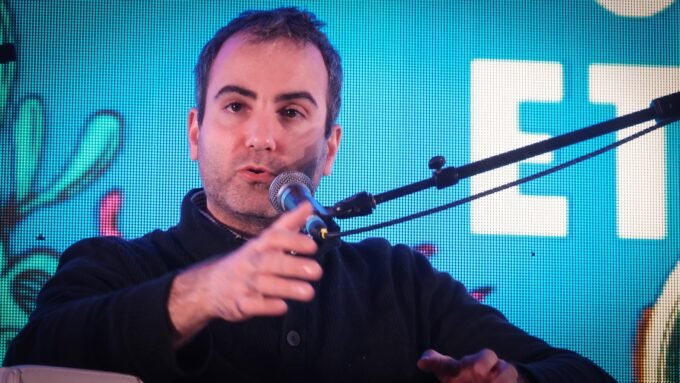
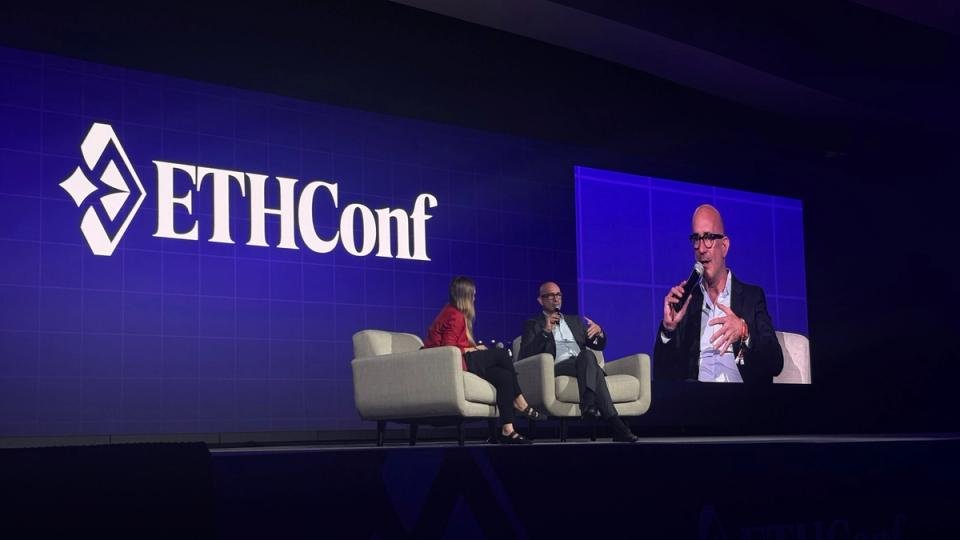
Speaking at a recent ETHConf panel in New York, Domingo laid out a compelling vision: integrating the vast global equities market onto public blockchains, particularly Ethereum. With the worldwide equities and ETF market valued at an estimated $150 trillion, even a modest shift of 2% to 3% onto the blockchain could inject $5 trillion into the burgeoning tokenized asset space.
This isn’t merely about digitizing existing assets; it’s about creating a fundamentally more efficient and accessible financial ecosystem. Securitize, a major institutional tokenization provider backed by BlackRock and preparing for its own public listing, is actively pursuing this future through partnerships with entities like the New York Stock Exchange and Computershare to facilitate on-chain trading and settlement of equities.
Beyond Synthetics: Defining True Tokenized Ownership
Domingo was quick to distinguish between what he considers “real” tokenized equities and many of the existing blockchain-based stock products available outside the U.S. He criticized offerings that rely on derivatives or synthetic structures, emphasizing that genuine tokenized equities must grant investors direct ownership, complete with voting rights and dividend entitlements, mirroring traditional share ownership.
The long-term objective is clear: blockchain-based securities should offer all the investor rights of conventional shares, while simultaneously leveraging the inherent advantages of decentralized networks. This includes instant settlement, 24/7 transferability, and seamless integration with decentralized finance (DeFi) protocols, promising a liquidity and efficiency paradigm shift.
Ethereum’s Role in Institutional Tokenization
Despite ongoing discussions around transparency and compliance, Domingo firmly believes that public blockchains, with Ethereum at the forefront, are the optimal infrastructure for institutional-grade tokenization. Securitize itself employs smart contracts to ensure that ownership is restricted to approved investors, all while operating on permissionless networks, balancing regulatory needs with blockchain’s core tenets.
A Parallel Evolution: The Future of Finance
Looking ahead, Domingo envisions a future where blockchain-based markets don’t immediately replace traditional financial infrastructure but rather evolve alongside it. “The traditional markets are going to stay,” he affirmed, predicting the emergence of “a new market… in parallel that will run on blockchain rails and be much more efficient.” This parallel development suggests a gradual absorption of activity, leading to a more robust and interconnected global financial landscape.
For more details, visit our website.
Source: Link