
The ‘Made in USA’ Promise: A Closer Look at the Trump Phone’s Origins
Almost a year after its initial announcement, the Trump T1 Phone has finally begun reaching a select few, sparking renewed interest and scrutiny. While initially marketed with bold claims of being “designed and built in the United States,” the reality, much like with other Trump-branded products, tells a different story. This investigation delves into the shifting narratives surrounding the T1 Phone’s manufacturing and the formidable challenges of producing a smartphone entirely on American soil.
From Grand Claims to Careful Phrasing: The FTC’s Influence
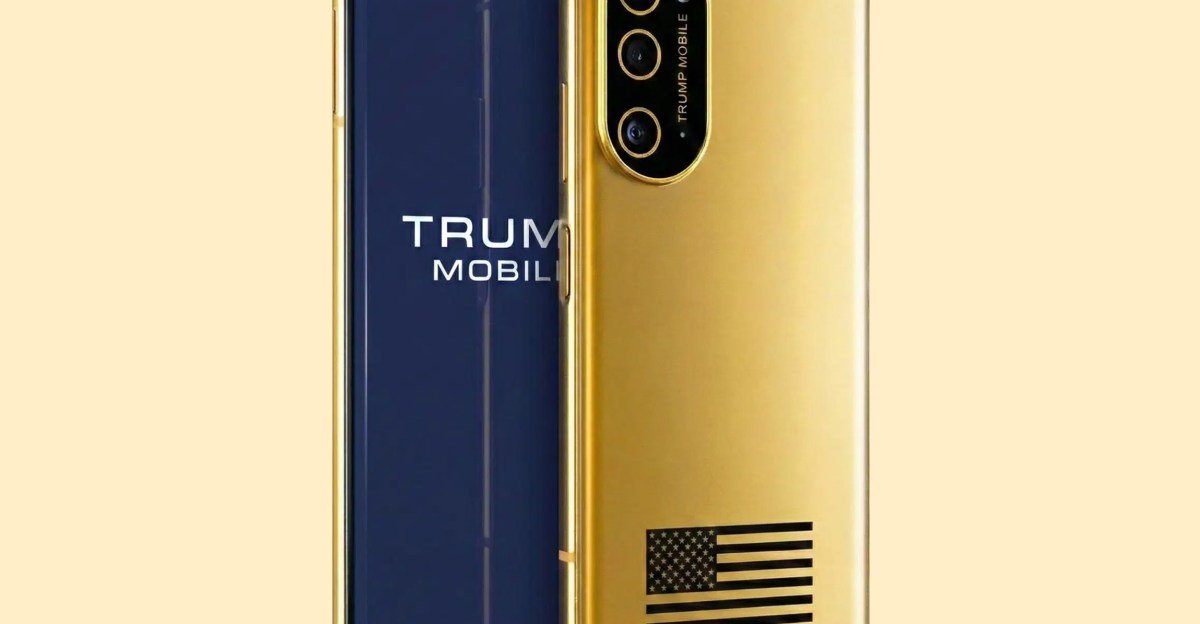
When Trump Mobile first unveiled the T1 Phone in June 2025, the announcement was riddled with peculiarities. A clunky name, “T1 Phone 8002 (gold version),” an incomprehensible spec sheet featuring a “5,000mAh long life camera,” and a series of missed release dates all raised eyebrows. Yet, the most significant claim – that the phone was “designed and built in the United States” – quickly became the focal point of skepticism.
It wasn’t long before the company’s website quietly underwent a significant revision. Within two weeks, the explicit “made in the USA” declarations were largely scrubbed, replaced by more ambiguous phrases like “proudly American,” “American hands behind every device,” and “shaped by American innovation.” This strategic shift wasn’t arbitrary; it was a direct response to the stringent regulations enforced by the Federal Trade Commission (FTC).
The FTC’s “Made in USA” standard is clear: for a product to bear this label, “all significant processing” must occur domestically, and “all or virtually all” components must originate from the US. Given that the vast majority of smartphone components are manufactured in Asian powerhouses like China, India, and Southeast Asia, meeting this benchmark for a modern smartphone is an almost insurmountable hurdle.
The Nuance of ‘Assembled in USA’
Trump Mobile executives, Don Hendrickson and Eric Thomas, acknowledged the regulatory pressures in a February interview. While they initially claimed “made in America” was merely a “goal,” they conceded that explicit claims had indeed appeared on the website. Thomas candidly admitted, “If we’re going to build everything in America, it is going to cost more money.”
Consequently, the company has adopted a more cautious stance. CEO Pat O’Brien recently stated that the T1 is “proudly assembled in the US.” Hendrickson and Thomas clarified that “final assembly” takes place in Miami, involving the integration of “let’s say 10 parts.” While the FTC also regulates “assembled in US” claims, the bar is considerably lower and less defined. It requires “principal assembly” to be “substantial,” going beyond “simple screwdriver assembly,” yet still leaves ample room for interpretation.
The Unyielding Reality: Why US Phone Manufacturing Remains a ‘Miracle’
Beyond the marketing lexicon, the fundamental question persists: why isn’t the Trump phone, or indeed most smartphones, fully manufactured in the US? The consensus among industry experts is stark: the United States currently lacks the comprehensive infrastructure required for large-scale phone production.
Infrastructure and Expertise Gap
Building a smartphone from scratch demands an intricate ecosystem of specialized equipment, highly skilled engineering expertise, and an immense volume of affordable labor – resources that are simply not available at scale in the US. Keith Cochran, who worked on iPhone manufacturing at Jabil (an Apple supplier), highlights the “tremendous” volume of people required. Smartphone manufacturing is a notoriously low-margin business, making it difficult for companies to absorb the significantly higher labor costs associated with US employees. As Cochran succinctly puts it, “You’re being asked to build some of the hardest things in the world to build, with the most precision that you can imagine, at peanuts.”
Equipment and Supply Chain Challenges
Even if the labor cost issue could be magically resolved, the physical infrastructure is a major impediment. Hendrickson himself admitted that “some of the manufacturing equipment that’s required for the phone doesn’t exist in the US. No one has purchased it and brought it here.” While some US companies do produce components like touchscreens and batteries, these are often for bulky manufacturing or specialized industrial applications, not the high-volume, miniaturized components required for modern smartphones.
The global supply chain for electronics has been meticulously developed over decades, primarily concentrated in Asia, offering unparalleled efficiency, specialization, and cost-effectiveness. Replicating this complex web of suppliers, fabricators, and assemblers in the US would require monumental investment and time, making full domestic production a distant, if not impossible, dream for most consumer electronics, including the Trump T1 Phone.
For more details, visit our website.
Source: Link