
The Unfolding Saga of Dell, Trump, and a $9.7 Billion Contract
In a narrative that intertwines high-stakes politics with unprecedented corporate success, Michael Dell, CEO of Dell Technologies, appears to have strategically positioned his company for significant gains during the Trump administration’s second term. This week, Dell Technologies secured a colossal $9.7 billion Pentagon contract, providing a suite of software to the U.S. military. This award comes as Dell’s stock has been on an extraordinary ascent, fueled by robust revenue growth and a burgeoning presence in the AI server market.
The confluence of political engagement and financial triumph has sparked considerable discussion, raising questions about the evolving dynamics between big business and the White House.
Courting the White House: A Strategic Engagement
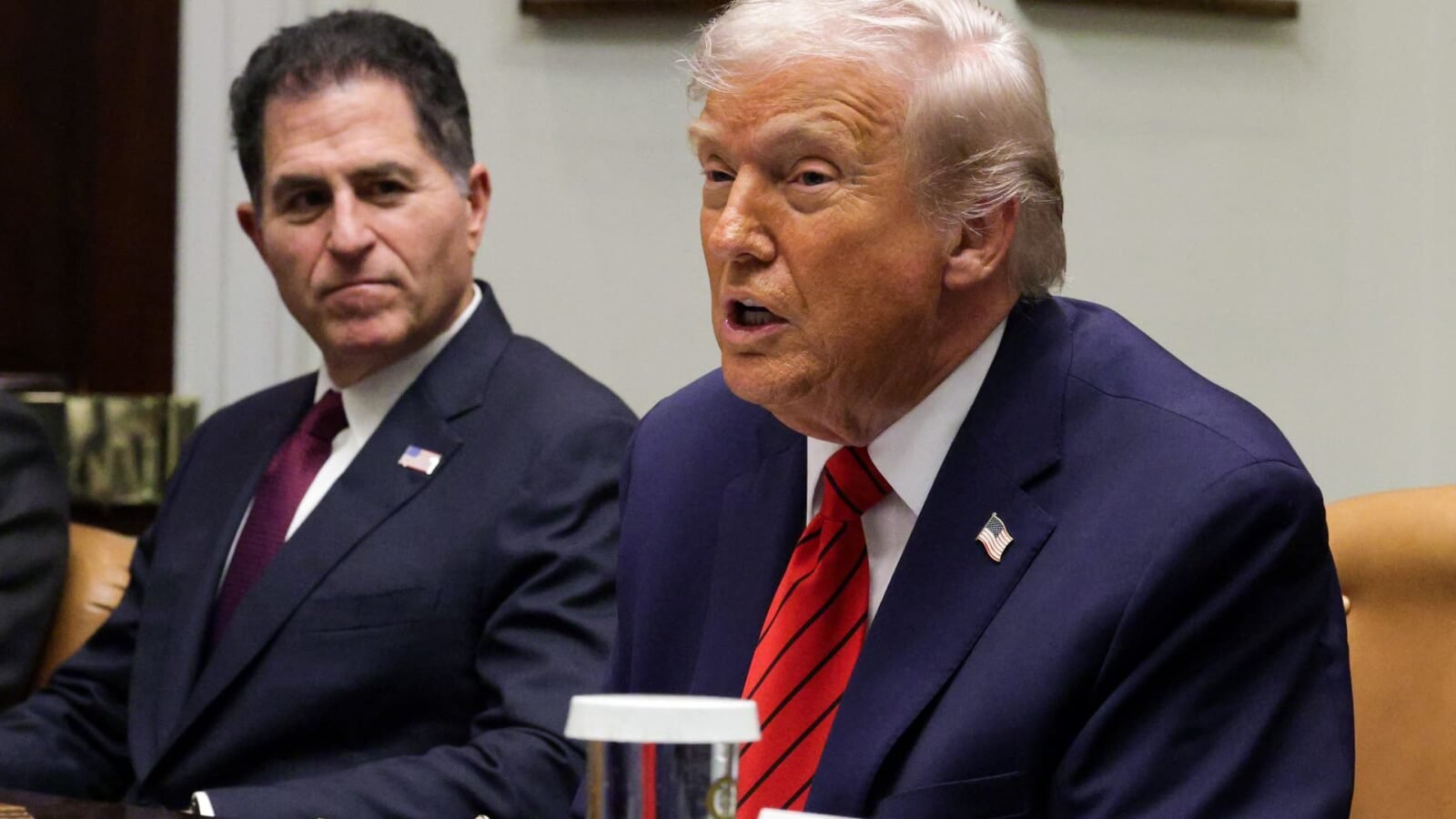
Michael Dell’s proactive engagement with President Donald Trump’s second term began early, marked by several high-profile interactions. In June 2025, Dell attended Trump’s ‘Invest America Roundtable’ event. Later that year, in December, Trump personally introduced Michael and Susan Dell as they announced a substantial $6.25 billion gift for 25 million U.S. children’s ‘Trump Accounts’. The president even publicly endorsed the company, advising Americans to “go out and buy a Dell.”
The $9.7 Billion Pentagon Deal: A Closer Look
The recent $9.7 billion contract awarded to Dell Federal Systems, the company’s government-focused division, by the Pentagon has inevitably drawn scrutiny. While the Pentagon asserts the award followed a competitive process, experts in government oversight are questioning the timing and implications of the deal, particularly in light of the ‘Trump Accounts’ donation.
Greg Williams, director of the Center for Defense Information, part of the Project on Government Oversight, minced no words: “It looks terrible is the short answer.” He suggests that publicly courting contributions to presidential projects creates a strong perception of soliciting favors in exchange for access or favorable outcomes. Megan Tompkins-Stange, an associate professor at the University of Michigan’s Ford School of Public Policy, highlighted the unusual nature of the direct donation: “What’s new here is they’re not giving through an intermediary or through a nonprofit… Instead, they are giving directly to this branded initiative with Trump’s name.” This dynamic, she notes, deviates from traditional norms of corporate philanthropy and White House lobbying.
Dell’s Market Dominance: Beyond Political Favors
Even prior to the Pentagon announcement, Dell Technologies was experiencing a remarkable surge. The company’s stock has nearly tripled in the past year, pushing its market capitalization beyond $200 billion. This financial momentum is largely attributed to impressive operational performance and strategic market positioning.
The AI Catalyst: Fueling Unprecedented Growth
Dell’s recent financial reports reveal staggering growth, particularly in its AI server segment. The company reported a nearly 40% year-over-year revenue increase, the fastest pace since its 2018 return to the public market. Executives pointed to “neoclouds” acquiring Dell’s servers, equipped with graphics processing units essential for generative artificial intelligence models, as a primary driver. This led to an astounding 342% jump in AI server sales, with overall earnings increasing by 47%.
The latest quarterly results further underscore this trajectory, with total revenue surging almost 88% and AI server revenue spiking an incredible 757%. This propelled the stock to a 39% gain in extended trading, reaching $441.56.
Presidential Portfolio: Trump’s Dell Investments
Adding another layer to this complex story, government ethics filings indicate that President Trump himself purchased between $1 million and $5 million in Dell shares on February 10, when the stock closed at $126.01. He made additional, smaller purchases in March. If these shares were held, Trump would be sitting on a paper profit potentially ranging from $1.5 million to $7.5 million. The Trump Organization maintains that the president’s accounts are managed by third-party financial institutions without his input, while the White House states his assets are in a trust managed by his children.
A New Era of Corporate-Political Interplay?
The Dell Technologies saga serves as a compelling case study in the modern intersection of corporate strategy, political influence, and market performance. While Dell’s financial success is undeniably driven by technological innovation and market demand, its proactive engagement with the Trump administration and the subsequent multi-billion dollar government contract raise pertinent questions about the evolving landscape of corporate-political relations and the perception of fair play in public procurement.
For more details, visit our website.
Source: Link