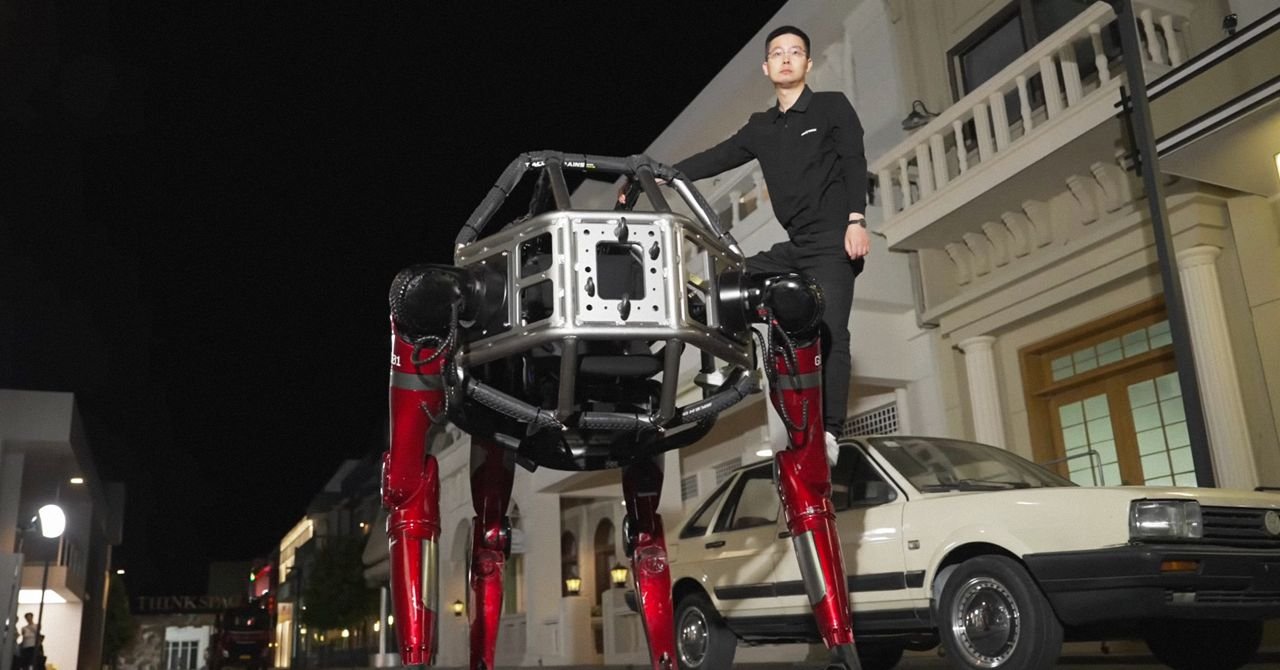

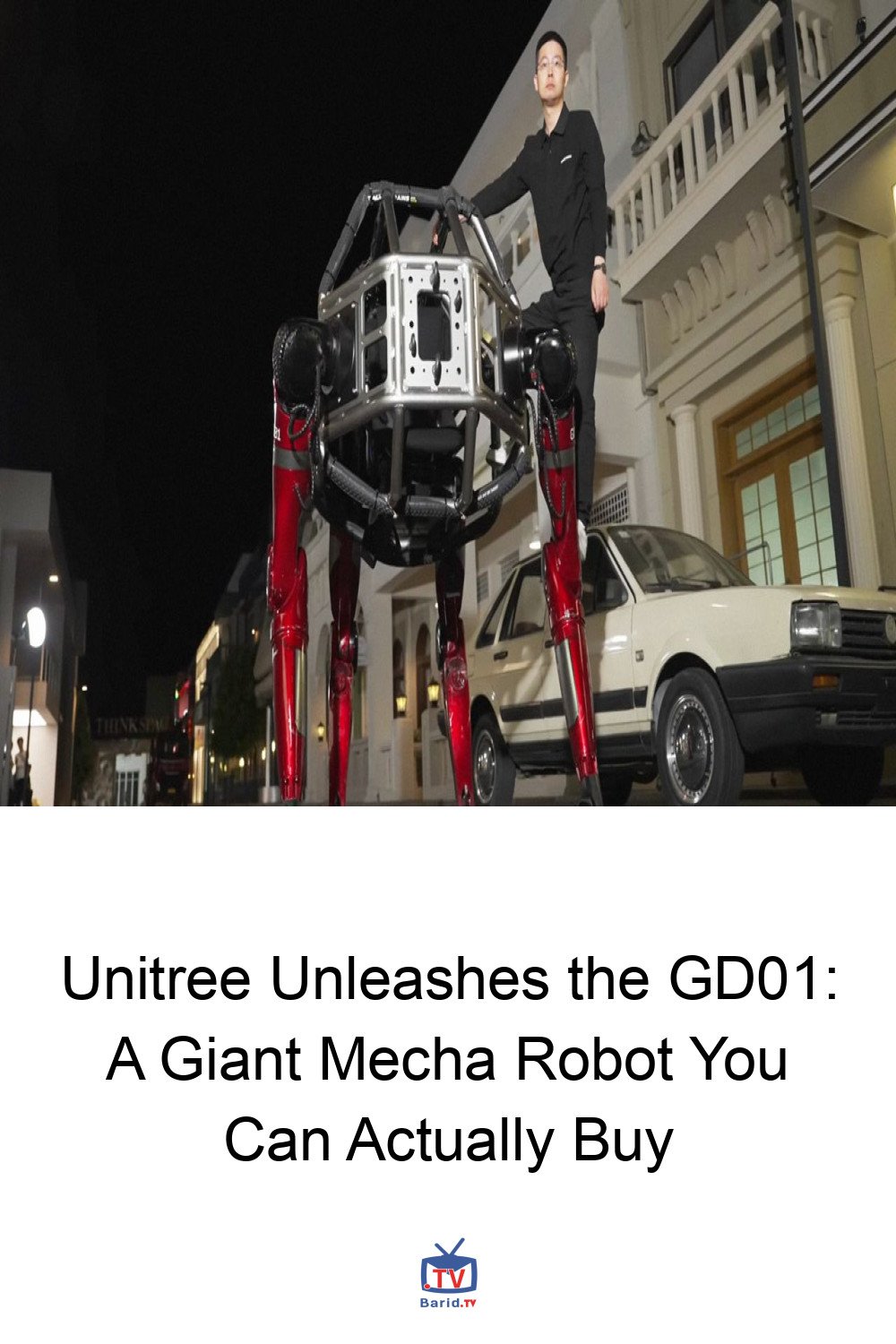
Unitree, the Chinese robotics innovator celebrated for its charming and budget-friendly dancing robots, has just unveiled a creation that marks a dramatic departure from its usual fare. Meet the GD01: a colossal, walking, crawling, transforming, and unapologetically wall-smashing “mecha” that isn’t just a concept – it’s a product you can actually purchase.
The GD01’s Grand Entrance
The GD01’s introduction video is nothing short of cinematic. Set to a thunderous rock guitar soundtrack, it features Unitree’s founder and CEO, Xingxing Wang, not just interacting with the robot but climbing into its expansive, open-air cockpit. A playful yet poignant disclaimer accompanying Unitree’s social media post urges users: “Please everyone be sure to use the robot in a Friendly and Safe manner.”
Despite the safety prompt, the video quickly showcases the GD01’s less-than-friendly capabilities. Without a human pilot, the mecha effortlessly demolishes a cinder block wall, demonstrating its raw power. Later, the red-limbed behemoth contorts into a crab-like crawl, bending backwards with an operator lying prone inside – a testament to its surprising agility, even if the pilot’s view is limited to the sky.
Unitree: A Robotics Powerhouse
From Agile Humanoids to Mecha Giants
Based in Hangzhou, China, Unitree has rapidly ascended as a leading robotics startup. The company has already carved out a niche, producing some of the world’s most popular four-legged and humanoid robots. Their G1 humanoids are a common sight in viral social media clips, showcasing impressive dance routines, acrobatics, and even kung-fu moves. The GD01 represents their audacious first venture into the realm of giant mechas, a move confirmed by Unitree to WIRED as a genuine product for sale, not an elaborate stunt.
Unitree’s remarkable success is largely attributed to the affordability of its robots. A G1 model, for instance, can be acquired for approximately $15,000 – a fraction of the cost of comparable US-made humanoid robots, which can command ten times that price. This competitive edge stems from the company’s profound mastery of China’s extensive and intricate hardware supply chain, enabling them to construct robots cost-effectively. Furthermore, Unitree’s hardware is designed for ease of configuration, making it a preferred platform for researchers deploying AI programs.
Synchronized Futures and Public Offerings
With an anticipated public offering this year, Unitree is undeniably a rising star in the Chinese tech landscape. Their robots recently captivated audiences at a televised spring festival event, performing synchronized parkour and martial arts. These routines highlighted a sophisticated new capability: numerous robots wirelessly communicating to achieve tightly synchronized movements, showcasing advanced coordination.
The GD01’s True Purpose: Destruction and Distinction
While Unitree’s existing robots are typically either remotely controlled or execute relatively simple autonomous actions, and their humanoids, though agile, lack the advanced AI for complex real-world tasks, the GD01 appears to serve a different, more primal purpose. Its design seems overtly geared towards destruction and, perhaps more importantly, generating unprecedented publicity for the Unitree brand.
In an era where AI companies are minting new millionaires and billionaires, the GD01 presents an unparalleled opportunity to flaunt newfound wealth. Why settle for a luxury car or an exclusive timepiece when you can make an unforgettable entrance in a personal mecha? Imagine smashing your way into the office – a truly unique statement of AI-fueled affluence.
For more details, visit our website.
Source: Link