

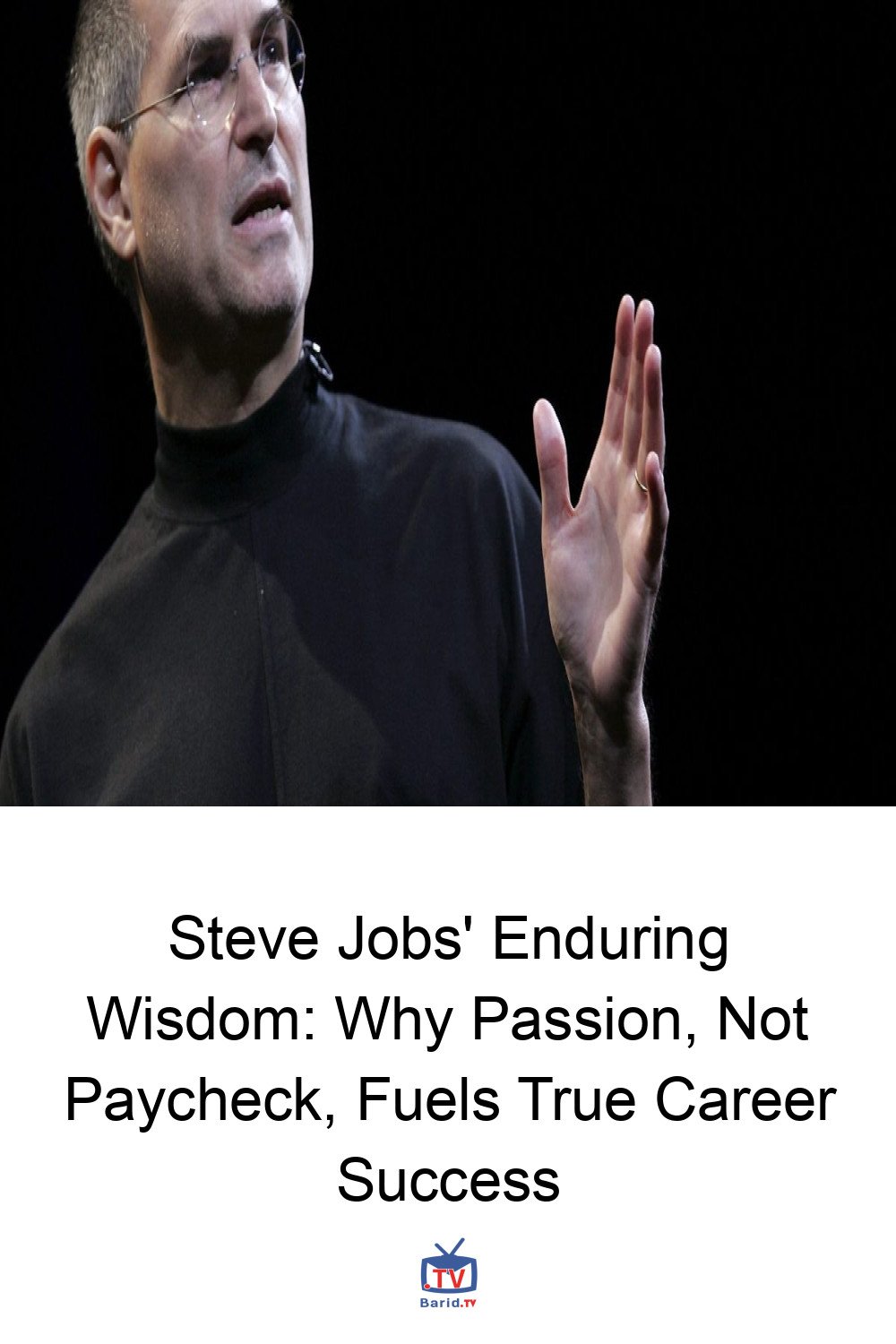
Steve Jobs: The Unyielding Pursuit of Passion in a $4 Trillion Empire
More than four decades after its initial public offering, Apple stands as a titan, valued at an astounding $4 trillion. Yet, the journey to this zenith was anything but linear, marked by near-bankruptcy and the dramatic ousting of its visionary co-founder, Steve Jobs. What propelled Jobs through these tumultuous periods, ultimately setting the stage for Apple’s monumental resurgence? His answer, shared with students during a pivotal 2005 Stanford commencement speech, was disarmingly simple: the profound importance of loving your work.
“Your work is going to fill a large part of your life, and the only way to be truly satisfied is to do what you believe is great work. And the only way to do great work is to love what you do,” Jobs declared. His message resonated then, and it echoes powerfully today: “If you haven’t found it yet, keep looking—and don’t settle. As with all matters of the heart, you’ll know when you find it.”
In an era where Gen Z grapples with career uncertainties, facing rapid disruption from AI and the shifting landscape of once-lucrative professions, Jobs’ narrative serves as a potent reminder. It underscores that a career built on genuine passion is not merely a luxury but the very blueprint for enduring success, especially when a professional life can span nearly five decades.
The Odyssey of a Visionary: From Ousting to Resurgence
Steve Jobs’ professional life was a tapestry woven with diverse and successful ventures, including the groundbreaking Pixar Animation Studios and the innovative software company NeXT. However, Apple remained his ultimate brainchild, the canvas for his most profound impact. He steered the company through countless iterations, orchestrating the creation of products that would define generations.
A Legacy of Innovation Across Generations
- 1977: Baby boomers eagerly queued for the revolutionary Apple II computer.
- 2001:
Millennials embraced the iPod classic, transforming music consumption.
- 2010s: Gen Z received their first iPhones, ushering in a new era of connectivity.
Today, Apple appears an unshakeable force, a perennial fixture on the Fortune 500, having sold over 3 billion iPhones. Yet, its ascent was fraught with challenges. In 1985, Jobs, the very co-founder of this industrial behemoth, was forced out by then-CEO John Sculley, casting his career into an unforeseen flux.
Reflecting on this period, Jobs described it as one of the “most creative periods” of his life, giving birth to NeXT and revitalizing Pixar. But the gravitational pull of Apple, which he famously called “the best thing that ever happened to [him],” proved irresistible. He returned as CEO in 1997, guiding the fledgling company back from the brink and remaining at the helm until just two months before his passing in October 2011.
“Sometimes life hits you in the head with a brick. Don’t lose faith,” Jobs advised. “I’m convinced that the only thing that kept me going was that I loved what I did. You’ve got to find what you love.”
Beyond Billions: The True Measure of Jobs’ Devotion
Despite amassing a fortune estimated at $10.2 billion at the time of his death, Jobs consistently emphasized that his ambitions transcended mere financial gain. Apple’s transformation into a trillion-dollar innovator was, in large part, a testament to his unwavering devotion to its products—a lifelong love affair with technology ignited in his eager tween years.
“I was worth about over $1 million when I was 23, and over $10 million when I was 24, and over $100 million when I was 25,” Jobs recounted to PBS in 1996. “And it wasn’t that important, because I never did it for the money.”
The ubiquity of iPhones and MacBooks today might not exist were it not for Jobs’ audacious commitment to his craft. At just 12 years old, he took a monumental leap of faith, tracking down Hewlett-Packard co-founder Bill Hewlett in the yellow pages to request spare parts for a frequency counter. What he received was far more valuable than nuts and bolts: an offer for a gig at the iconic tech company, a launchpad that would shape his future dominance in the industry.
The Power of Asking: Jobs’ Simple Secret to Progress
Jobs’ path to greatness was paved by his courage to try, and crucially, his willingness to ask for help. “I never found anybody that didn’t want to help me if I asked them for help. I always call them up,” he shared in a 1994 interview. “I’ve never found anyone who says no, or hung up the phone when I called. I just asked.”
He lamented the common reluctance to reach out: “Most people never pick up the phone and call. Most people never ask…You’ve got to be willing to crash and burn with people on the phone, with starting a company, with whatever. If you’re afraid of failing, you won’t get very far.”
Steve Jobs’ legacy is a powerful testament to the transformative potential of passion, resilience, and the simple act of seeking guidance. His journey reminds us that true satisfaction and monumental success stem not from avoiding failure, but from an unyielding pursuit of what you love, no matter the obstacles.
For more details, visit our website.
Source: Link