

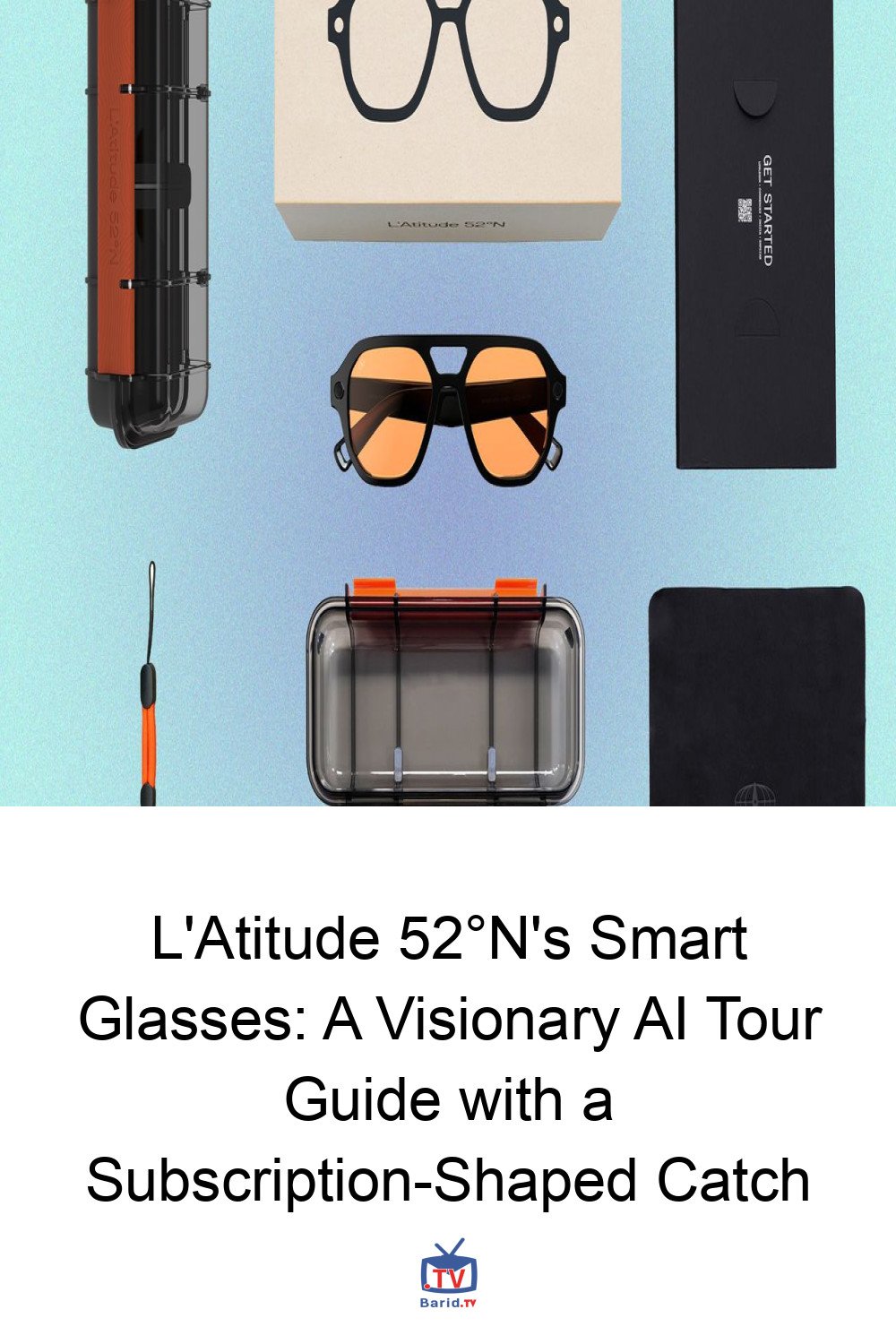
A New Frontier in Wearable Tech: L’Atitude 52°N’s Smart Glasses
The landscape of smart glasses is rapidly evolving, with artificial intelligence increasingly becoming their beating heart. Enter L’Atitude 52°N, a Berlin-based startup founded by Gary Chen, an industry veteran with a pedigree from Oppo, OnePlus, and HTC. His latest venture promises to redefine travel and cultural exploration through a pair of sleek smart glasses, but a closer look reveals a significant caveat: a subscription model for its most compelling AI features.
Meet Goya: Your Personal AI Connoisseur
At the core of L’Atitude 52°N’s offering is Goya, an AI assistant named after the celebrated Spanish artist, Francisco Goya. Designed with the modern traveler in mind, Goya acts as an intelligent tour guide, ready to enrich your museum visits and sightseeing adventures. Imagine pointing your glasses at a masterpiece and simply asking, “Hey Goya, what is the story about Mona Lisa?” The AI, powered by Google’s Gemini, can analyze its surroundings through the integrated camera and provide instant, insightful commentary. Beyond art, Chen hints at broader capabilities, “It can also give you some recommendations about restaurants,” he notes, suggesting a versatile companion for any journey.
From Kickstarter Triumph to Launch Day Hurdles
L’Atitude 52°N burst onto the scene with a successful Kickstarter campaign in September 2025, easily surpassing its funding goal and raising over $400,000. However, the journey hasn’t been without its bumps. Initial shipments, slated for February 2026, faced delays, and one model was even scrapped. Now, the company has set an official release for its “Berlin” model, with preorders commencing on May 19 and general sales beginning May 26. This timeline, however, may disappoint early Kickstarter backers who were promised April 15 shipping for Berlin units and June 7 for the “Milan” model, which still awaits an official launch date beyond “second quarter of 2026.”
The Price of Innovation: A Hidden Subscription
The “Berlin” glasses are priced at $399, with an additional $50 for photochromatic lenses. While competitive, the real cost emerges after the first year. L’Atitude 52°N refers to its AI capabilities as an “AI feature trial,” lasting only 12 months. Post-trial, users must subscribe to continue accessing these advanced features, or be relegated to basic functionalities like music playback and media capture.
An Undecided Future for AI Pricing
The crucial question of the subscription’s cost remains unanswered. Chen admits, “Right now, we don’t have a final plan for the subscription.” He suggests pricing will be determined roughly six months after initial sales, based on user behavior. “If you go to the British Museum, you can buy a tour guide, maybe $3,” Chen explains, hinting at a tiered approach where “most of the features will still be free,” but “some more advanced features, we will plan to charge.” This reliance on post-purchase data to formulate a pricing strategy could leave early adopters feeling uncertain about their long-term investment.
Specs and Competition: Measuring Up Against Meta
L’Atitude 52°N aims to carve out its niche against market leader Meta. The Berlin glasses boast a 12-megapixel wide-angle camera (107-degree view) capable of 1080p video recording, though Meta’s latest Ray-Ban and Oakley models offer superior 3K video. With 32 GB of onboard storage, open-ear stereo speakers, and microphone arrays for “Hey Goya” voice commands, the Berlin offers a robust feature set. Available in “obsidian” and “dune,” with gradient or photochromatic lenses, they present a stylish alternative. However, the core AI functionality – pointing a camera at an object for information – isn’t entirely novel, with phone apps like Google Lens and existing smart glasses from Meta and upcoming Android XR devices already demonstrating similar capabilities.
Prioritizing Privacy in Wearable Technology
Privacy is a key consideration, and L’Atitude 52°N has implemented features such as an indicator light at the temple that flashes during recording or photo capture. The company assures users that captured media is offloaded to a connected phone app and not stored in the cloud. While “some user interactions may generate cloud records,” these are explicitly stated to be anonymous. This commitment to local storage offers a degree of reassurance, though the effectiveness of such measures in practice often faces scrutiny, as seen with other smart glasses.
The Lingering Question of Value
Gary Chen’s vision for travel-centric smart glasses is compelling, offering an immersive and intelligent way to explore the world. Yet, the 12-month “AI feature trial” casts a long shadow over this promise. If the very features that distinguish these glasses – the AI tour guide capabilities – become a recurring expense after just one year, users may feel that the initial investment of $399 (plus $50 for photochromatic lenses) is merely an entry fee to an ongoing, and as yet undefined, subscription. The success of L’Atitude 52°N will ultimately hinge on how it balances innovation with transparent, sustainable value for its customers.
For more details, visit our website.
Source: Link