



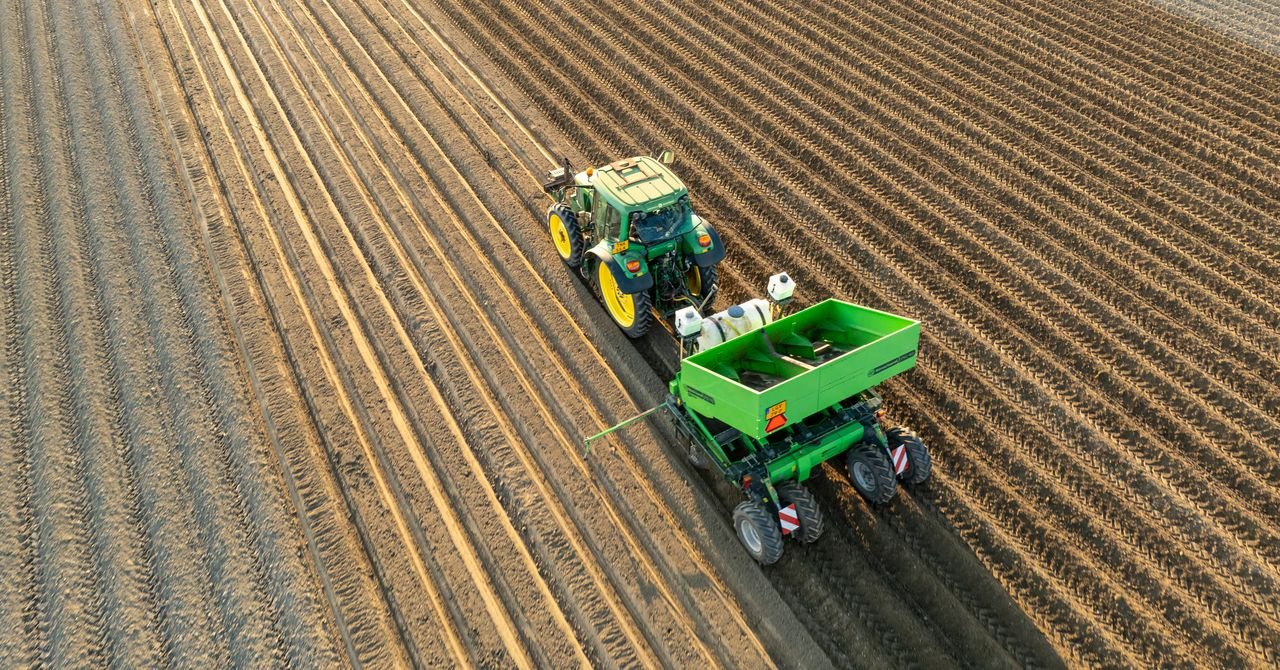


In a significant development for agricultural communities and the burgeoning ‘right-to-repair’ movement, farming equipment giant John Deere has agreed to a $99 million settlement. This payout addresses a class-action lawsuit brought by its customers, who accused the company of stifling competition and monopolizing the repair market for its iconic green machinery.
A Victory for Farmers, But What Does it Mean?
The settlement, announced Monday, will establish a fund to compensate Deere equipment owners who can demonstrate they paid for dealership repairs since 2018. Crucially, beyond the financial restitution, John Deere has also committed to making repair tools and services more broadly accessible for at least the next decade. This marks a notable shift from its previous stringent control over equipment diagnostics and fixes.
The Roots of the Conflict: Control and Cost
For years, John Deere maintained a tight grip on how its customers could maintain their equipment. Software restrictions and mandates to use approved dealerships for repairs left thousands of farmers vulnerable to costly delays, resulting in delayed harvests and millions in lost profits. This restrictive approach fueled widespread frustration and became a flashpoint for the broader right-to-repair movement.
Farmers, driven by necessity, resorted to hacking their own tractors to circumvent software locks. Concurrently, legislative efforts emerged in agricultural strongholds like Iowa, aiming to restore control to equipment owners. The legal landscape has also been active, with numerous similar lawsuits against Deere, including a significant one filed by the US Federal Trade Commission in January 2025.
Beyond the Dollars: The Fight for Ownership Rights
Ethan E. Litwin, an antitrust lawyer at Shinder Cantor Lerner, emphasizes that this isn’t just about repair; it’s about fundamental ownership. “Right-to-repair is almost a misnomer,” Litwin states. “This is the fight about ownership rights. What the farmers alleged is that John Deere changed the rules on them once they purchased their tractors and other farming equipment. How can a manufacturer legitimately claim to restrain those rights post-sale?”
Litwin also points to the curious $99 million figure, a common psychological pricing tactic. “Clearly that was the maximum that Deere was willing to go because they didn’t want to have a nine-figure number in the press release,” he explains, highlighting the significant PR difference between $99 million and $100 million.
A Fraction of the Estimated Damages
While $99 million is a substantial sum, it pales in comparison to the estimated losses incurred by farmers. Repair advocates suggest John Deere’s restrictions have cost customers approximately $4.2 billion. Antitrust economist Russell Lamb, involved in the lawsuit, estimated overcharging for repairs alone cost farmers between $190 million and $387 million. The settlement, therefore, represents only a fraction of these damages, to be distributed among an estimated 200,000 farmers.
Nathan Proctor, head of the right-to-repair campaign at US PIRG, underscores that the financial payout isn’t the primary motivator for farmers. “They’re not looking for five grand or something like that in the mail,” Proctor says. “They’re looking for the ability to fix their equipment, because if they can’t fix it, they can lose everything.”
Deere’s Future and Lingering Skepticism
John Deere, while settling, admitted no wrongdoing. The company’s Vice President of Global Aftermarket and Customer Support, Denver Caldwell, issued a statement asserting, “John Deere is aligned with farmers when it comes to repair. We want farmers to be able to fix their equipment. In fact, our industry depends on it.” The company also highlighted its Operations Center Pro Service, a software tool for diagnostics and repairs, claiming it’s actively used by many farmers.
However, repair advocates remain unconvinced. “John Deere has a terrible track record of saying one thing and then doing something that is not fully as good as they said that they were going to do,” Litwin notes. Proctor adds, “They’ve earned the skepticism.” The true economic impact of Deere’s commitment to wider access is yet to be seen, but Litwin suggests it “could be very substantial,” potentially costing Deere hundreds of millions in profits.
This settlement, while not a complete victory in the eyes of all advocates, marks a significant step forward in the ongoing battle for consumers’ right to repair their own property, setting a precedent that could resonate far beyond the fields of agriculture.
For more details, visit our website.
Source: Link







Leave a comment