




In a significant leap for the cybersecurity landscape, RunSybil, an innovative AI startup, has successfully closed a $40 million venture capital funding round. Spearheaded by Khosla Ventures, this investment underscores a growing belief in AI’s transformative potential to safeguard digital infrastructures, particularly through RunSybil’s pioneering approach to autonomous penetration testing.
Revolutionizing Security with AI Agents
At the heart of RunSybil’s offering is ‘Sybil,’ an advanced AI agent designed to autonomously identify and exploit security vulnerabilities in live applications. Unlike traditional security tools that often analyze source code for known flaws before deployment, Sybil operates like a real-world hacker. It continuously probes running systems, exploring their intricacies, chaining together vulnerabilities, and testing authentication boundaries to uncover pathways to sensitive data – all without human intervention.
This “ethical hacking” automation marks a crucial evolution from conventional methods, which typically involve a mix of external penetration testers, bug bounty programs, and internal ‘red teams.’ RunSybil’s AI system promises to streamline and accelerate this critical work, continuously scanning applications for weaknesses as new code is deployed.
The Imperative for Automated Security in an AI-First World
As artificial intelligence rapidly redefines every facet of corporate operations – from procurement and legal to finance and engineering – the need for equally advanced security measures has become paramount. Yet, cybersecurity testing often remains a discrete, scheduled event, creating a dangerous mismatch with the agile, AI-driven development cycles of modern enterprises.
This disconnect is particularly acute for highly regulated sectors like finance, insurance, and healthcare, which grapple with stringent legal and audit requirements. RunSybil positions its continuous, automated testing as a vital, permanent capability, seamlessly embedded into the development lifecycle, rather than a standalone project.
The Visionaries Behind RunSybil
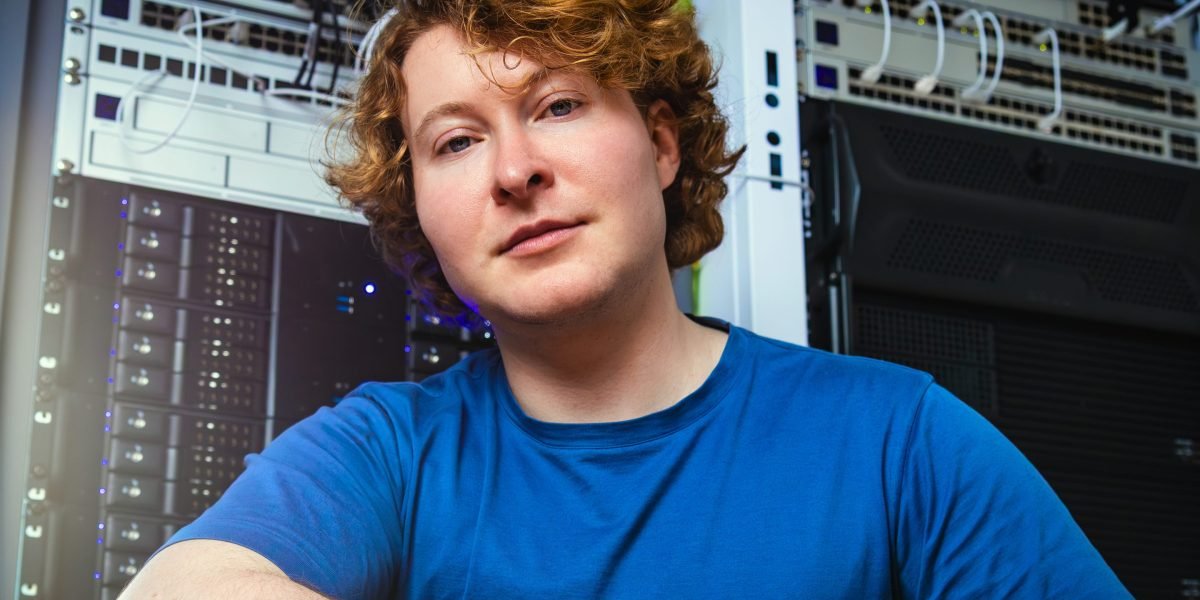
RunSybil was co-founded in 2023 by Ari Herbert-Voss and Vlad Ionescu, a duo whose combined expertise forms a rare intersection of frontier AI development and offensive security. Herbert-Voss, notably OpenAI’s first security research hire in 2019, brings a deep understanding of advanced AI systems. Ionescu, who previously led offensive security red teams at Meta, contributes extensive experience in complex software exploitation.
Their unique synergy allows RunSybil to “check every box” for auditors, regulators, and compliance teams, while fundamentally transforming how organizations discover and remediate security issues. “Not as a project, but as a permanent capability embedded in how they build,” Herbert-Voss emphasizes.
Khosla Ventures: Investing at the AI Security Frontier
The substantial $40 million funding round, led by Khosla Ventures, signals strong investor confidence in RunSybil’s vision. Vinod Khosla, an early backer of OpenAI, articulated his belief that RunSybil operates “on the edge” of the AI security frontier. He noted the current scarcity of competition in this specialized offensive security market, highlighting Herbert-Voss’s unparalleled knowledge in the field.
Khosla also voiced long-standing concerns about the potential for AI’s cyber capabilities to fall into adversarial hands, underscoring the strategic importance of companies like RunSybil. “We invest in founders who tackle large, unsolved problems with technically ambitious solutions,” Khosla stated, affirming that Herbert-Voss and Ionescu are building the essential platform for security teams navigating accelerating software complexity and AI-driven development.
From Hacker Roots to AI Security Pioneer
Herbert-Voss’s journey to the forefront of AI security is a compelling narrative. Drawn to the online hacker scene in his youth, he later pursued a Ph.D. in machine learning at Harvard. His conviction that the rapid scaling of AI models would unlock unprecedented capabilities led him to drop out and join OpenAI. It was there, witnessing the power of models like GPT-2, that he recognized the profound implications for cyber campaigns.
After demonstrating hacker capabilities to OpenAI CEO Sam Altman and then-head of policy Jack Clark (co-founder of Anthropic), Herbert-Voss was brought on to research security. By 2022, he foresaw the rapid evolution of offensive cyber capabilities fueled by powerful language models, setting the stage for RunSybil’s mission to proactively secure the AI-driven future.
For more details, visit our website.
Source: Link







Leave a comment