



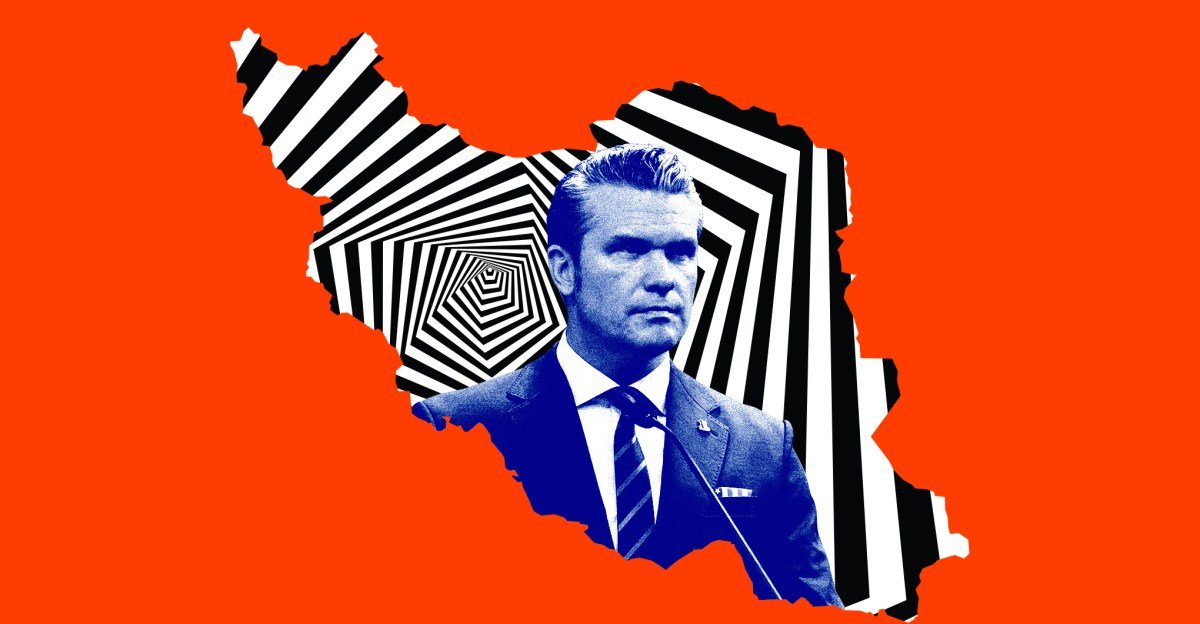

It was day 13 of America’s surprise war with Iran, a grim Friday the 13th in March 2026, and I was running on fumes. Having woken at 5 AM, the Pentagon’s strict no-outside-beverages policy meant no coffee, and Defense Secretary Pete Hegseth’s year-old rules prohibited unescorted journalists from even seeking a caffeine fix within the building. Yet, despite never having covered a war, I found myself in a prime second-row seat in the briefing room, a strange vantage point from which to witness Hegseth’s immediate and aggressive berating of the very journalists who had covered conflicts for decades.
Hegseth’s Unfiltered Assault on the Press
From the podium, Hegseth’s voice, honed to a perfect cable-news cadence, cut through the room. “We will keep pushing. Keep advancing. No quarter, no mercy for our enemies. Yet some of this crew in the press just can’t stop,” he glowered. His target: the seasoned defense reporters from NBC, ABC, The Wall Street Journal, The New York Times, and Fox News – veterans who understood the Pentagon’s intricate workings and the critical questions needed for accountability. For many, it was their first time back since a mass resignation last October, triggered by Hegseth’s decree that they couldn’t report any information, classified or otherwise, without his explicit approval.
The ‘Patriotic Press’ and the Empty Seats
Directly in Hegseth’s eyeline, occupying the front row and middle aisles, sat their replacements: representatives from what he termed the “patriotic press.” Young, eager faces from outlets like One America News, ZeroHedge, The Gateway Pundit, Real America’s Voice, The Daily Wire, and Lindell TV filled the void. The Pentagon’s press team, perhaps realizing the optics of a half-empty room during a controversial war, had extended an olive branch this week, inviting the veteran defense reporters back. But the message was clear: ask too many questions, and the disrespect would continue.
Rewriting the Narrative: Hegseth’s Media Masterclass
Hegseth then pivoted to a lesson in media manipulation. “People look up at the TV and they see banners. They see headlines. I used to be in that business. And I know that everything is written intentionally,” he lectured. He offered a stark example: instead of a banner reading ‘Mideast war intensified’ alongside visuals of Iranian strikes, he suggested, “How about ‘Iran increasingly desperate’?”
The Uncomfortable Truth Behind the Spin
But was Iran truly desperate? The reality painted a far grimmer picture than Hegseth’s narrative. Since his last press conference, two US planes had crashed overnight – a detail Hegseth conveniently omitted. Iran had launched missiles at Bahrain, deployed attack drones into Lebanon, and openly threatened American cities. The conflict was hitting home, both financially and emotionally. Iran’s mining operations and assaults on ships in the Strait of Hormuz, a vital energy shipping lane, had sent oil prices skyrocketing to roughly $100 a barrel, a 40 percent increase in just two weeks.
Dismissing Dissent, Threatening Control
Hegseth continued his tirade, dismissing critical reporting as “fake news.” “More fake news from CNN: reports that the Trump administration underestimated the Iran War’s impact on the Strait of Hormuz,” he scoffed. “Patently ridiculous, of course. For decades, Iran has threatened shipping in the strait before. This is always what they do. Hold the strait hostage. CNN doesn’t think we thought of that. It’s a fundamentally unserious report. The sooner David Ellison takes over that network…” He let the implication hang in the air, a chilling reminder of what had transpired at CBS News after Ellison’s acquisition.
A Reporter’s Perplexing Invitation
As Hegseth oscillated between press abuse and military glorification, punctuated by Chairman of the Joint Chiefs of Staff Dan Caine’s brief interjections of actual war updates, my personal curiosity intensified. Why had I, a reporter known for my less-than-favorable coverage, been specifically invited to this briefing? The Pentagon press team knew my reputation, yet offered me a seat. And during a war, what journalist could refuse a Pentagon press conference? The surreal spectacle unfolded, a stark illustration of a White House determined to control the narrative, even if it meant openly scolding the very institutions meant to hold power accountable.
For more details, visit our website.
Source: Link






Leave a comment