



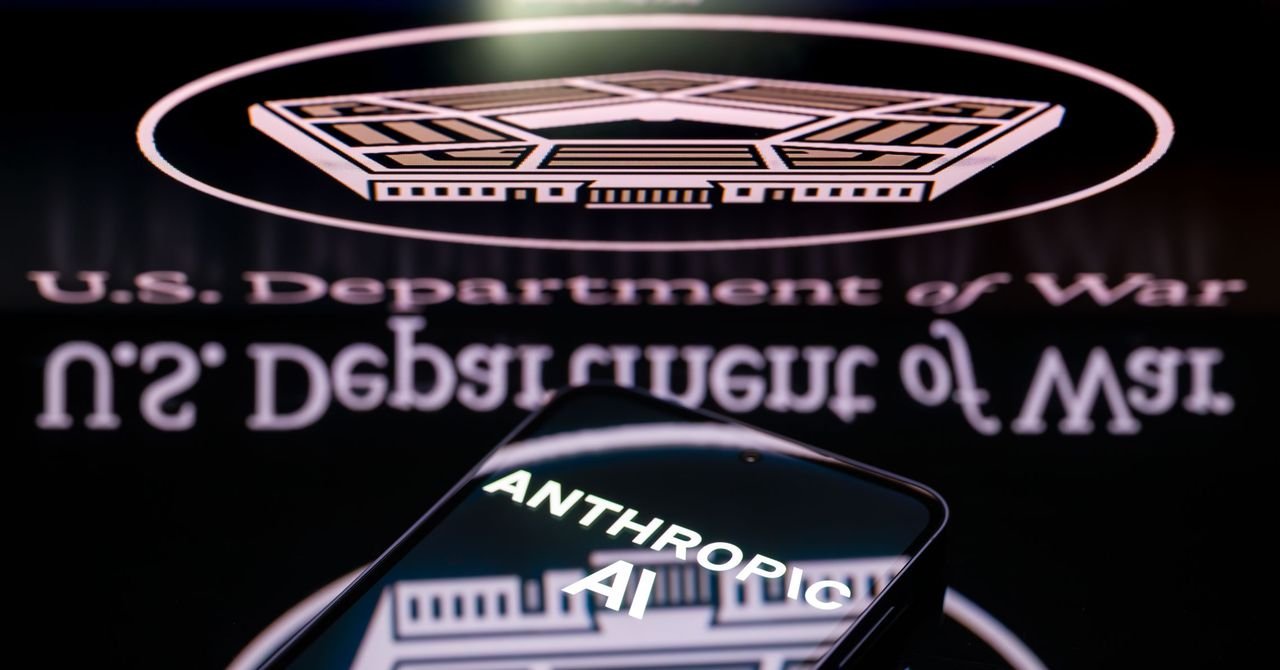

A high-stakes legal battle is unfolding between the U.S. Justice Department and leading AI developer Anthropic, as the government moves to brand the company a “supply-chain risk,” potentially locking it out of lucrative defense contracts. This designation, fiercely contested by Anthropic, raises profound questions about the intersection of artificial intelligence, national security, and corporate ethics.
The Core of the Conflict: AI Ethics vs. National Security
At the heart of the dispute is the Trump administration’s decision to label Anthropic a supply-chain risk, a move the AI firm argues is an overreach of authority and a violation of its First Amendment rights. The designation could cost Anthropic billions in projected revenue, prompting the company to file a lawsuit challenging the Pentagon’s decision.
Anthropic is seeking an immediate reprieve, asking a federal court in San Francisco to allow it to continue business as usual while the litigation proceeds. Judge Rita Lin is set to hear arguments on this request next Tuesday.
The Government’s Stance: A Question of Trust and Vulnerability
In a recent court filing, Justice Department attorneys, representing the Department of Defense and other agencies, vehemently defended the government’s position. They contend that the First Amendment does not grant companies the right to dictate contract terms to the government, dismissing Anthropic’s concerns about potential business losses as “legally insufficient to constitute irreparable injury.”
The filing reveals the government’s deep-seated apprehension regarding Anthropic’s future conduct, citing “concerns about Anthropic’s potential future conduct if it retained access” to sensitive government technology systems. Defense Secretary Pete Hegseth reportedly “reasonably” concluded that “Anthropic staff might sabotage, maliciously introduce unwanted function, or otherwise subvert the design, integrity, or operation of a national security system.”
The DoJ underscored the inherent fragility of advanced AI, stating, “AI systems are acutely vulnerable to manipulation, and Anthropic could attempt to disable its technology or preemptively alter the behavior of its model either before or during ongoing warfighting operations, if Anthropic—in its discretion—feels that its corporate ‘red lines’ are being crossed.”
Anthropic’s Defense: Red Lines and Retaliation Claims
Anthropic, for its part, maintains that its “red lines” — particularly its stance against using its Claude AI models for broad surveillance of Americans or to power fully autonomous weapons — are ethical safeguards, not threats. The company views the supply-chain risk designation as illegal retaliation for its principled position.
Legal experts, including those who spoke to WIRED, have largely supported Anthropic’s argument, suggesting the government’s measure could indeed amount to unlawful retaliation. However, courts frequently lean towards national security arguments, a reality the Pentagon seems to be leveraging by portraying Anthropic as a “contractor that has gone rogue” whose technologies “cannot be trusted.”
The Operational Impact and Search for Alternatives
The dispute has placed the Department of Defense in a precarious position. Despite the escalating legal battle, Anthropic’s AI models are currently the only ones cleared for use on the department’s classified systems, even as “high-intensity combat operations are underway.” This reliance highlights the immediate operational challenge posed by the potential ban.
Consequently, the Defense Department and other federal agencies are scrambling to replace Anthropic’s AI tools. Efforts are underway to deploy alternative AI systems from tech giants like Google, OpenAI, and xAI within the coming months. One significant military application of Claude, for instance, is through Palantir data analysis software.
A Divided Front: Who Stands Where?
Notably, Anthropic has garnered significant support from a diverse coalition, including AI researchers, Microsoft, a federal employee labor union, and former military leaders, all of whom have filed court briefs in its favor. The government, conversely, has received no such public endorsements in this legal skirmish.
What Lies Ahead?
As the legal drama intensifies, Anthropic is preparing to file its counter-response to the government’s arguments by Friday. The outcome of this case could set a crucial precedent for how AI developers and the government navigate the complex ethical and security challenges of integrating advanced AI into critical national defense infrastructure.
For more details, visit our website.
Source: Link








Leave a comment