



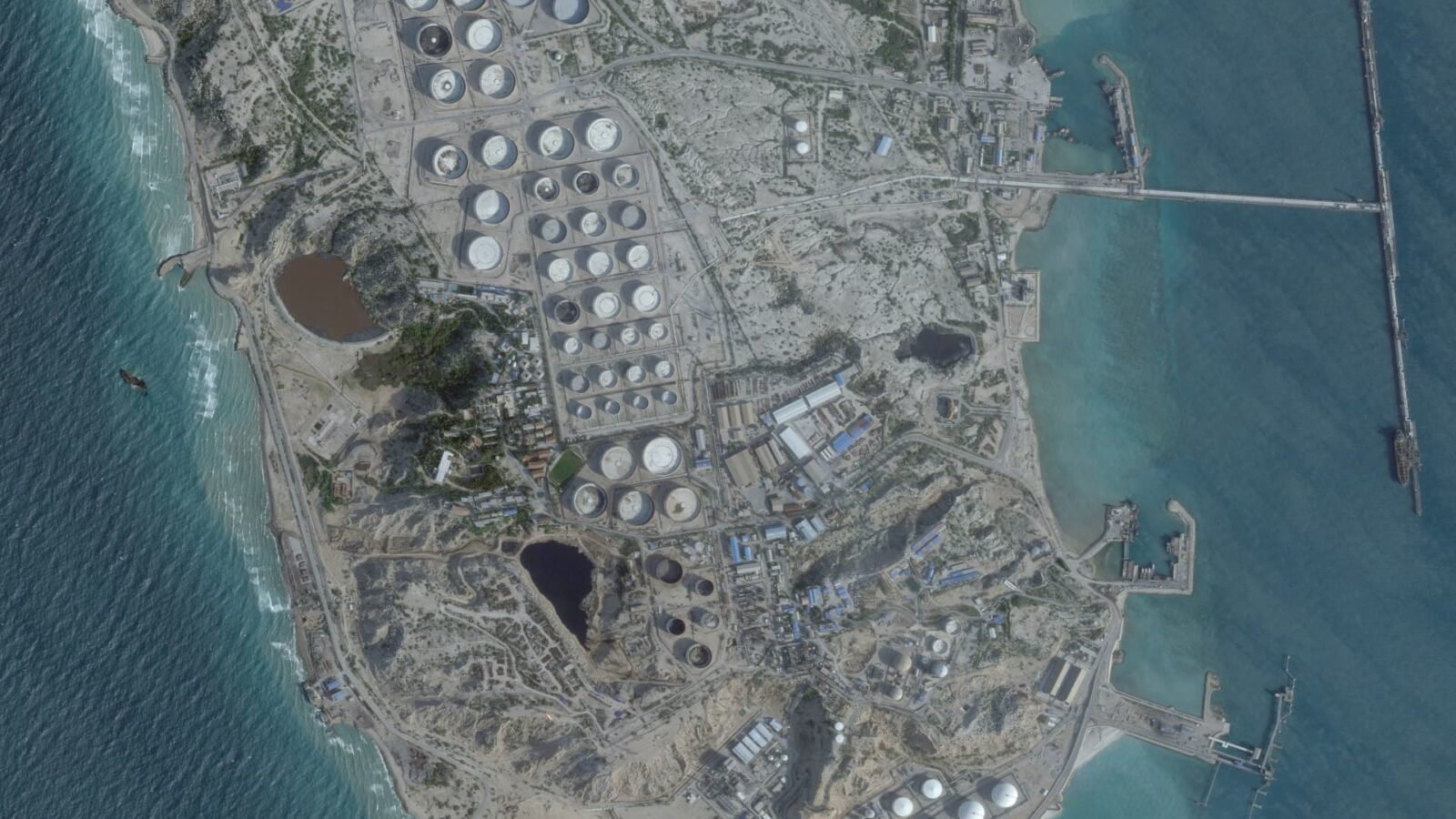

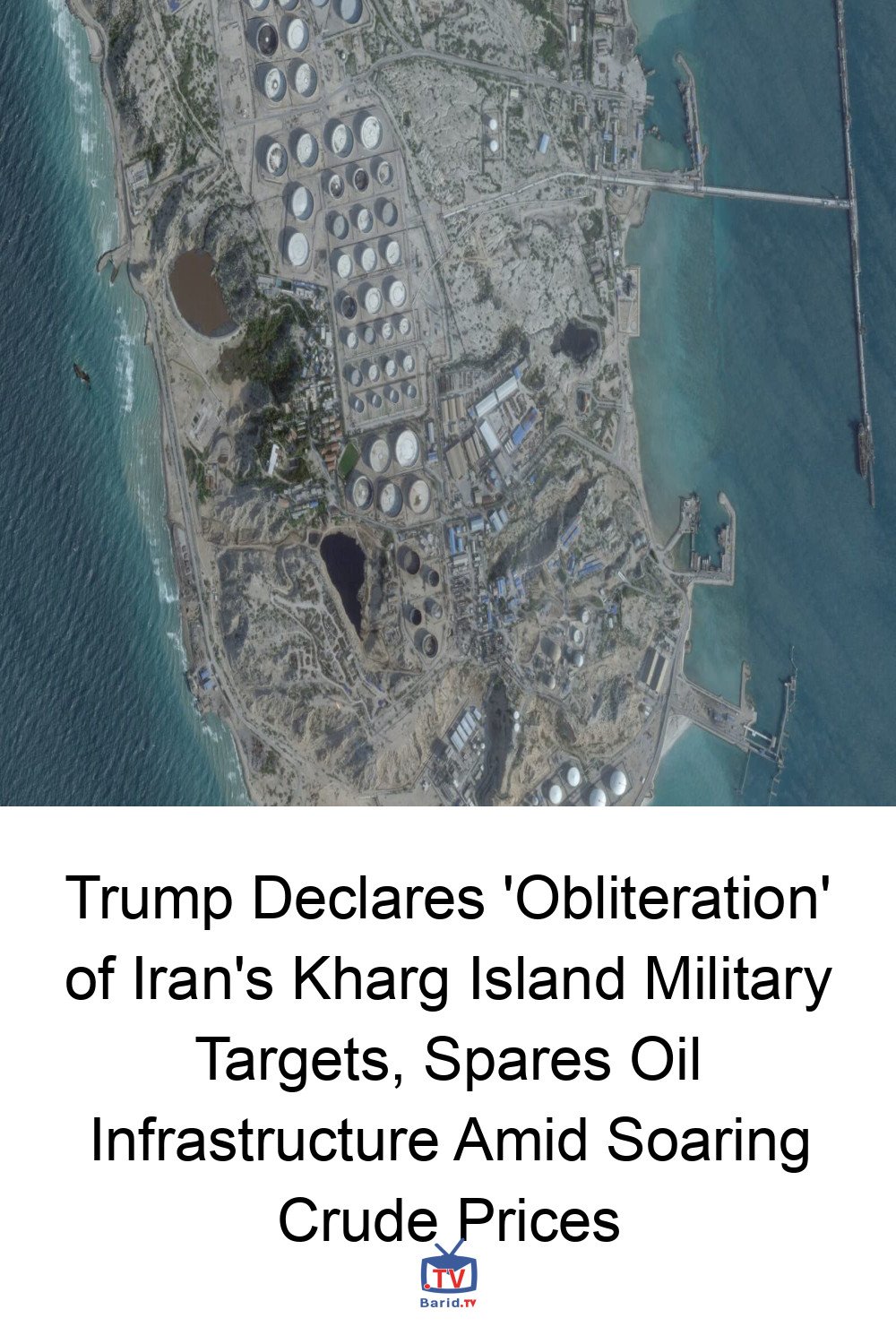
In a dramatic escalation of Middle East tensions, President Donald Trump announced that U.S. Central Command had executed a powerful bombing raid, effectively “obliterating” military targets on Iran’s strategically vital Kharg Island. Crucially, the President also revealed a deliberate decision to spare the island’s extensive oil infrastructure, a move that comes as global Brent crude oil futures surged past $100 a barrel for the second consecutive day.
A Calculated Strike on Iran’s ‘Crown Jewel’
President Trump took to Truth Social on Friday to declare the success of the operation. “Moments ago, at my direction, the United States Central Command executed one of the most powerful bombing raids in the History of the Middle East, and totally obliterated every MILITARY target in Iran’s crown jewel, Kharg Island,” he wrote. This assertion was later corroborated by U.S. Central Command (CENTCOM), which released video evidence early Saturday showcasing strikes on over 90 Iranian military sites, including naval mine storage facilities and missile bunkers, while confirming the preservation of oil infrastructure.
The President’s posts also carried a stark warning regarding the Strait of Hormuz, a critical choke point for global oil shipments. “However, should Iran, or anyone else, do anything to interfere with the Free and Safe Passage of Ships through the Strait of Hormuz, I will immediately reconsider this decision,” Trump stated. He further claimed that Iran’s alleged plans to “take over the entire Middle East, and completely obliterating Israel” were now “DEAD!”
International Calls and Campaign Outlook
Following the strikes, President Trump called upon international allies to bolster naval presence in the Strait of Hormuz. In a Saturday Truth Social post, he urged nations like China, France, Japan, South Korea, and the UK, all impacted by potential disruptions, to deploy warships to ensure the strait remains “open and safe.” He asserted that “many countries will be sending war ships” to aid the U.S., though specific details remained undisclosed.
Speaking to reporters before departing for Florida, Trump indicated that his military campaign would continue “as long as necessary,” adding that the U.S. was “way ahead of schedule.” When pressed on the meaning of “unconditional surrender,” he responded, “To me it means very simply that we are in a position of dominance that nobody has seen before, whether or not they’re able to say the words…” He also criticized what he termed the “Fake News Media” for allegedly downplaying the U.S. military’s success against Iran.
Kharg Island: Iran’s Economic Lifeline in the Crosshairs
Kharg Island, a five-mile-long coral island situated approximately 15 miles off mainland Iran in the northern Persian Gulf, has been thrust into the global spotlight due to its immense strategic and economic importance. Often referred to as Iran’s “oil lifeline,” the terminal on Kharg Island handles approximately 90% of the country’s crude exports and boasts a loading capacity of roughly 7 million barrels per day.
Despite nearly two weeks of U.S. and Israeli-led strikes against Iran, Kharg Island had remained untouched until this latest operation. Reports from Axios on March 7, citing unnamed sources, indicated that the Trump administration had previously discussed the possibility of seizing the island. White House officials have expressed expectations for oil prices to fall dramatically once “Operation Epic Fury” concludes, with Press Secretary Karoline Leavitt affirming that President Trump “wisely” keeps all options on the table.
Geopolitical Risks and Economic Ramifications
Analysts universally agree that any direct attack or attempt to seize Kharg Island would carry extremely high geopolitical and economic risks. Such an operation would likely necessitate a significant ground troop deployment, a prospect the U.S. appears reluctant to undertake. U.S. Defense Secretary Pete Hegseth has previously stated that while not ruling out ground forces, the U.S. would not get “bogged down” in Iran.
An assault on this critical oil hub would almost certainly trigger a sustained and dramatic increase in already soaring oil prices. Brent crude’s recent ascent above $100 per barrel for two consecutive days, marking a more than 40% surge since the conflict in Iran began, underscores the market’s extreme sensitivity to regional stability. The decision to spare the oil infrastructure, therefore, appears to be a calculated move to inflict military damage without immediately crippling global energy markets, while maintaining a potent threat for future contingencies.
For more details, visit our website.
Source: Link







Leave a comment