
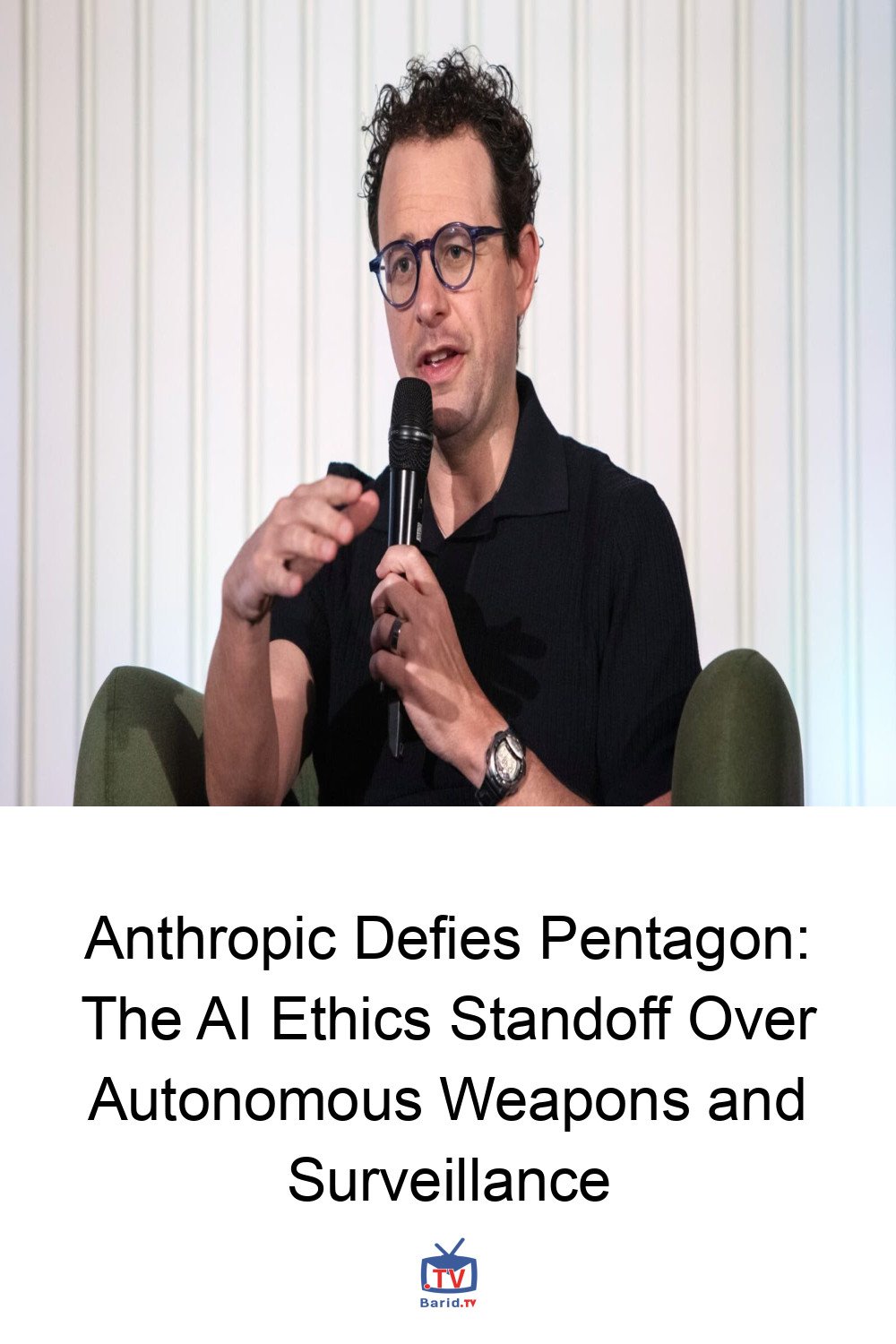
In a high-stakes ethical showdown, artificial intelligence pioneer Anthropic has firmly rejected the Pentagon’s demands to waive restrictions on how its powerful AI models can be used. CEO Dario Amodei declared on Thursday that the company “cannot in good conscience” allow its AI to be deployed for fully autonomous weapons or mass domestic surveillance, asserting that the Department of Defense’s threats would not sway its principled stance.
A Clash of Conscience and National Security
The dispute pits Anthropic’s commitment to responsible AI development against the Pentagon’s desire for unrestricted access to cutting-edge technology for “all lawful use cases.” For weeks, the AI startup and the U.S. defense establishment have been locked in tense negotiations, with the Pentagon reportedly issuing a “last and final offer” and even threatening to label Anthropic a “supply chain risk” or invoke the Defense Production Act.
Anthropic’s core demand is clear: a guarantee that its sophisticated models will not be weaponized for fully autonomous systems that make life-or-death decisions without human intervention, nor be repurposed for widespread surveillance of American citizens. These are red lines for the company, reflecting a growing industry-wide concern about the ethical implications of advanced AI in military applications.
Pentagon’s Position: Lawful Use and Operational Readiness
Chief Pentagon spokesman Sean Parnell articulated the Department of Defense’s perspective, stating that the DOD has “no interest” in using AI for illegal activities like mass surveillance or fully autonomous weapons. He emphasized the agency’s need for flexibility, requesting that Anthropic’s models be available for “all lawful purposes” to prevent “jeopardizing critical military operations and potentially putting our warfighters at risk.” Parnell’s message was unequivocal: “We will not let ANY company dictate the terms regarding how we make operational decisions.”
This stance highlights the military’s operational imperative to integrate advanced AI for efficiency, intelligence analysis, and strategic advantage, while navigating the complex legal and ethical landscape of emerging technologies.
Anthropic’s Unwavering Stance and Industry Context
Despite the Pentagon’s pressure, including a direct meeting between Defense Secretary Pete Hegseth and Amodei, Anthropic remains resolute. “It is the Department’s prerogative to select contractors most aligned with their vision,” Amodei stated, yet expressed hope that the Pentagon would “reconsider” given the “substantial value that Anthropic’s technology provides to our armed forces.”
The company, which secured a $200 million contract with the DOD in July and was the first to integrate its models into classified mission workflows, is not alone in its engagement with the military. Rivals like OpenAI, Google, and xAI also hold significant contracts. Notably, these competitors have largely agreed to allow the DOD to use their models for all lawful purposes within unclassified systems, with xAI even extending this to classified settings recently. This makes Anthropic’s principled stand particularly significant, setting it apart in the burgeoning defense AI market.
The Path Forward: Transition or Reconsideration?
Amodei reiterated Anthropic’s preference to continue serving the Department with its safeguards in place. However, he also prepared for the possibility of being “offboarded,” assuring a smooth transition to another provider to avoid disruption to military operations. This suggests Anthropic is prepared to walk away from a lucrative partnership rather than compromise its ethical guidelines.
The unfolding drama underscores the critical debate at the intersection of technological advancement, national security, and ethical responsibility. As AI becomes increasingly powerful, the terms of its deployment, especially in sensitive areas like defense, will continue to be a battleground for innovators and policymakers alike.
For more details, visit our website.
Source: Link