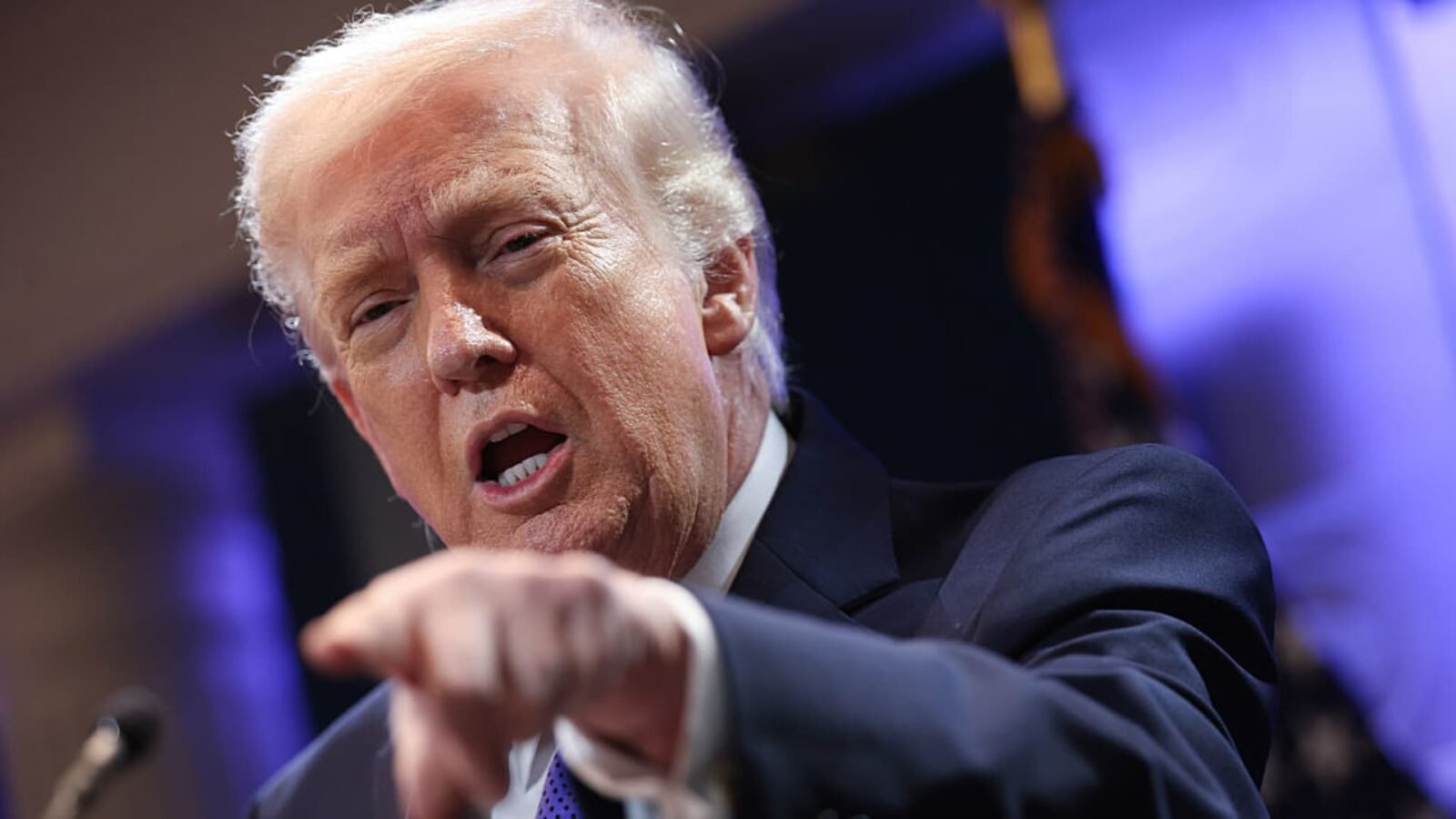

In a swift and defiant move following a significant Supreme Court setback, former President Donald Trump announced on Saturday his intention to raise global tariffs from 10% to 15%, declaring the new levies “effective immediately.” This unilateral declaration, made via his Truth Social platform, comes just one day after the nation’s highest court struck down a substantial portion of his previous trade agenda.
A Direct Challenge to the Supreme Court
The announcement marks a direct and aggressive response to Friday’s 6-3 Supreme Court ruling, which determined that Trump had improperly invoked the International Emergency Economic Powers Act (IEEPA) to implement his earlier tariffs. The court’s decision was a major blow to a signature policy of the former president, who has consistently advocated for robust protectionist trade measures.
Hours after the Supreme Court’s verdict, Trump initially responded by imposing a 10% global tariff under Section 122 of the Trade Act of 1974. This statute permits the president to enact temporary levies for a period of 150 days, with any extension requiring explicit congressional approval. However, Saturday’s escalation to 15% signals a heightened commitment to his tariff strategy.
The ‘Effective Immediately’ Clause and Legal Ambiguity
Trump’s declaration that the 15% tariffs would be “effective immediately” has introduced considerable uncertainty. While his social media post asserted an immediate implementation, it remains unclear whether the necessary official documents have been signed or if the administrative mechanisms are in place to enact such a rapid change. A White House fact sheet issued just prior to his latest announcement had indicated the original 10% tariffs were slated to commence on Tuesday, February 24, at 12:01 a.m. ET, further clouding the timeline.
The White House has not yet responded to requests for clarification, leaving businesses and international partners in a state of flux regarding the precise timing and legal standing of these new tariffs.
Trump’s Scathing Rebuke and Political Fallout
The former president did not mince words in his reaction to the Supreme Court’s decision, lambasting the ruling as “ridiculous, poorly written, and extraordinarily anti-American.” He also took the unusual step of publicly criticizing Justices Neil Gorsuch and Amy Coney Barrett, both of whom he appointed, for voting with the majority against his tariff policy.
Divided Reactions Across the Political Spectrum
The Supreme Court’s initial ruling, which invalidated Trump’s tariffs, was met with jubilation by Congressional Democrats. Senate Minority Leader Chuck Schumer (D-N.Y.) characterized the tariffs as “chaotic and illegal,” signaling that trade policy and its economic ramifications are poised to be central issues in the upcoming midterm elections.
Republicans, however, displayed a more fractured response. While some condemned the Supreme Court for overstepping, others reiterated that the U.S. Constitution vests the authority to implement levies squarely with Congress, implicitly criticizing the president’s unilateral approach.
Economic Implications and the Question of Refunds
The initial Supreme Court decision had a noticeable, albeit volatile, impact on financial markets. Stocks initially rallied on Friday, reflecting investor optimism that the ruling could ease international trade tensions, potentially leading to refunds for affected companies and a reduction in inflationary pressures. However, the market later pulled back before recovering, indicating ongoing uncertainty.
A significant question now looms over the U.S. government: how will it handle potential refunds for importers who paid tariffs under the now-invalidated policies? Estimates suggest the government could owe more than $175 billion in refunds, a staggering sum that could have substantial fiscal implications. The broader U.S. trade deficit, which stood at $901 billion in 2025 despite Trump’s previous tariffs, underscores the persistent challenges in global trade balances.
As the nation awaits further clarity on the implementation of these new tariffs and the resolution of past trade disputes, the economic landscape remains fraught with uncertainty, with businesses and consumers alike bracing for potential impacts.
For more details, visit our website.
Source: Link