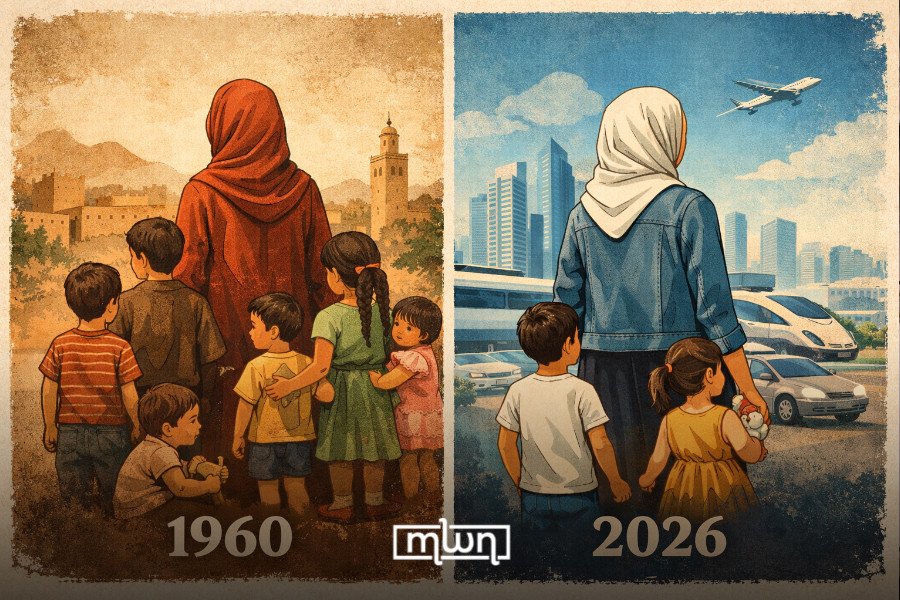

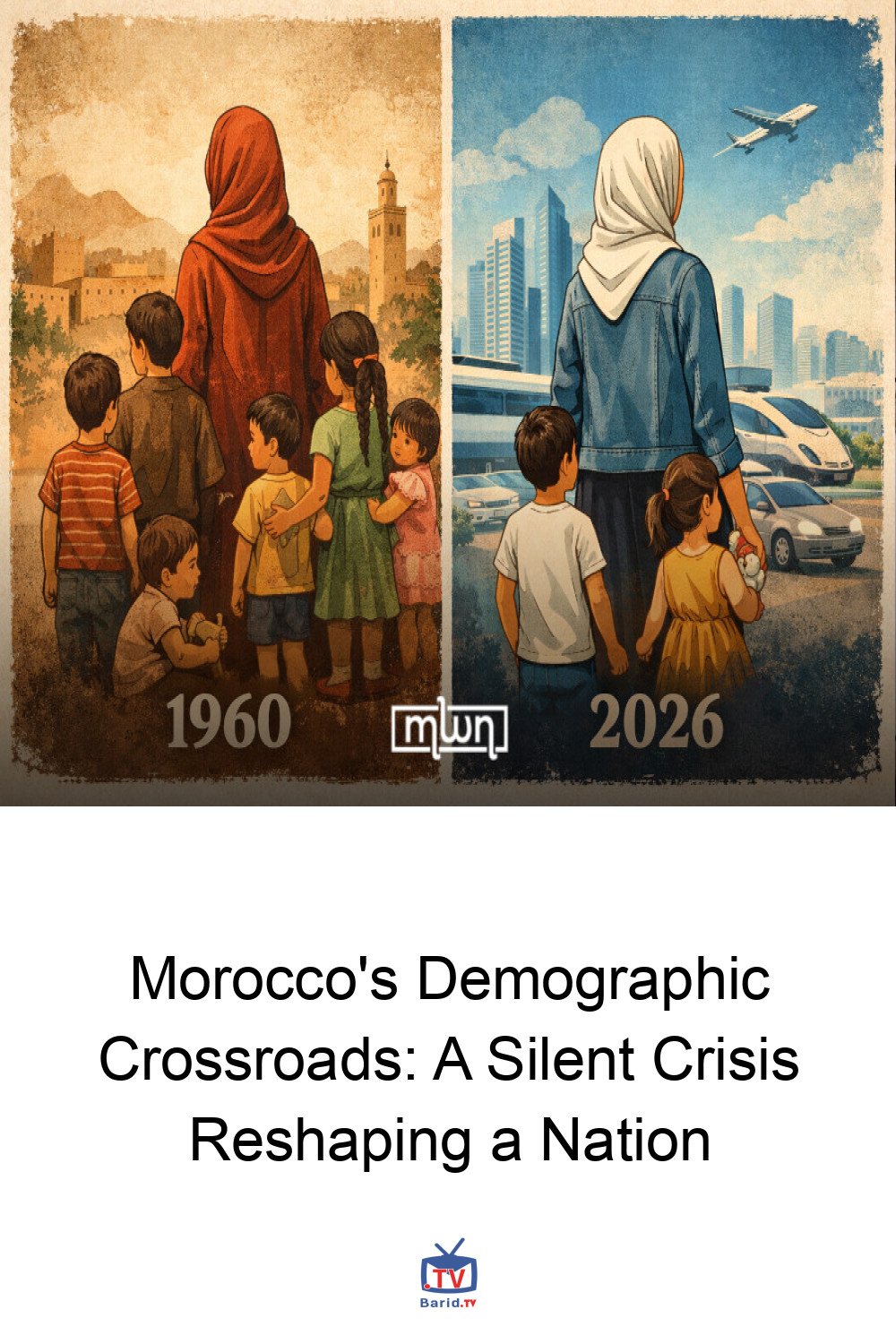
Once a nation where large families were the norm, Morocco has undergone a dramatic demographic transformation. From an average of seven children per woman in the 1960s, the latest national census in 2024 reveals a fertility rate of just 1.97 children per woman – a figure that dips below the critical 2.1 replacement threshold for the first time in its history. This isn’t merely a statistical anomaly; it marks a profound civilizational inflection point, poised to redefine Morocco’s economic landscape, geopolitical standing, and the very fabric of its social contract.
The Silent Shift: Morocco’s Demographic Rubicon
Morocco now finds itself in demographic territory akin to aging European nations, yet without the accompanying wealth, robust welfare systems, or the capacity to readily import labor to offset the decline. The next 15 years, leading up to 2040, represent a crucial, perhaps final, window for the nation to harness its shrinking youth bulge into sustainable prosperity. The urgency is palpable; the demographic clock is ticking, almost silently.
Unpacking the Numbers: A Rapid Decline
Population Growth Stagnation:
Over the past decade, Morocco’s population growth plummeted to a mere 0.85% annually, a stark contrast to the 2.6% recorded in 1994.- Longevity and Its Cost:
While a life expectancy of 76.4 years is a testament to public health advancements, it simultaneously presents a significant fiscal challenge.
- The Graying Nation: The population aged 60 and over currently stands at 5.1 million (13.8%) and is projected to surge to 7.9 million (19.5%) by 2040. By 2050, one in four Moroccans will be a senior citizen, with over 10 million individuals aged 60-plus.
- Pension Predicament: This aging trend casts a long shadow over Morocco’s pension systems. Reserves for civil servants are forecast to be exhausted by 2031, with the private-sector fund following by 2036.
- Shrinking Workforce: The working-age population share has already declined from 62.4% to 59.7% in a single decade, signaling a future labor shortage.
- Family Structure Evolution: Average household size has rapidly decreased from 5.3 persons in 2004 to 3.9 today, reflecting a swift transition from extended clans to nuclear families. Over 1.03 million Moroccans now live alone, a phenomenon virtually nonexistent a generation ago.
A Fractured Demographic Map
The demographic picture across Morocco is far from uniform, resembling a mosaic of twelve distinct regions within one state. The Oriental region, for instance, records an alarming fertility rate of 1.73, nearing Germany’s 1.35, with minimal population growth and rapid aging. Casablanca-Settat, the nation’s economic powerhouse, sits at 1.90. Conversely, regions like Drâa-Tafilalet (2.35) and the southern Saharan territories maintain fertility rates above replacement levels. This creates a challenging demographic imbalance where the most urbanized and economically vibrant areas are experiencing the fastest decline, while poorer regions shoulder the burden of sustaining Morocco’s demographic momentum.
Geopolitical Ripples: Neighbors Pulling Ahead
The divergence in demographic trends between Morocco and its North African neighbors is striking and carries significant geopolitical weight.
Algeria’s Baby Boom Resurgence
Algeria’s fertility rate hovers around 2.75 children per woman – a remarkable 40% higher than Morocco’s. Fueled by a baby boom recovery that saw annual births exceed one million between 2014 and 2017, Algeria’s population has reached 47.4 million and continues to grow at 1.3-1.5% annually. Projections suggest it could reach 61 million by 2050, potentially making it 40% more populous than Morocco.
This widening demographic chasm unfolds against a backdrop of intense North African geopolitical volatility. The Morocco-Algeria rivalry has escalated into outright diplomatic severance since August 2021, compounded by the unresolved Moroccan Sahara conflict – the continent’s longest-running territorial dispute – and a regional arms race showing no signs of abating. In the intricate calculus of nations, demography often dictates destiny, influencing military mobilization, economic gravitational pull, tax revenue potential, and the capacity to project influence across a contested region.
Egypt: A Giant on a Different Plane
Egypt operates on an entirely different demographic scale. With a population of 118.4 million, growing at 1.5% per year, and a fertility rate between 2.75-3.1, Egypt adds nearly two million people annually. Its median age of 24.5 years positions it as one of the youngest large nations globally. By 2040, Egypt is expected to reach approximately 130 million people – more than triple Morocco’s projected 42 million. Egypt’s population already surpasses that of every Maghreb country combined.
An “echo generation” born during its 2008-2014 fertility surge is poised to flood Egypt’s labor market by 2030. This demographic wave presents either a colossal dividend or a historic risk of instability. Regardless, Egypt’s sheer demographic mass is fundamentally reshaping North African power dynamics, a stark contrast to Morocco’s stagnating population trajectory.
The Path Forward
Morocco stands at a critical juncture. The demographic dividend, once a powerful engine for growth, is rapidly diminishing. Addressing the challenges of an aging population, a shrinking workforce, and strained social security systems will require bold, innovative policy responses. Investing in human capital, fostering economic diversification, and potentially re-evaluating immigration policies could be crucial steps to navigate this silent crisis and secure a prosperous future for the Kingdom.
For more details, visit our website.
Source: Link