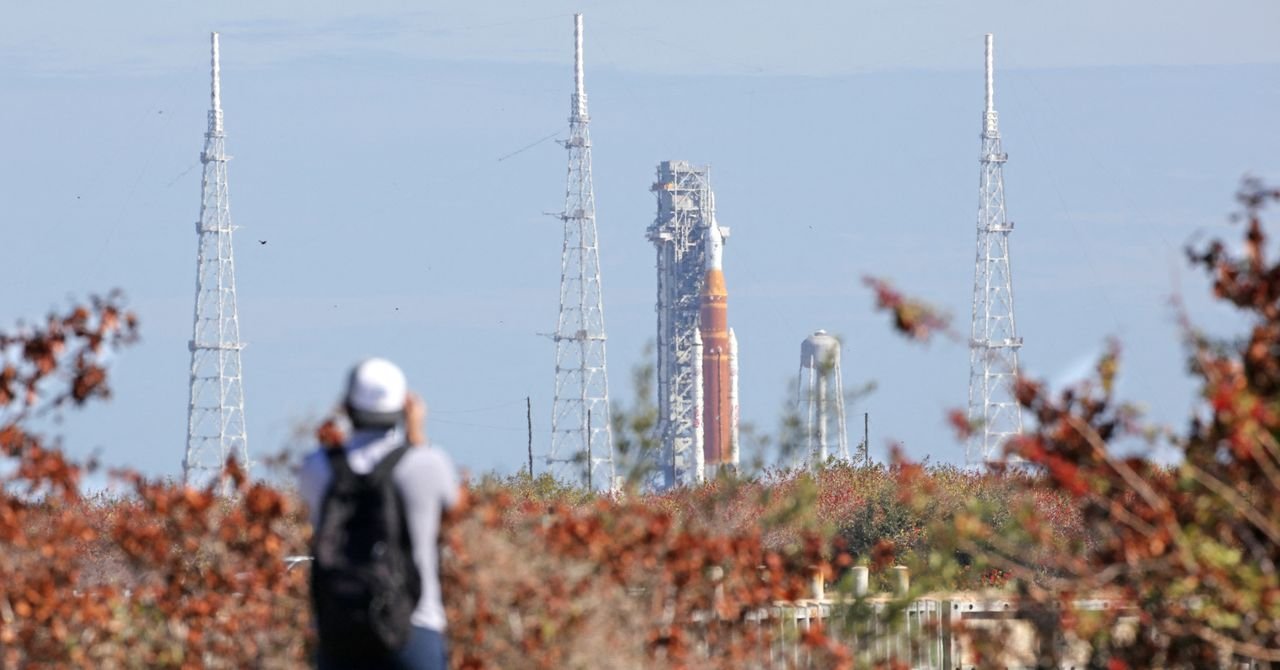

The ambitious journey back to the Moon has encountered another significant delay, as NASA announced the postponement of its crewed Artemis II lunar flyby mission. Originally eyed for a March 6 liftoff, the mission now targets an April launch window, a setback attributed to a critical technical issue with the Space Launch System (SLS) rocket.
A Helium Hiccup Halts Progress
The latest hurdle stems from an unexpected interruption in the helium flow within the SLS rocket’s interim cryogenic propulsion stage. NASA Administrator Jared Isaacman clarified that this helium flow is vital for purging the engines and pressurizing the fuel tanks – a fundamental process for launch. While the system performed flawlessly during two recent dress rehearsals, the failure emerged during a routine operation, catching engineers off guard.
The nature of this particular problem necessitates the rocket’s return to the iconic Vehicle Assembly Building (VAB) for repairs. This means the March launch window is no longer viable, extending the wait for the four-person crew.
“I understand people are disappointed by this development,” Isaacman shared on his X account, acknowledging public anticipation. “That disappointment is felt most by the team at NASA, who have been working tirelessly to prepare for this great endeavor. During the 1960s, when NASA achieved what most thought was impossible, and what has never been repeated since, there were many setbacks.” His words serve as a reminder of the inherent complexities and historical challenges of pioneering space exploration.
Navigating the Path to April
Despite the current setback, NASA remains cautiously optimistic about preserving the April launch window. Agency officials report that rapid preparatory efforts could potentially keep this target alive, contingent on thorough data analysis, successful repair efforts, and a streamlined schedule in the coming days. The world watches as engineers race against time to resolve the issue and get Artemis II back on its trajectory.
A History of Hurdles: Artemis II’s Prior Delays
This isn’t the first time Artemis II has faced a delay. The mission’s initial launch window, slated for February 6-11, was abandoned after a wet dress rehearsal (WDR) revealed small hydrogen leaks during refueling and other minor technical glitches. NASA, prioritizing astronaut safety, deemed the risk too high and opted for a postponement.
A subsequent dress rehearsal on February 19, however, offered a glimmer of hope. The space agency successfully loaded 700,000 gallons of liquid propellant without any leaks. “During the test, teams closely monitored liquid hydrogen fueling operations, which proved challenging during previous tests. Hydrogen gas concentrations remained under allowable limits, giving engineers confidence in new seals installed in an interface used to route fuel to the rocket,” NASA stated, highlighting progress in addressing earlier issues.
Despite this success, the very next day, February 20, the critical helium flow failure occurred – a problem eerily similar to one encountered during testing for the Artemis I mission. Isaacman speculated the root cause could be a faulty filter, valve, or connector plate.
Beyond the Delays: A Vision for Lunar Exploration
Isaacman emphasized the grander vision behind the Artemis program. “There are many differences between the 1960s and today, and expectations should rightfully be high after the time and expense invested in this program,” he asserted. “I will say again, the President created Artemis as a program that will far surpass what America achieved during Apollo. We will return in the years ahead, we will build a Moon base, and undertake what should be continuous missions to and from the lunar environment.”
When it finally lifts off, the Artemis II mission will see the Orion capsule embark on a 10-day journey, pushing the boundaries of human spaceflight. On its sixth day, it is projected to surpass the 400,171-kilometer record set by Apollo 13, traveling farther than any other manned spacecraft. The mission will culminate with Orion’s splashdown in the Pacific Ocean off the coast of San Diego, California.
While Artemis II will not include a lunar landing – that monumental achievement is reserved for the Artemis III mission – its success is paramount. It serves as a crucial demonstration of NASA’s technical prowess and its renewed capability to return humanity to the Moon, paving the way for a new era of sustained lunar presence and deeper space exploration.
For more details, visit our website.
Source: Link