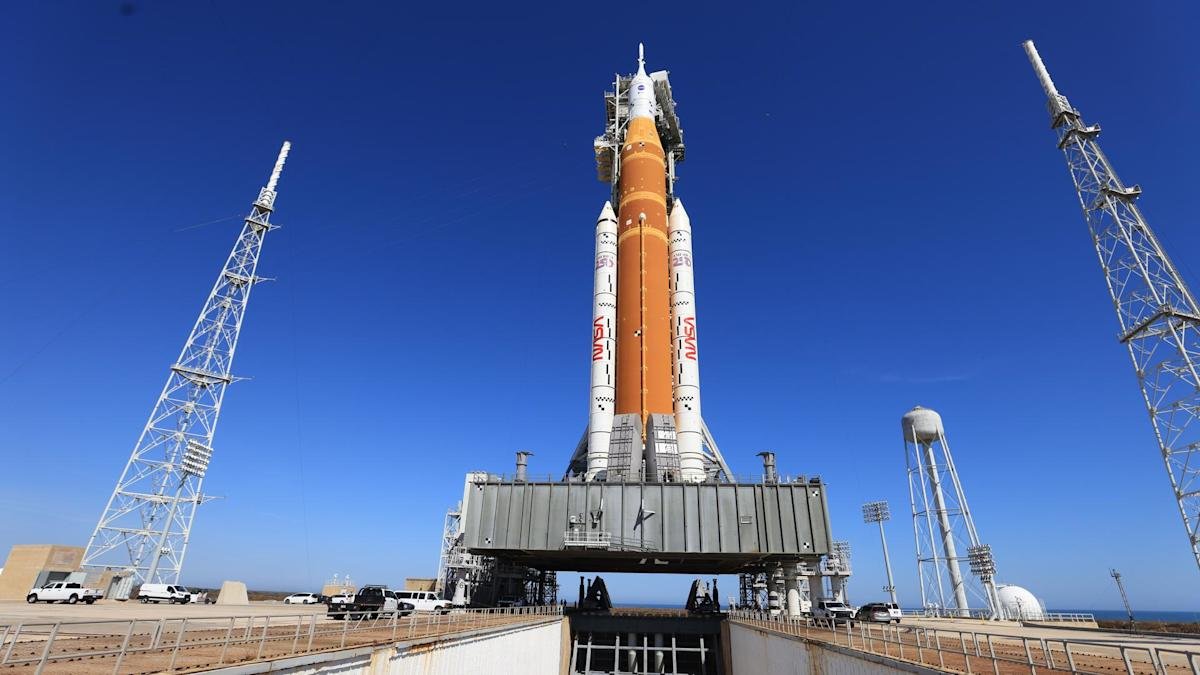

NASA’s highly anticipated Artemis II mission, poised to mark humanity’s return to the lunar vicinity after more than half a century, has encountered another hurdle. What was once a hopeful March launch window has now closed, as the space agency grapples with an unexpected helium flow issue in the mighty Space Launch System (SLS) rocket’s upper stage.
A Critical Helium Anomaly Halts Progress
The setback emerged in the early hours of February 21st, when engineers at the Kennedy Space Center detected an “interrupted flow of helium” to the SLS rocket’s interim cryogenic propulsion stage. This isn’t a minor glitch; helium plays a vital role in maintaining the precise environmental conditions for the stage’s engine and pressurizing the liquid hydrogen and liquid oxygen propellant tanks – essentially, the rocket’s lifeblood. While the systems performed flawlessly during prior wet dress rehearsals, post-rehearsal reconfigurations revealed the anomaly, necessitating immediate action.
In response, NASA has confirmed the monumental task of rolling the SLS rocket and its Orion spacecraft a four-mile journey back from the launch pad to the iconic Vehicle Assembly Building (VAB). This intricate maneuver, expected around February 24th, will allow teams to meticulously diagnose and rectify the problem. NASA Administrator Jared Isaacman swiftly confirmed via X that this rollback definitively “takes the March launch window out of consideration.”
The Shifting Sands of the Launch Schedule
This isn’t the first adjustment for Artemis II. Initially slated for an early February liftoff, the mission was pushed to March following issues identified during earlier wet dress rehearsals. Now, with the helium conundrum, the focus shifts to potentially preserving an April launch window, a prospect contingent on the swift resolution of the current technical challenge and subsequent data findings.
The Artemis II mission, a 10-day journey around the Moon, represents the crucial first crewed flight of the SLS rocket and a significant step towards establishing a long-term human presence on the Moon. The four-person crew – Commander Reid Wiseman, Pilot Victor Glover, Mission Specialist Christina Koch, and Canadian Space Agency astronaut Jeremy Hansen – had just entered quarantine when the issue arose, only to be released shortly thereafter due to the delay.
Patience in the Pursuit of the Moon
Space exploration is an endeavor defined by precision, patience, and an unwavering commitment to safety. Each delay, while frustrating for eager observers and the dedicated teams alike, underscores the immense complexity and inherent risks involved in sending humans beyond Earth’s orbit. As NASA works diligently within the VAB, the world watches, understanding that every fix, every test, brings us one step closer to witnessing humanity’s next giant leap around the Moon.
For more details, visit our website.
Source: Link