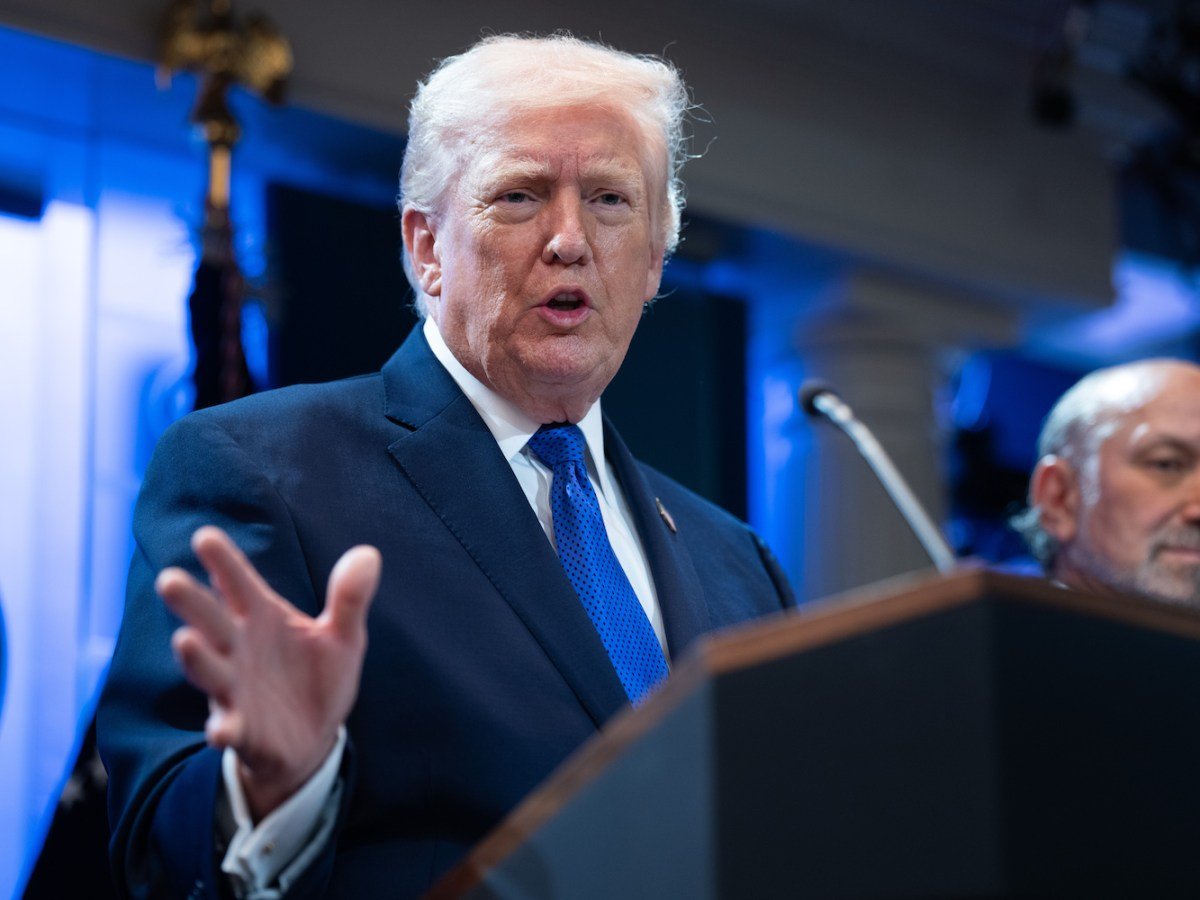

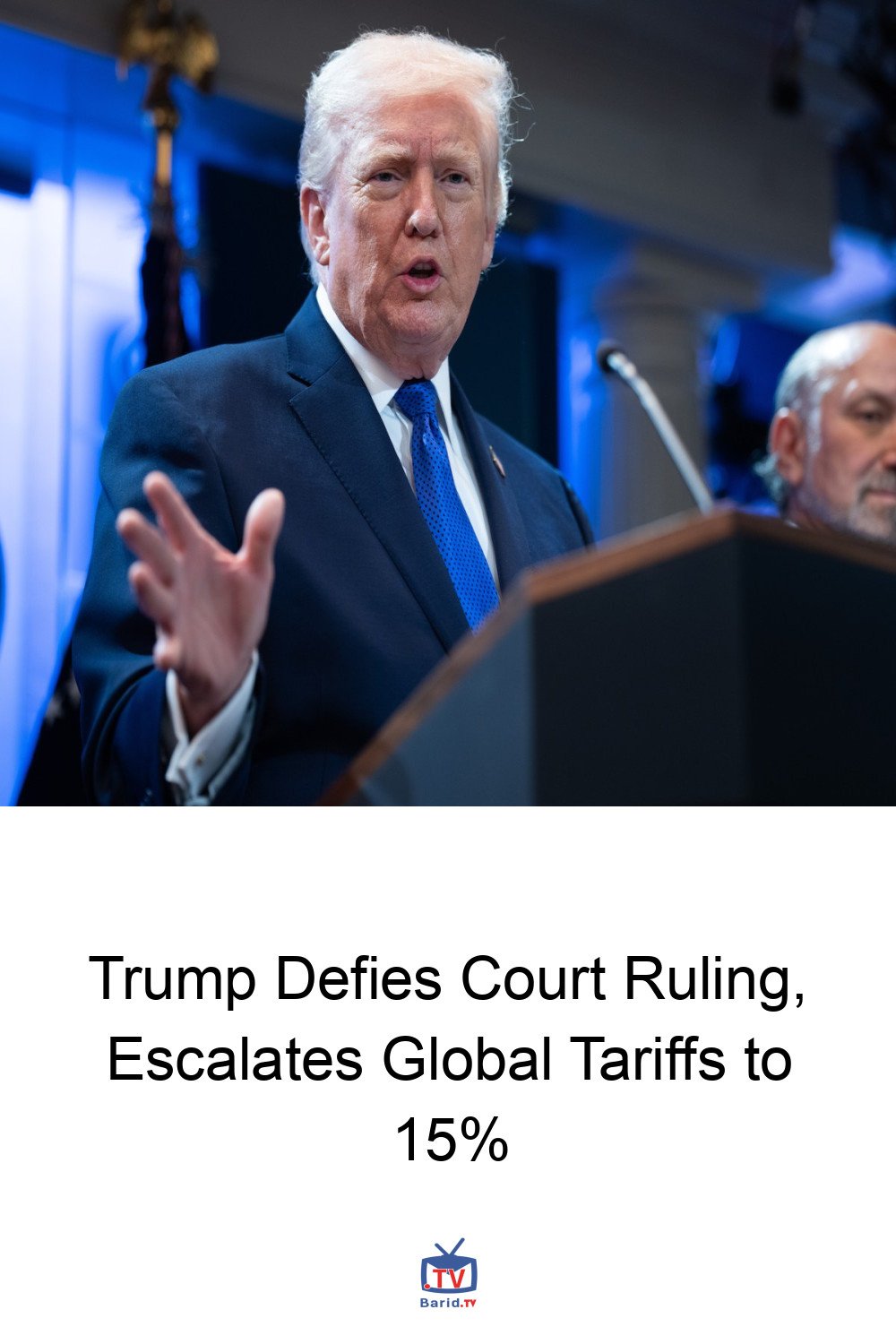
In a defiant move following a significant judicial setback, President Donald Trump has escalated his newly imposed global tariff from 10% to 15%, effective immediately. The announcement, made via his Truth Social platform, came just one day after the US Supreme Court delivered a resounding blow, striking down the majority of his sweeping trade policies as unconstitutional.
A Swift Rebuttal to Judicial Oversight
President Trump wasted no time in responding to the Supreme Court’s decision. On Saturday, he declared, “I, as President of the United States of America, will be raising the 10% Worldwide Tariff to the fully allowed, and legally tested, 15% level.” He characterized the court’s ruling as “ridiculous” and “extraordinarily anti-American,” signaling his intent to push the boundaries of presidential trade authority.
This escalation followed an initial executive order signed Friday, hours after the Supreme Court’s verdict, which had already reinstated a 10% global tariff. Critics have long accused Trump of overstepping constitutional boundaries, viewing his tariff strategies as an unlawful power grab that bypassed Congress and destabilized crucial global trade relationships.
The Supreme Court’s Stance
The Supreme Court’s 6-3 majority ruling on Friday determined that Trump had exceeded his constitutional authority. The justices found that his previous import taxes, levied under the International Emergency Economic Powers Act of 1977 – a law specifically reserved for national emergencies – lacked “clear congressional authorization.” Chief Justice John Roberts emphasized that the 1977 law “does not authorize the president to impose tariffs” without such explicit approval.
While three conservative justices, Clarence Thomas, Samuel Alito, and Brett Kavanaugh, dissented, Kavanaugh notably warned of potential “chaos” stemming from the decision, particularly regarding refunds for duties already collected. Analysts had estimated these tariffs generated over $130 billion in 2025, with French Economy Minister Roland Lescure suggesting a figure closer to $185 billion.
A New Legal Battleground: The Trade Act of 1974
Undeterred, Trump is now leveraging Section 122 of the Trade Act of 1974. This distinct legal provision allows for a temporary import surcharge of up to 15% for a maximum of 150 days, specifically to address significant balance-of-payments deficits. However, any extension beyond this 150-day window would necessitate congressional approval, setting the stage for potential legislative clashes.
The new 15% tariff is set to take effect on February 24, with notable exemptions for pharmaceutical products and goods covered by the US-Mexico-Canada Agreement (USMCA).
Global Repercussions and European Resistance
The heightened tariff rate will impact countries that had existing trade agreements with Washington, including key economic partners like the European Union, Japan, South Korea, and Taiwan. Interestingly, major partners such as China, Mexico, and Canada may see an overall reduction in the tariffs previously imposed on their exports, a complex outcome of the shifting legal landscape.
European leaders have swiftly called for a coordinated response. French President Emmanuel Macron, while welcoming the Supreme Court’s initial ruling, urged calm and emphasized Europe’s need to pursue “the fairest rules possible.” German Chancellor Friedrich Merz announced his intention to seek “a very clear European position” ahead of his planned visit to Washington, while France’s trade minister, Nicolas Forissier, confirmed that retaliatory EU measures remain a distinct possibility.
Market Reactions and Future Outlook
Despite the trade turbulence, Wall Street showed resilience, with the S&P 500 closing 0.69% higher and the Nasdaq gaining 0.90% on Friday. In Paris, the CAC 40 index soared past 8,500 points for the first time, buoyed by strong performances in luxury and export sectors.
Looking ahead, President Trump indicated that his administration would introduce new “legally permissible” tariffs in the coming months. He also announced the initiation of Section 301 investigations, targeting the trade practices of most major trading partners, signaling a continued aggressive stance on international trade.
For more details, visit our website.
Source: Link