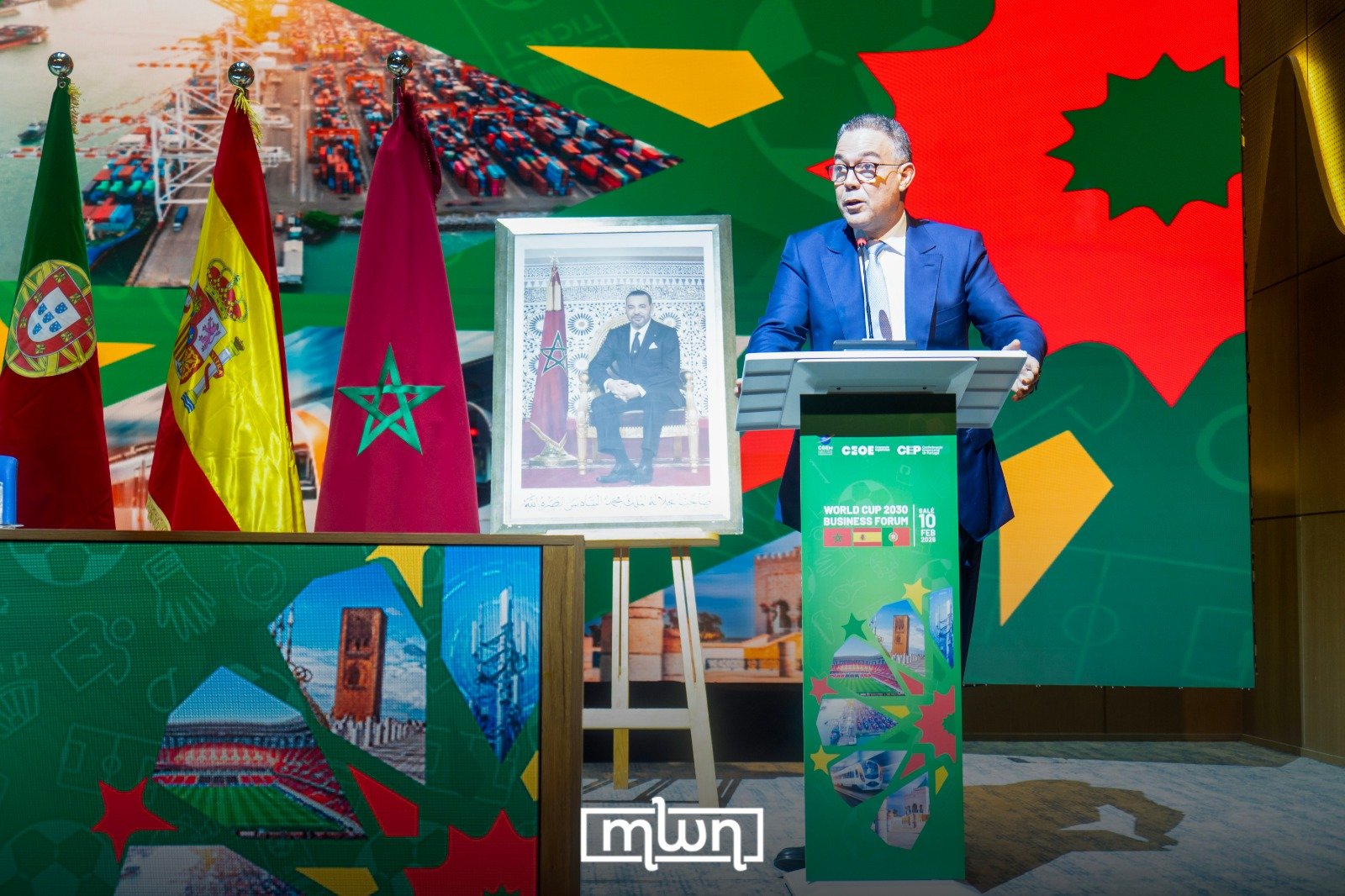

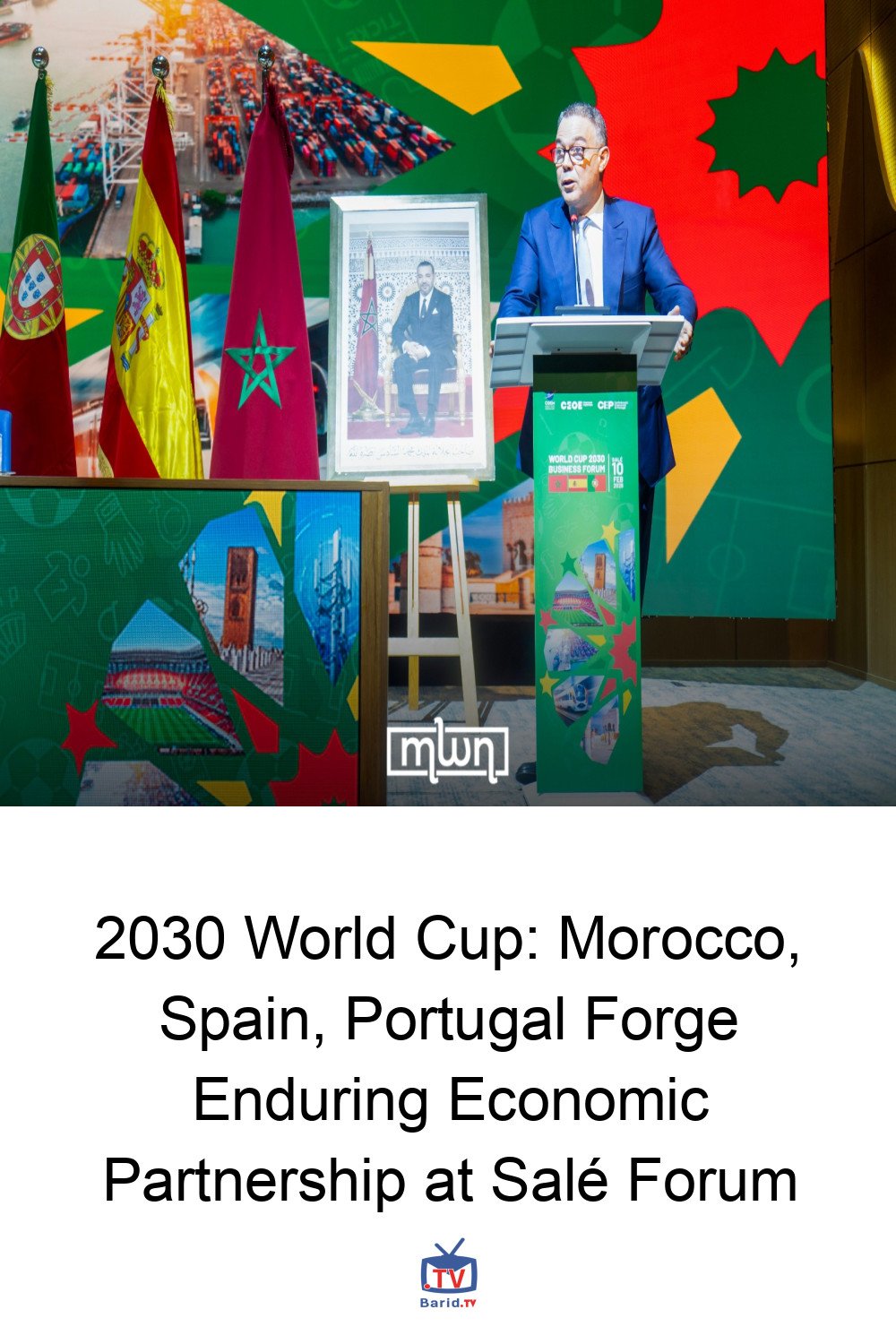
As the countdown to the 2030 FIFA World Cup begins, co-hosts Morocco, Spain, and Portugal are setting the stage for an event far grander than a mere football tournament. A pivotal business forum held recently in Salé, Morocco, brought together an influential assembly of business leaders, policymakers, and institutional figures, signaling a collective commitment to transform the World Cup into a robust, long-term economic and regional partnership.
A Vision Beyond the Tournament: The Salé Summit
The Mohammed VI Complex in Salé played host to this significant Morocco-Spain-Portugal Business Forum, orchestrated through the collaborative efforts of the General Confederation of Moroccan Enterprises (CGEM), the Spanish Confederation of Business Organizations (CEOE), and the Portuguese Business Confederation (CIP). More than just a meeting, the forum served as a crucible where economic ambition, political alignment, and deep cultural proximity converged around a shared global objective.
Participants engaged in discussions that underscored a strategic shift: viewing the co-hosted World Cup not as a fleeting sporting spectacle, but as a powerful catalyst for enduring economic growth and regional integration. The emphasis was firmly placed on leveraging the global spotlight to foster sustainable development across the three nations.
Diplomacy and Culture: Uniting Nations Through Sport
For Nuno Gabriel Cabral, a counsellor at the Portuguese Embassy, the 2030 World Cup embodies a profound diplomatic and cultural opportunity. “Every time we spoke about the World Cup, there was a spontaneous and very positive reaction, full of enthusiasm,” Cabral shared, noting the palpable excitement among both Moroccan and Portuguese stakeholders. He characterized the tournament as a unique moment capable of naturally fostering closer ties between institutions, businesses, and societies.
“There was an enormous potential that we identified as companies and as public, political, and cultural institutions,” Cabral explained, calling it an “extraordinary pretext to bring people together.” He further highlighted Morocco’s proven track record in converting major events into broader national momentum, asserting that such initiatives inevitably yield positive impacts on bilateral relations across economic, political, and cultural spheres.
Tangible Cooperation: Building a Shared Future
From the Moroccan industry’s vantage point, Mohamed Mahboub, President of the National Federation of Building and Public Works, viewed the forum as a crucial practical milestone on the road to 2030. He remarked that the discussions provided “a clearer view of the state of preparation for the World Cup in the three countries and of the possibilities for collaboration between their companies.”
Mahboub emphasized that the scope of cooperation extends far beyond traditional construction projects. “Each country brought its own experience across many sectors,” he stated, detailing opportunities in vital areas such as energy, tourism, security, and telecommunications, alongside infrastructure development. Crucially, he stressed that these exchanges are designed to create mutual benefit, fostering synergy rather than competition among the participating nations’ enterprises.
Towards an Unprecedented 2030 World Cup
A resounding message of political will and collective determination permeated the forum. Mahboub articulated a shared ambition to deliver a tournament that would set new global benchmarks for organization and execution. “This confirmed a shared desire for cooperation between the companies of the three countries,” he affirmed, adding, “The objective was clear: to ensure that the 2030 World Cup succeeded and became the best organized edition to date.”
As Morocco, Spain, and Portugal embark on this unprecedented co-hosting venture, the deliberations in Salé underscore a forward-looking vision. The 2030 World Cup is being strategically positioned within a durable framework of robust economic partnership, seamless regional coordination, and significant long-term investment, promising a legacy that will resonate far beyond the final whistle.
For more details, visit our website.
Source: Link