

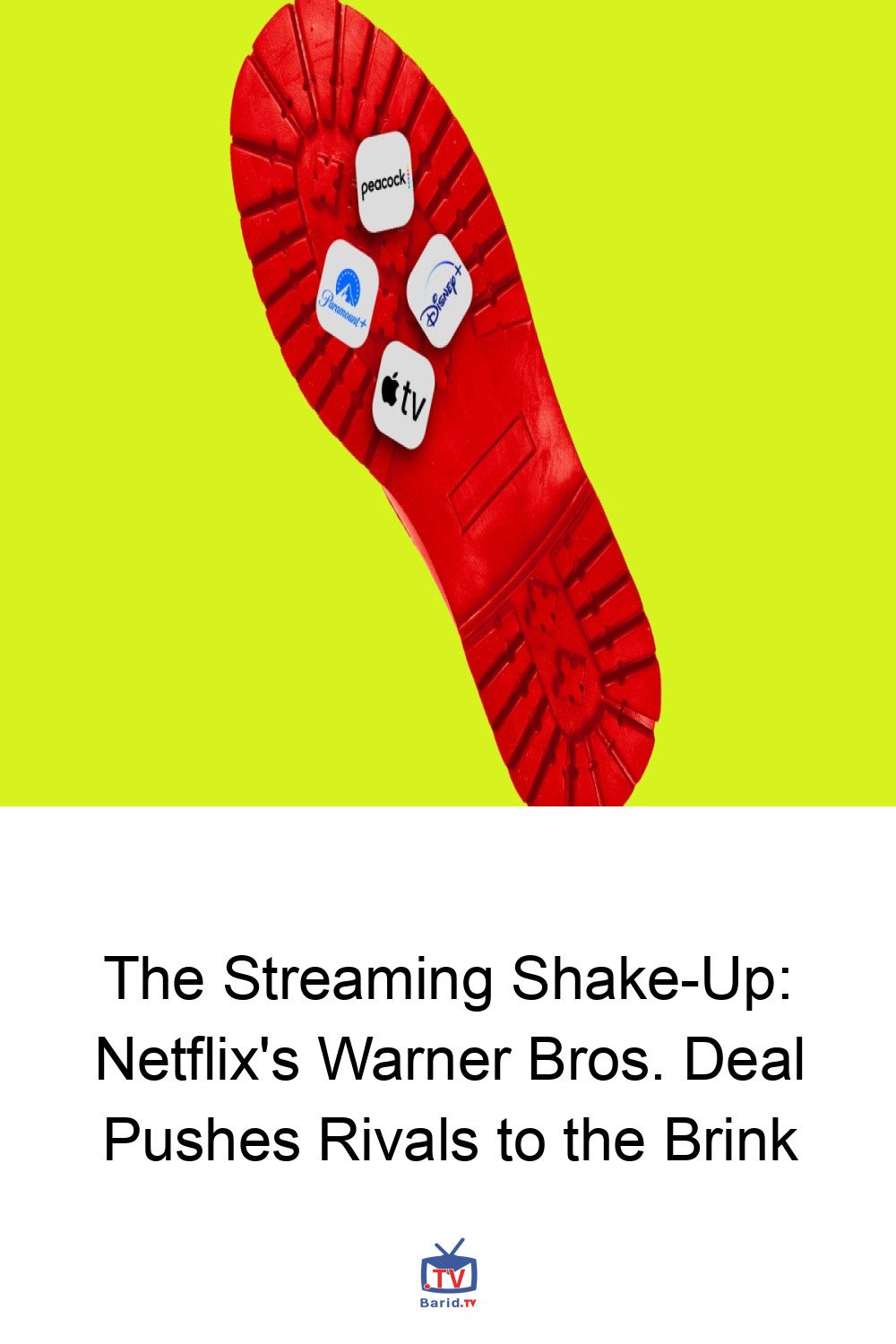
The streaming landscape is undergoing a seismic shift, and the tremors are being felt across the industry. Netflix’s colossal $82.7 billion acquisition of Warner Bros. isn’t just a business transaction; it’s a declaration of dominance that has sent rival platforms scrambling into survival mode. This monumental deal is poised to redefine how we consume entertainment, forcing major players like Paramount Plus, Disney Plus, Peacock, and Apple TV to fundamentally rethink their strategies.
The Fading Golden Age of Streaming
Just a few years ago, between 2019 and 2021, the streaming world was experiencing a vibrant renaissance. New contenders emerged, including Paramount Plus, Disney Plus, Apple TV, Peacock, and HBO Max, all eager to challenge the established reign of Netflix, Hulu, and Amazon Prime Video. This era saw an explosion of original, high-quality content like
Ted Lasso, The Mandalorian, and Star Trek: Strange New Worlds, making subscriptions to multiple services genuinely appealing. Prices were competitive, with Disney Plus launching at an astonishingly low $6.99 without ads.
The Inevitable Crunch
However, this golden age proved fleeting. By 2022, the market became oversaturated, and the pandemic-driven surge in sign-ups began to wane. Many of Netflix’s competitors struggled to achieve profitability, leading to a significant cutback in adult scripted series and numerous cancellations. Even Netflix, the long-time leader, felt the pressure, reporting its first subscriber loss in over a decade in April 2022. The industry responded with a stark shift: previously ad-free platforms like Netflix, Disney Plus, HBO Max, and Amazon Prime Video introduced commercials, hiked subscription prices, and cracked down on password sharing – a clear signal of tightening belts and a desperate search for revenue.
The Current State: Plateau and Pivot
Fast forward to 2025, and the narrative has diverged sharply. Netflix continues its impressive growth trajectory, adding 25 million subscribers in 2025 to reach a global total of 325 million. In stark contrast, many rivals are experiencing a plateau. Peacock managed to add three million subscribers in late 2025, while Paramount grew by 1.4 million. Disney Plus saw a modest increase of 1.5 million subscribers in the US and Canada in the three months leading up to November 2025, but, like Netflix, has since ceased reporting these figures quarterly, perhaps indicating a less rosy picture.
Beyond Scripted: The Rise of Live Sports and Ads
Scraping for new subscribers, competitors are increasingly turning to exclusive live sporting events as a powerful draw. Paramount Plus now boasts the UFC, Peacock offers exclusive Monday night NBA games through the 2025-2026 season, and Apple TV has secured Major League Soccer, with Formula 1 races joining its roster in March 2026. Simultaneously, advertising has become an indispensable revenue stream. Data from Antenna reveals that a significant 46 percent of US subscribers to major platforms like Disney Plus, Hulu, HBO Max, Netflix, Paramount Plus, Peacock, and Discovery Plus are now on ad-supported plans, signaling a new era where commercials are an expected, if sometimes “annoying,” part of the streaming experience.
Netflix’s Game-Changing Acquisition and the Road Ahead
The $82.7 billion Warner Bros. acquisition by Netflix is set to fundamentally reshape the streaming ecosystem. This deal grants Netflix unprecedented control over a vast content library, serving its 325 million subscribers and the 128 million signed up to HBO Max. While there’s a significant overlap – Netflix co-CEO Ted Sarandos noted that 80 percent of HBO Max subscribers also subscribe to Netflix – the consolidation of content under one giant umbrella creates an undeniable powerhouse.
The Era of Bundles and Consolidation
For the remaining competitors, the path forward is clear: unite or perish. The industry is already witnessing a surge in bundling, a strategy that not only offers subscribers a more affordable alternative to individual subscriptions but also significantly reduces churn. A compelling example is the Disney Plus, Hulu, and HBO Max bundle launched in 2024, which saw 80 percent of its 1.6 million sign-ups remain subscribed three months later, according to Antenna data. This trend is only set to accelerate.
Further consolidation is also on the horizon. Disney is actively working to fully integrate Hulu within the Disney Plus app by year-end. Paramount, which reportedly vied for Warner Bros. itself, is now rumored to be exploring a merger of its Paramount Plus streaming service, indicating a broader industry movement towards fewer, larger entities capable of competing with the new Netflix-Warner Bros. behemoth. The streaming wars are far from over, but the battle lines have been redrawn, ushering in an era where scale, strategic partnerships, and diversified revenue streams will dictate survival.
For more details, visit our website.
Source: Link