
In the fiercely competitive landscape of global business, certain institutions stand out as unparalleled incubators of top-tier leadership. Among them, McKinsey & Company reigns supreme, renowned not just for its lucrative rewards but as a veritable launchpad to the C-suite. A glance through the ranks of Fortune 500 CEOs reveals a striking pattern: a significant number have honed their strategic acumen within the hallowed halls of the consulting giant.
The McKinsey Crucible: Forging Future Leaders
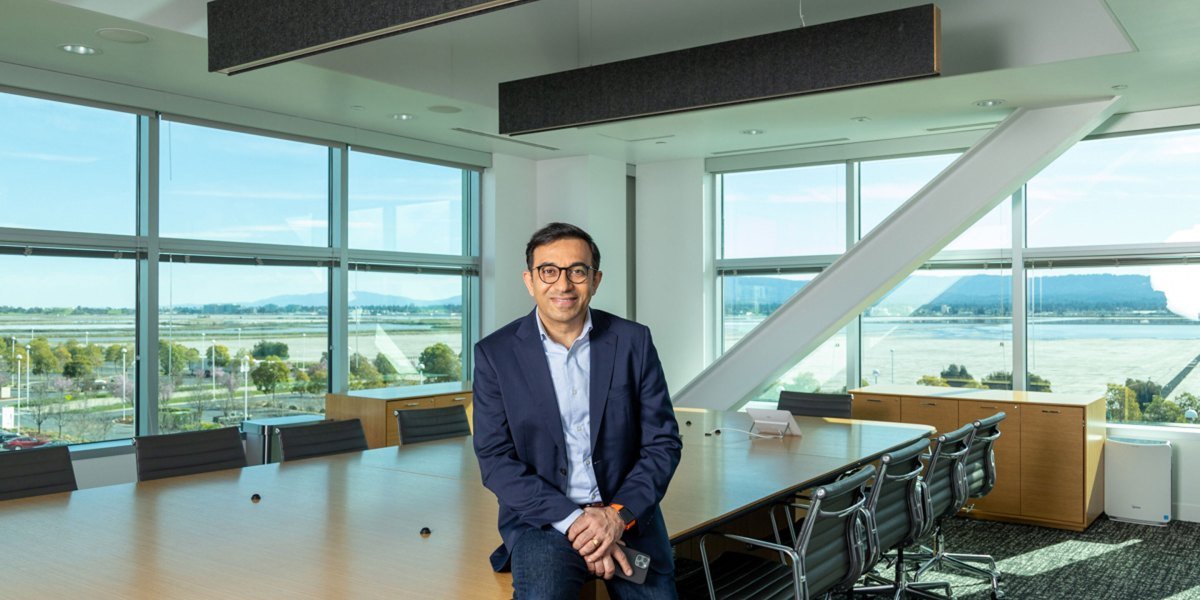
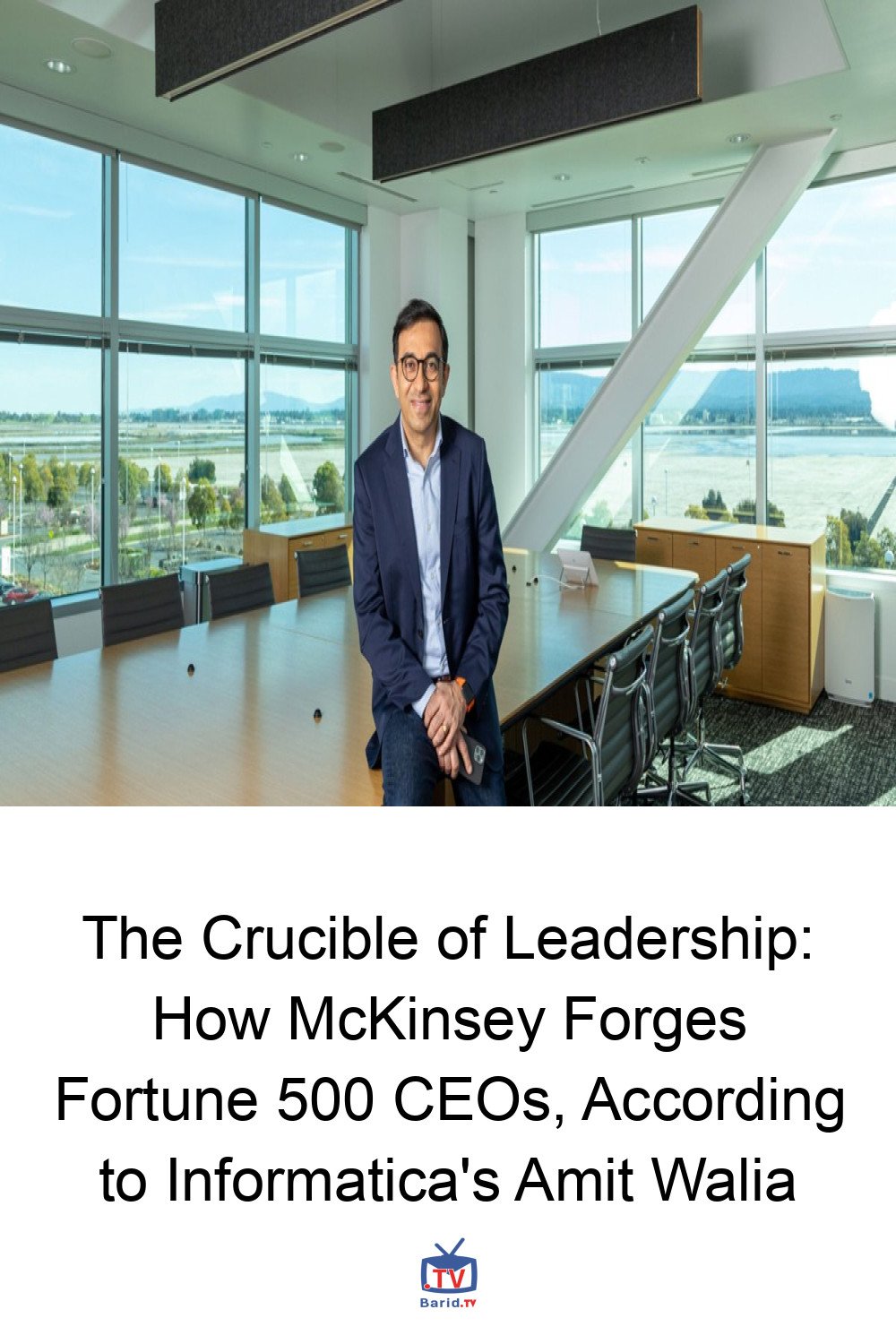
Amit Walia, the visionary CEO steering the $7.6 billion data management powerhouse Informatica, is a prime example of this phenomenon. Following in the footsteps of tech titans like Google’s Sundar Pichai and DoorDash’s Tony Xu, Walia embarked on his post-MBA journey at McKinsey. Far from a mere stepping stone, he describes the experience as a transformative, albeit intensely rigorous, period that meticulously prepared him for the demands of leading a major corporation.
“McKinsey was a dream job for me when I went to business school,” Walia shared with Fortune. “Partly because I was an engineer before business school, and I thought, ‘Look, what a great place to be to learn about business in the broadest way—and, of course, the most intense way.’”
Walia’s career trajectory before McKinsey was already impressive. After earning his undergraduate degree, he served as a senior officer at India’s Tata Steel, overseeing a staggering 20,000 employees at just 22. He then spent two years as a senior engineer at Infosys Technologies before pursuing an MBA from Northwestern’s Kellogg School of Management, another renowned executive training ground. His nearly five years at McKinsey as a senior engagement manager solidified his foundation, priming him for Informatica’s top role in 2020.
Beyond the Comfort Zone: The Rigor of Consulting
The path at McKinsey, Walia recounts, was anything but easy. It was a relentless immersion into complex challenges designed to stretch and sharpen the mind.
Embracing Discomfort and Analytical Precision
“You really get pushed into difficult situations [at McKinsey],” Walia explained. “You have to always have a clear bent of mind to be very analytical, to really distill out the problem to its core. It’s a skill you learn, and that’s the hardest thing in a big job.” This constant pressure, he believes, is where true growth occurs. “You become a better person by being pushed around by the environment of a lot of other smart people.”
This environment also fostered a unique relationship with self-doubt. Walia observed that even the brightest minds at McKinsey grappled with imposter syndrome. “I always joke [that] I felt everybody over there feels like they’re an imposter, because you’re next to another smart person. So you push yourself, and you learn from everybody,” he said.
However, dwelling on self-doubt was a luxury McKinsey consultants couldn’t afford. They were thrust into “complex environments” with myriad variables, trained to swiftly identify the core of an issue. The firm championed “hypothesis-driven problem-solving,” encouraging consultants to devise solutions even in ambiguous situations where no clear “right answer” existed. Every decision was a test, every assumption subject to rigorous validation.
The Gift of Feedback and Continuous Growth
A cornerstone of the McKinsey experience, according to Walia, is its pervasive learning culture and the relentless flow of constructive criticism.
Feedback as a Catalyst for Improvement
“It’s a very learning-based culture. You’re constantly learning, and you get [a] tremendous amount of feedback, which helps you become better all the time,” Walia emphasized. He views feedback not as a judgment, but as an invaluable tool for evolution. “I always say, ‘Feedback is a gift.’ It’s not to tell you what you’re not doing right, it should tell you what you could do better. Those are the few things that have helped me grow over time from my McKinsey experience.”
McKinsey’s Unmatched CEO Pipeline
Walia’s journey is far from an anomaly. McKinsey’s reputation as the preeminent incubator of Fortune 500 CEOs is well-earned. The consulting behemoth has produced more top executives than any other organization globally.
Beyond Walia, Pichai, and Xu, the list of distinguished alumni includes Citigroup leader Jane Fraser and Visa chief executive Ryan McInerney. A 2025 analysis by Fortune editor Ruth Umoh revealed that McKinsey has propelled 18 sitting Fortune 500 CEOs, and 28 globally, into their top roles.
Former and current McKinsey alumni confirm that this outcome is no accident. The firm’s strategy is intentionally rigorous, cycling staffers through diverse industries, geographies, and departments, deliberately pushing them out of their comfort zones. A culture of constructive disagreement is actively fostered, where assumptions and strategies are challenged regardless of seniority.
As Liz Hilton Segel, a senior partner at McKinsey, aptly put it, “You start to believe that more is possible. You build pattern recognition that comes from helping a client do something they didn’t think was even achievable—and that builds confidence you carry forever.”
The McKinsey experience, therefore, isn’t just about problem-solving; it’s about instilling a profound belief in one’s capacity to achieve the seemingly impossible, a trait indispensable for any leader at the helm of a Fortune 500 enterprise.
For more details, visit our website.
Source: Link