

The concept of ‘home’ transcends mere bricks and mortar; it embodies strength, safety, and permanence. Yet, when this fundamental stability is shattered by unforeseen tragedy, the very act of design transforms into a profound instrument of healing and reclamation. Nestled on a tranquil residential street in El Segundo, California, the Pine Ave Residence stands as a powerful testament to architecture’s ability to reframe trauma, not through erasure, but through thoughtful transformation.
A Phoenix Rises: Rebuilding with Purpose
Conceived by the visionary team at AAHA Studio, this 5,100-square-foot home emerged from the devastating aftermath of a fire that rendered the original structure irreparable. What unfolded over two and a half years was a deeply collaborative journey, positioning design as a steadfast anchor capable of restoring calm, confidence, and comfort to a family in need. The AAHA team, acting as both designers and empathetic stewards, meticulously balanced the clients’ aspirations for a renewed home with the complex financial and logistical realities of rebuilding. Given the original structure’s lack of historical significance, the project became an opportunity for reinvention, crafting a new physical form while honoring the existing emotional essence of ‘home’.
Illuminating Hope: The Central Atrium
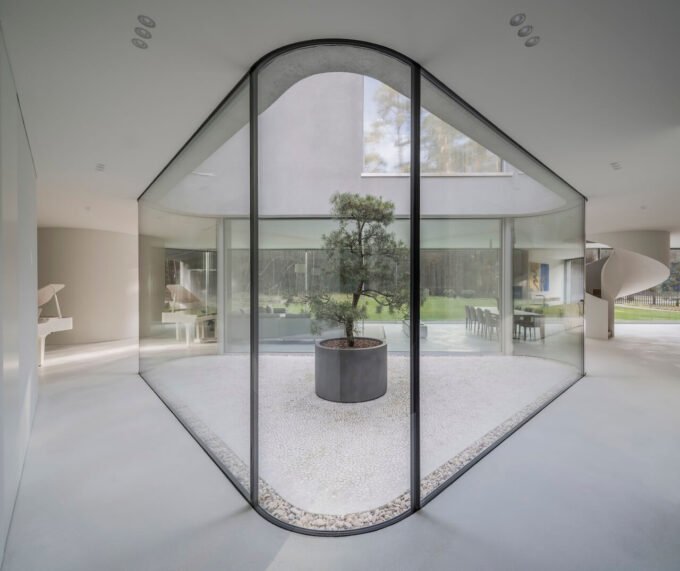
In a dense urban setting, light often proves to be architecture’s most potent tool for renewal. Despite the crowded, narrow lot, AAHA Studio masterfully harnessed this power. The home’s spatial and emotional heart is an ingenious indoor atrium. By leveraging an existing second-floor setback, an underutilized recess was transformed into a central lightwell, drawing abundant daylight deep into the interior. Its minimalist design, featuring slim aluminum framing, allows glass and sky to take precedence, creating a luminous pause. This intentional contrast between industrial precision and the home’s softer, beach-inspired interiors anchors daily life with quiet elegance. Furthermore, this inward-facing strategy offers invaluable privacy in a bustling coastal neighborhood, creating a protective sanctuary that remains open and fluid.
Harmonious Flow and Family Focus
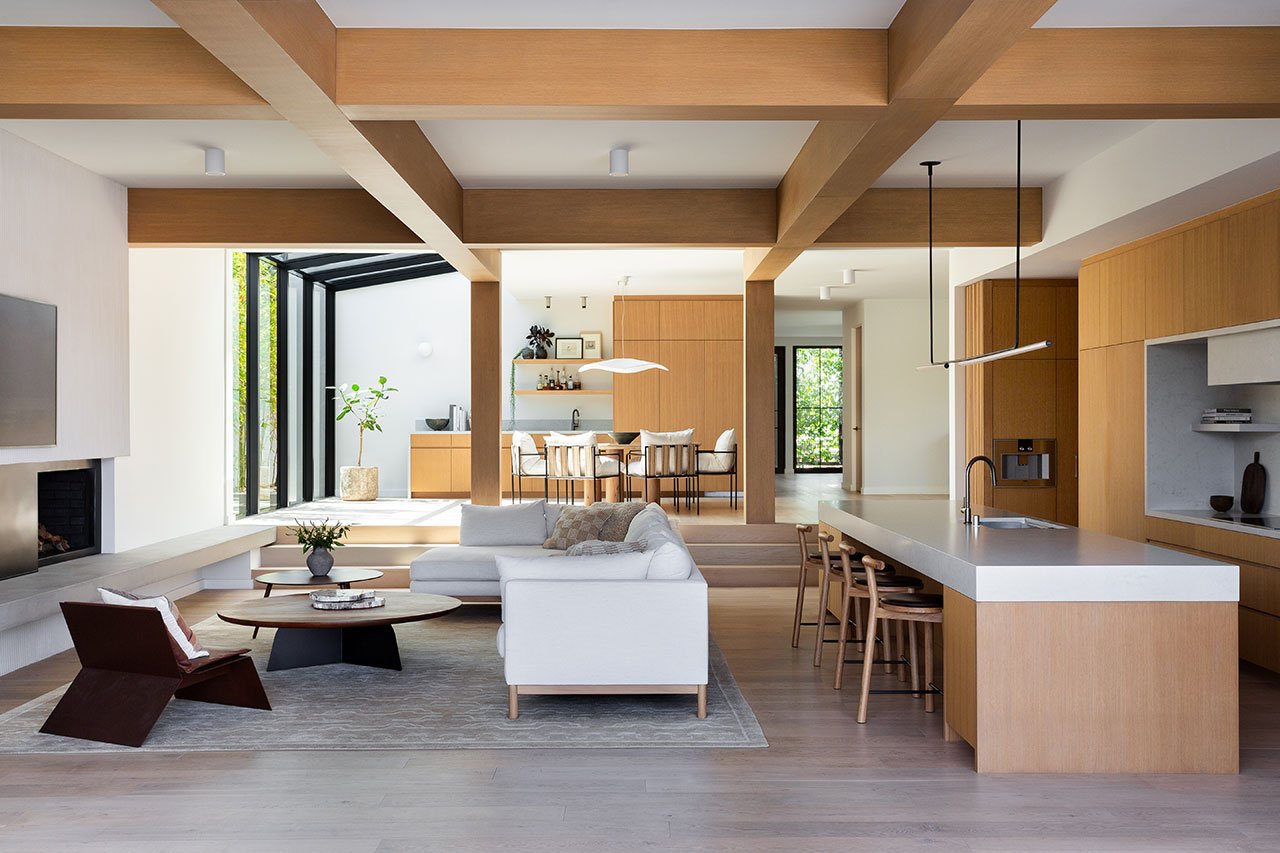
The design promotes a seamless flow throughout the living spaces, all centered around the radiant atrium. A gym extends to an outdoor deck, blurring the lines between indoor and outdoor activity, while a piano strategically placed at the entry underscores music’s central role in the family’s daily rhythm. Sound, much like light, is encouraged to permeate the house, subtly moderated by carefully chosen materials like felt and carpeting, rather than rigid acoustic barriers. The result is a space that feels both animated and serene, capable of expanding for vibrant gatherings or contracting for quiet, intimate evenings, facilitated by subtle level changes and thoughtful visual connections.
Every design aspect reflects a profound commitment to family-centered planning. AAHA Studio designed for growth and evolution, rather than static moments. Each family member was invited to contribute, specifying finishes and shaping spaces to reflect their evolving identities. Notably, productivity was consciously deprioritized in favor of facilitating retreat from demanding professional lives. Flexible communal areas and intimate nooks support both focused activity and playful relaxation, reinforcing the belief that emotional well-being is paramount to a home’s success.
A Private Retreat: The Primary Suite
This ethos culminates in the primary suite, envisioned as a boutique-hotel-like retreat. Without expanding the footprint or introducing excess, AAHA integrated the bedroom, workspace, storage, and dressing areas into a single, highly efficient composition through bespoke millwork. Clutter is meticulously eliminated, ensuring every element serves a clear purpose. In the adjoining bath, plaster textures and natural daylight converge to create a sense of quiet luxury, achieved through masterful restraint.
Beyond Design: A Navigator’s Role
Material and performance decisions were made with equal clarity. Extensive smoke remediation necessitated a complete interior overhaul – HVAC, plumbing, drywall, and windows were all replaced. This allowed for a comprehensive modernization of the home’s infrastructure, bringing it up to current codes and standards. Sustainability is intrinsically woven into the design through passive strategies: cross-ventilation harnesses refreshing ocean breezes, skylights and indirect LED lighting minimize reliance on mechanical systems, and flexible planning ensures long-term adaptability, including an Accessory Dwelling Unit (ADU) designed to evolve with the family over time.
Here, architecture transcends mere memorialization of tragedy. Instead, it quietly and deliberately reframes it into a powerful opportunity for regrowth. By prioritizing empathy, collaboration, and lived experience, AAHA Studio transformed a moment of profound disruption into a home that feels light with possibility, rather than heavy with memory. This project powerfully underscores the architect’s role extending far beyond traditional design. As the studio shares, “This process underscored that the architect’s role extended far beyond design. It required us to act as crucial navigators, helping the clients manage complex negotiations with insurance companies, the city, and the fire department to transform a profound loss into a successful act of rebuilding and renewal.”
To explore more of AAHA Studio’s work, visit aaha.studio. Photography by Amy Bartlam.
For more details, visit our website.
Source: Link