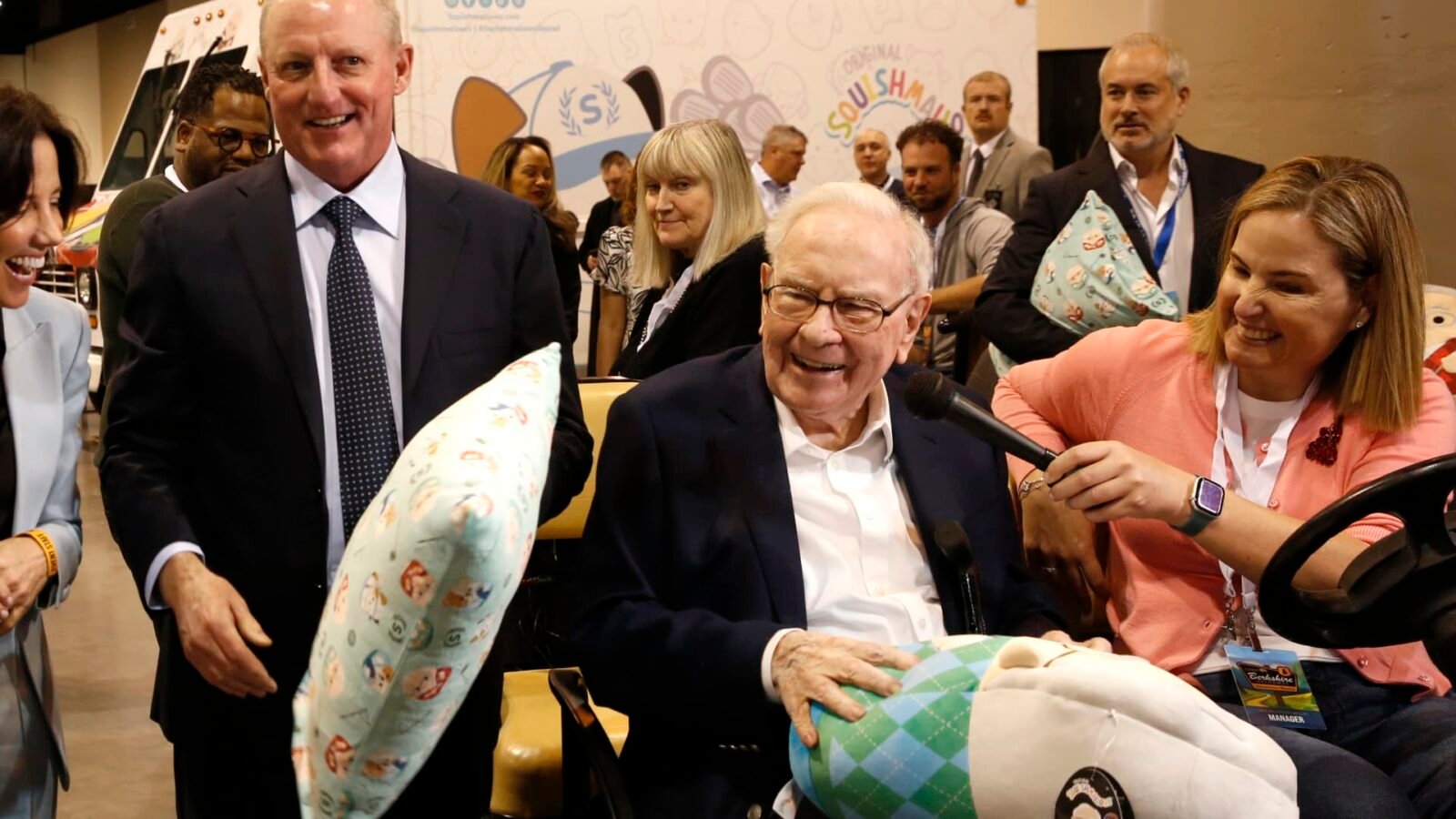

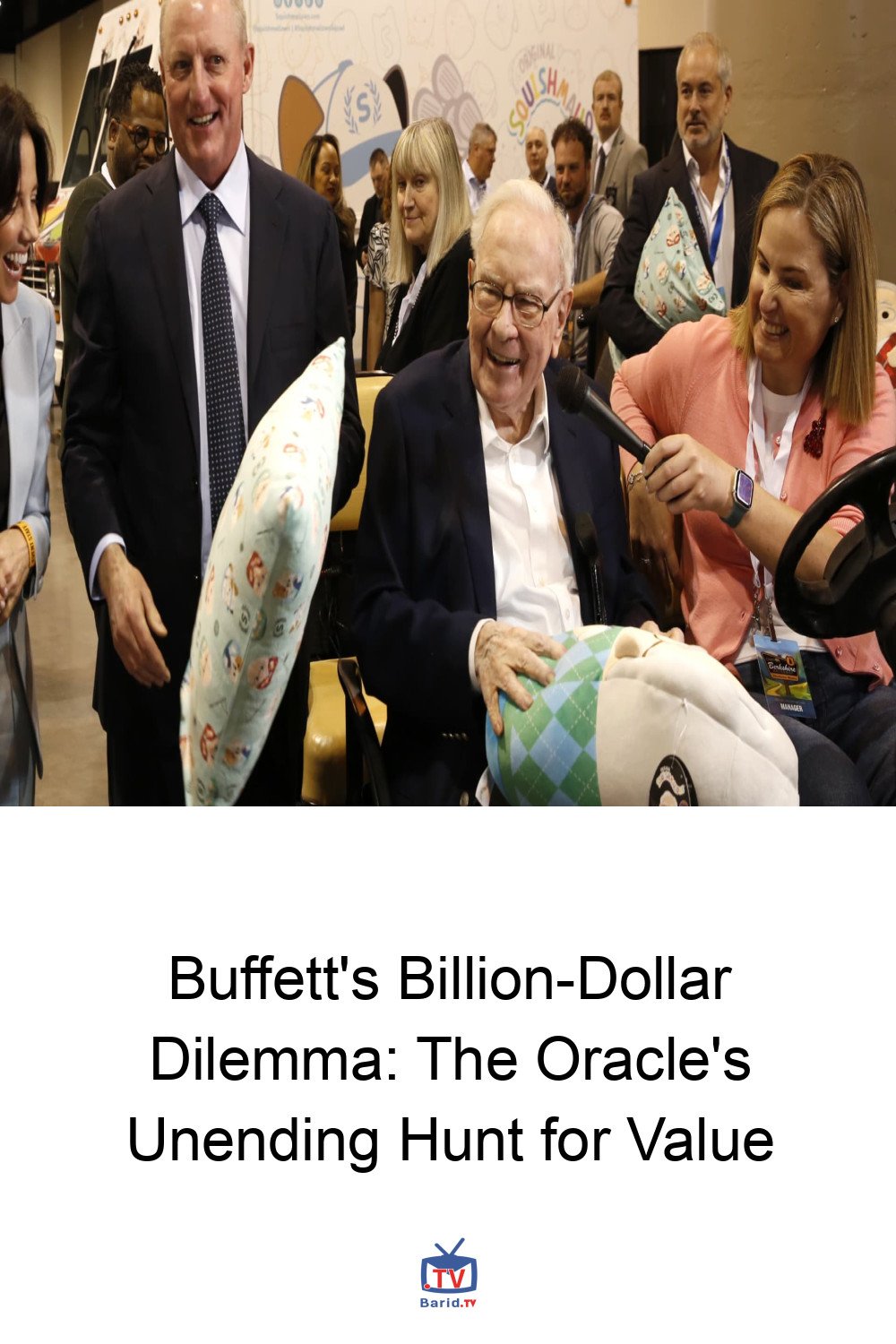
Even in the twilight of his remarkable tenure as CEO of Berkshire Hathaway, the legendary Warren Buffett remained relentlessly focused on the hunt for his next “elephant.” As he prepared to pass the reins to Greg Abel at the dawn of 2026, the 95-year-old Oracle of Omaha made it abundantly clear: the challenge wasn’t a lack of willingness to execute a colossal deal, but rather a scarcity of opportunities that met his exacting standards for value.
The Billion-Dollar Quest: Buffett’s Unending Search for Value
“It’s external circumstances,” Buffett candidly told Becky Quick in a special interview, parts of which aired on CNBC’s “Warren Buffett: A Life and Legacy” special. “Believe me if after we get finished talking you say, ‘I’ve got a great $100 billion new idea.’ I would say, ‘Let’s talk.'” This statement encapsulates the central paradox defining Berkshire Hathaway today: an unprecedented flood of liquidity juxtaposed against a barren landscape of investable assets at “sensible” prices.
By the end of the third quarter of 2025, Berkshire’s cash reserves had swelled to a staggering, record-breaking $381.6 billion. Yet, despite this immense financial firepower, Buffett found virtually no opportunities large enough to significantly impact the conglomerate’s overall performance. “When I look at the stock market, when I look at companies of a size that would make any difference to our total, I don’t see anything,” he lamented. While some smaller acquisitions were made, he dismissed them as “peanuts” in the grand scheme of Berkshire’s capital.
Cash as Oxygen: Buffett’s Liquidity Philosophy
Buffett has long championed the importance of maintaining ample cash reserves, likening liquidity to oxygen – cheap to acquire but catastrophic to lack at a critical moment. “You always want to have enough,” he explained. “You don’t have to pay a lot for it. But you do need oxygen. And cash is that way. You always need to have it available because you do not know what will happen.”
However, the veteran investor also consistently warns that cash is a poor long-term asset. His ideal scenario is to deploy capital into high-quality businesses at fair prices. “I’d rather have $100 billion and a really good business at a sensible price than have $100 billion in cash,” he asserted. The recent growth in Berkshire’s cash pile has been exacerbated by significant divestments, including substantial portions of its holdings in tech giant Apple and Bank of America.
Greg Abel’s Defining Challenge: Deploying the Mountain of Capital
While Buffett’s final months as CEO saw a notable $9.7 billion acquisition of Occidental Petroleum’s chemical business (OxyChem) – the largest since the $11.6 billion purchase of insurer Alleghany in 2022 – these deals barely made a dent in Berkshire’s burgeoning cash mountain. Now, with Greg Abel firmly in the CEO seat, the pressure to effectively deploy this capital is immense.
Abel, a seasoned lieutenant known for his role in transforming Berkshire Hathaway Energy, possesses established deal-making credentials. However, he may not be afforded the same boundless patience shareholders have historically extended to Buffett. With the conglomerate’s shares underperforming the broader market and a colossal sum awaiting investment, navigating this liquidity paradox will undoubtedly be a defining challenge for Berkshire’s new era under Abel’s leadership. The world watches to see how he will find the next “elephant” to move Berkshire’s formidable needle.
For more details, visit our website.
Source: Link