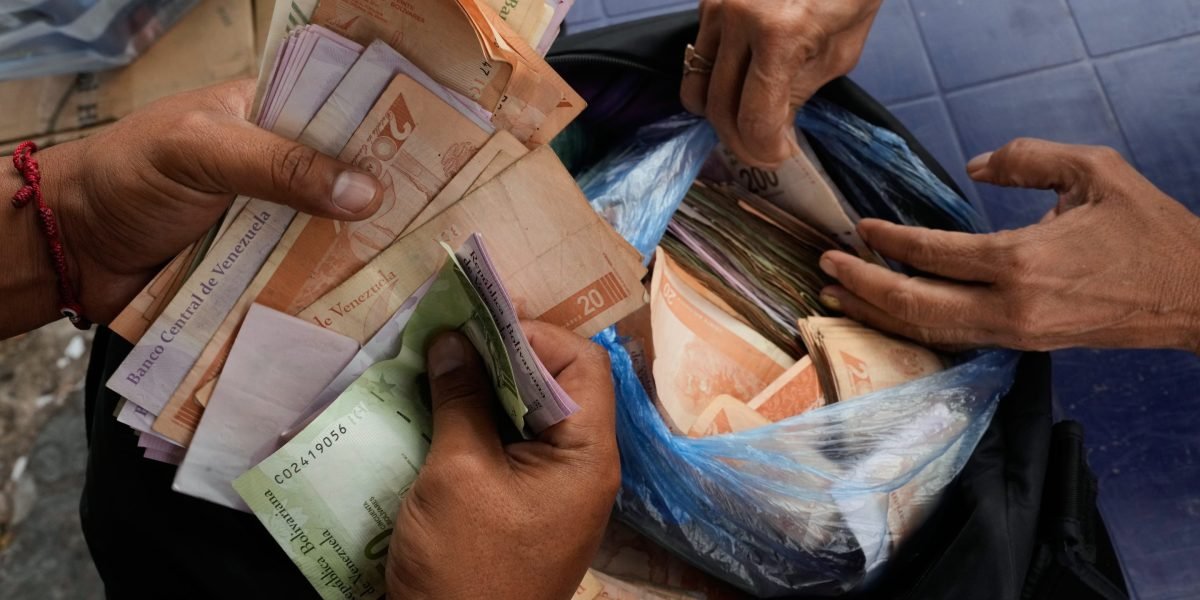

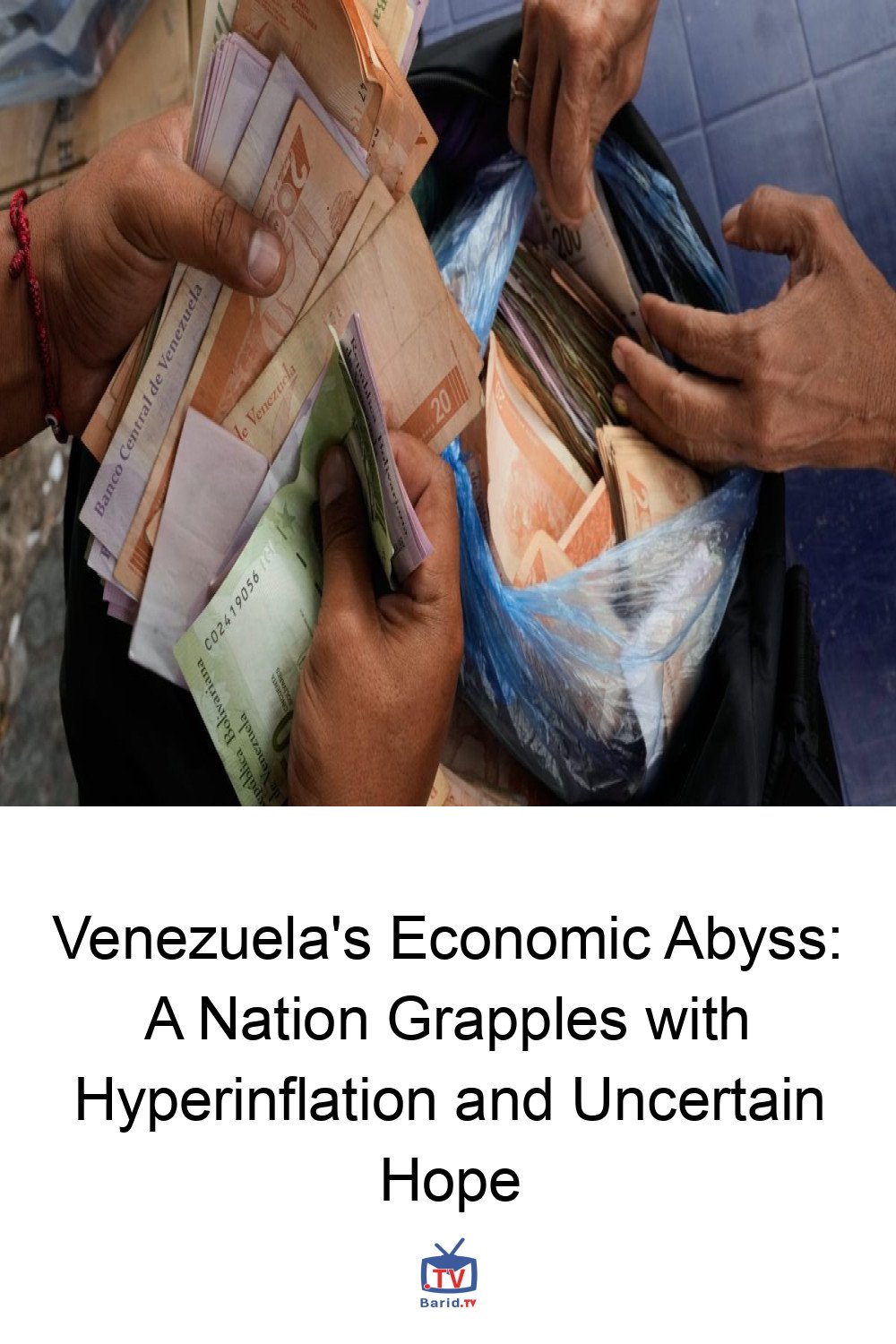
In the halls of power, grand pronouncements echo with promises of billions flowing into Venezuela, resurrecting its once-thriving oil industry, and ushering in an era of prosperity. Yet, on the bustling, albeit quieter, streets of Caracas, the reality for ordinary Venezuelans remains starkly different. Here, amidst the struggle, a utility worker named Ana Calderón simply yearns for the ingredients to make a pot of soup. “Food is incredibly expensive,” she laments, highlighting a staggering 682% inflation rate that sees celery prices double in weeks and a kilogram of meat cost 25 times the monthly minimum wage. Her sentiment, “Everything is so expensive,” encapsulates the daily agony of a nation teetering on the brink.
The Chilling Grip of Hyperinflation
Venezuela’s economic crisis is not merely a statistic; it’s a lived nightmare. With an inflation rate that has spiraled out of control, the purchasing power of the bolívar has all but vanished. Citizens are forced into an exhausting cycle of working two, three, or even more jobs, only to find their cupboards and refrigerators remain tragically bare. Children go to bed hungry, and parents face agonizing choices between essential medication and groceries. An estimated eight out of ten Venezuelans now live in poverty, a grim reality that has driven millions to seek refuge in other countries.
Even the once-vibrant street markets, like the one in Caracas’s Catia neighborhood, now bear the scars of this economic devastation. What was once a chaotic hub of shoppers has quieted, as soaring prices deter locals. Neila Roa, a young mother, exemplifies this struggle, selling cigarettes to passersby while constantly adjusting prices to keep pace with daily currency fluctuations. “Inflation and more inflation and devaluation,” she states, her voice tinged with resignation. “It’s out of control.”
Promises vs. Reality: A Nation in Limbo
The recent news of former President Nicolás Maduro’s capture and the U.S.’s bold promises of economic revival have stirred a complex mix of hope and skepticism among Venezuelans. While the outlook may have “significantly changed” on paper, as Venezuelan-born economist Luisa Palacios notes, the tangible improvements are yet to materialize. “What they’re seeing is repression. They’re seeing a lot of confusion,” Palacios explains. “People are hopeful and expecting that things are going to change but that doesn’t mean that things are going to change right now.”
The U.S. administration, under President Trump, has spoken of distributing proceeds from Venezuelan oil sales back to its population. However, the immediate focus appears heavily weighted towards American interests: extracting more oil, boosting U.S.-made exports, and repairing Venezuela’s dilapidated electricity grid. Meetings with U.S. oil executives underscore this agenda, even as Trump himself acknowledges that reviving the country’s oil industry would be a multi-year endeavor.
The Oil Curse: From Boom to Bust
Venezuela, a nation blessed with the world’s largest proven oil reserves, has seen its destiny inextricably linked to crude. The era of Hugo Chávez, elected in 1998, witnessed an oil bonanza that fueled expansive social programs, generating an estimated $981 billion between 1999 and 2011. Yet, this prosperity proved fleeting. Rampant corruption, declining oil production, and misguided economic policies sowed the seeds of a crisis that became undeniable by 2012.
Maduro, Chávez’s handpicked successor, inherited a nation already on a precipice. His presidency was defined by a deepening political, social, and economic maelstrom, exacerbated by plummeting oil prices. The middle class virtually evaporated, millions plunged into poverty, and over 7.7 million people were compelled to abandon their homeland in search of survival.
Reviving the Giant: A Path to Recovery?
Economist Albert Williams of Nova Southeastern University emphasizes the transformative potential of revitalizing Venezuela’s energy sector. In a country where oil is the dominant industry, a resurgence could trigger a powerful ripple effect, spurring the creation of restaurants, stores, and countless other businesses. “If you improve the oil industry, you improve the country,” Williams asserts. However, the critical unknowns remain: the certainty of such a revitalization, its timeline, and how a government shaped by years of Maduro’s rule would adapt to a new power dynamic. “That’s the billion-dollar question,” he concludes, highlighting the profound uncertainty that continues to grip Venezuela’s future.
A Future Shrouded in Uncertainty
For individuals like Neila Roa, grappling with daily survival, the grand narratives of political change and economic recovery feel distant. She views a fix for Venezuela’s economy as nothing short of “a miracle.” The capture of Maduro, while significant, leaves her with more questions than answers. “What we don’t know is whether the change is for better or for worse,” she reflects. “We’re in a state of uncertainty. We have to see how good it can be, and how much it can contribute to our lives.” This sentiment of cautious, almost desperate, hope underscores the precarious position of a nation caught between a devastating present and an unpredictable future.
For more details, visit our website.
Source: Link