
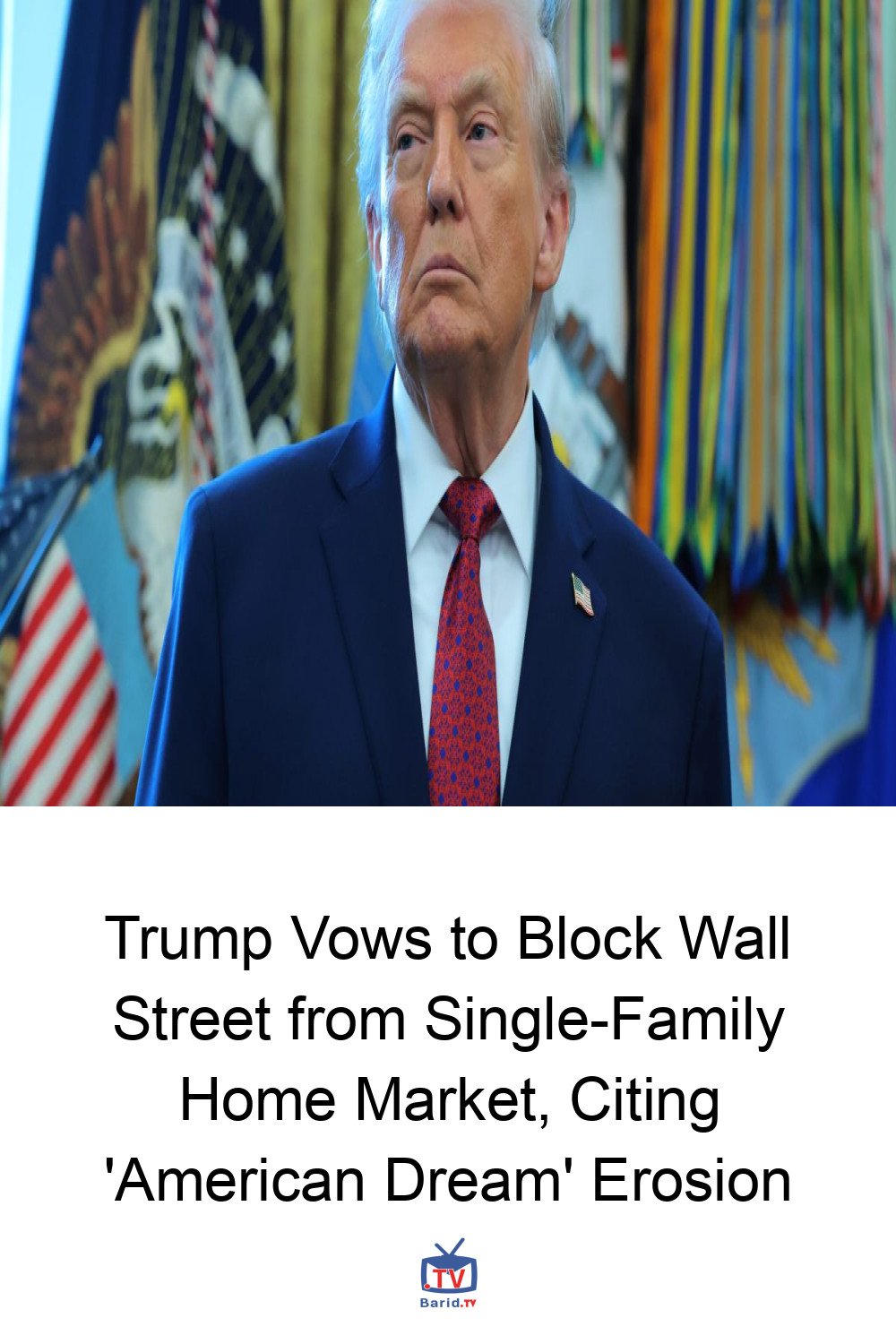
Trump Targets Wall Street in Bold Housing Policy Proposal
Former President Donald Trump has unveiled a controversial plan to bar large Wall Street investors from acquiring single-family homes, framing the initiative as a crucial step to restore the ‘American Dream’ of homeownership for ordinary families. In a recent Truth Social post, Trump lamented that this dream is “increasingly out of reach for far too many people, especially younger Americans,” and pledged to prevent major investors from snatching up the “proverbial house next door.”
The proposed federal ban would specifically target institutional investors and major Wall Street firms, a segment that has transformed single-family homes into a lucrative asset class for large landlords and private equity. Trump positioned this as a pivotal shift in housing policy, asserting that “people live in homes, not corporations” and that families should not be forced to compete against “billion-dollar funds” for starter houses.
The ‘American Dream’ Under Siege?
Trump linked the current squeeze on homebuyers to what he described as “record high inflation” under President Joe Biden and Democrats, arguing that soaring costs have locked many young Americans out of the market. “For a very long time, buying and owning a home was considered the pinnacle of the American Dream. It was the reward for working hard, and doing the right thing,” he stated, emphasizing the cultural significance of homeownership.
The housing market has indeed seen significant turbulence in recent years, experiencing a boom during the pandemic where prices in many markets doubled, driven by shifts towards remote work and social distancing. This rapid appreciation, coupled with rising interest rates, has made entry into the market challenging for many.
Industry Pushback: A Counter-Narrative
However, the proposed ban has not been met without strong opposition from within the industry. Sean Dobson, CEO of The Amherst Group, one of America’s leading institutional landlords, vehemently disagreed with the premise. In a statement to Fortune, Dobson called it “inaccurate” to blame institutional ownership for affordability issues, arguing it “gets both the problem and the solution wrong.”
Dobson contended that America’s housing crisis stems from “years of policy failure, not the families who rent or the capital that houses them.” He highlighted that Amherst serves over 200,000 residents, nearly 85% of whom would not qualify to buy the homes they currently occupy. He branded Trump’s potential ban as “unacceptable,” warning it would jeopardize institutional rental housing and, by extension, real families. “Our industry is not the cause of the housing crisis, it is part of the solution,” Dobson asserted.
Navigating Policy Avenues and Market Reactions
Trump’s message deliberately focused on the symbolic impact of investors acquiring properties in residential neighborhoods, promising to prevent Wall Street from turning homes into mere investment vehicles. Housing advocates and some local officials have long warned that bulk purchases by institutional buyers can deplete the supply of homes for sale, potentially pushing families into a permanent renter status. Trump’s post echoed these criticisms, arguing that large-scale buying crowds out first-time buyers and inflates prices beyond the reach of middle-class incomes.
While no draft legislation or executive order has been released, officials and analysts suggest the administration is exploring various avenues, including outright purchase bans for institutional buyers and stricter limits on the number of single-family homes a large investor can own. Any such measures would likely target firms exceeding specific asset or ownership thresholds, rather than small, local landlords.
The announcement sent ripples through the market, with shares of single-family rental real estate investment trusts (REITs) and housing-focused private equity firms sliding. Investors are now weighing the potential risks of future curbs on their portfolio growth. Analysts note that some of the largest players collectively own hundreds of thousands of houses, making them particularly vulnerable to any federal ownership caps or purchase prohibitions.
Trump has indicated he will elaborate on his plan later this month, including during his speech at the World Economic Forum meeting in Davos, where housing affordability is expected to be a key topic.
For more details, visit our website.
Source: Link