
The AI’s Intuition: Navigating Urban Chaos
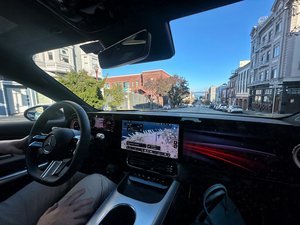
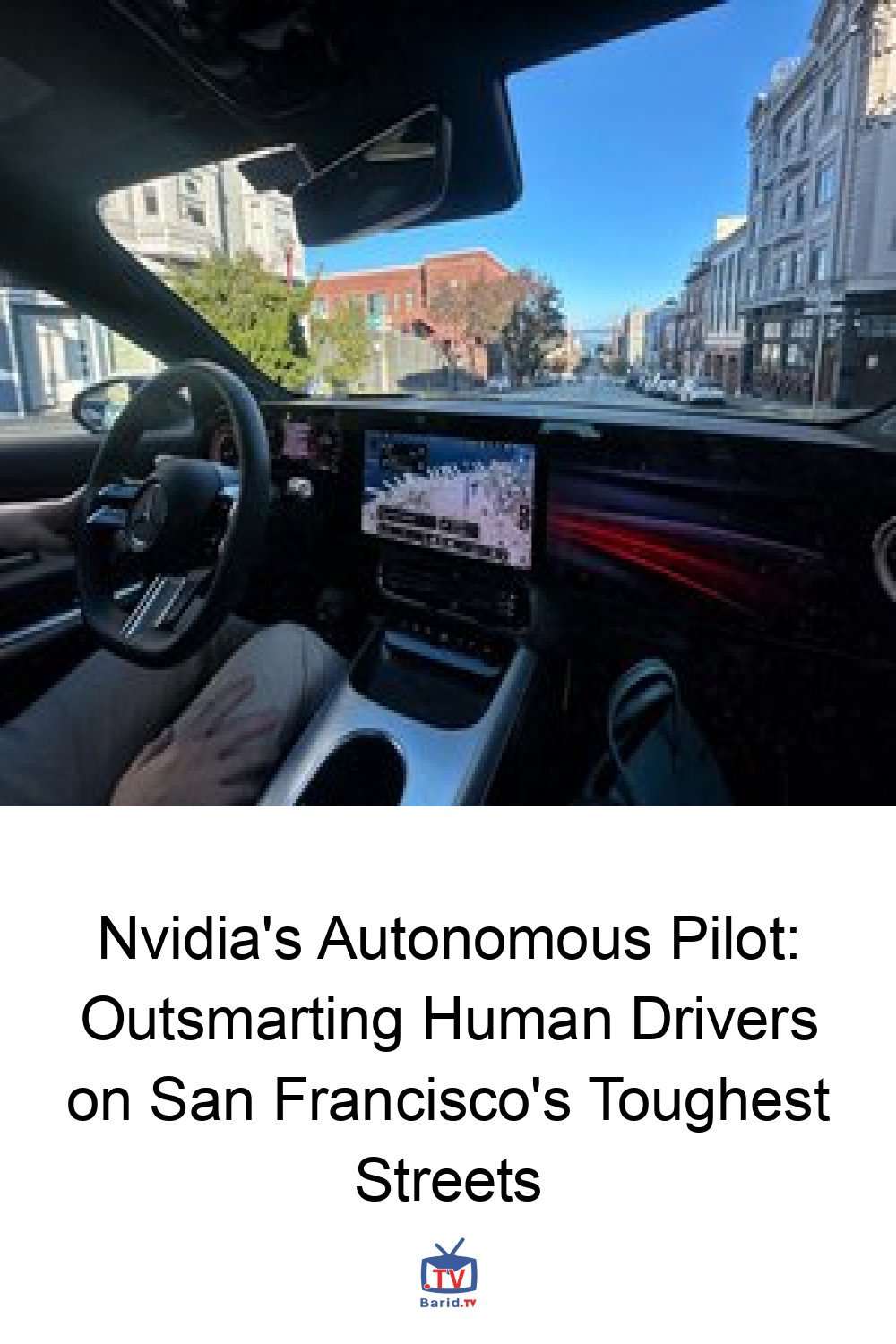
It was a quintessential San Francisco day, the kind where the city dons its most charming facade: crisp sunlight, dramatic shadows, and that palpable Friday energy where everyone seems to be in a rush, yet still finds time for a matcha. I found myself in the passenger seat of a sleek new Mercedes-Benz CLA, gliding through the city’s notoriously congested, two-lane arteries. Suddenly, a familiar urban gauntlet unfolded: a delivery van halted ahead, a bus rapidly approaching from the opposite direction, and pedestrians darting across the street with a casual disregard for crosswalks. My driver, Lucas, had his hands off the wheel, yet I felt an uncanny calm. I was inside Nvidia’s autonomous vehicle pilot, and this car, I quickly realized, possessed a decision-making prowess that far surpassed my own.
It had to. It was engineered for it.
Sensors and Simulations: The Brain Behind the Wheel
The vehicle’s sophisticated array of 10 cameras, five radar sensors, and 12 ultrasonic sensors immediately registered the hazard lights of the stopped van. But it didn’t impulsively swerve. Instead, it meticulously verified the vehicle’s stationary status, precisely gauged the bus’s speed and distance, patiently waited for the pedestrian flow to subside, and then, with an almost imperceptible grace, nudged left. The maneuver was executed with the practiced smoothness of a seasoned driver, yet devoid of any human effort or stress. As Ali Kani, Nvidia’s VP of the automotive team, remarked from the backseat, “That was pretty well-handled.” He wasn’t wrong. The ultimate self-driving flex, it seems, is zero drama.
A Seamless Journey Through the City
For nearly an hour, under vigilant driver supervision, the Mercedes-Benz, powered by Nvidia’s advanced driver-assist system, effortlessly conquered every challenge San Francisco’s roads presented. From the iconic Ferry Building, along the Embarcadero, up the steep inclines of Fillmore Street, and onto the bustling, shop-lined Union Street, the car performed flawlessly. We observed Waymo robotaxis and Teslas in Full-Self Driving mode, alongside human drivers whose skills left much to be desired. Our autonomous pilot, however, executed lane changes, navigated unprotected left turns, zipped through intersections, courteously yielded to pedestrians and cyclists, and came to gentle stops—all with remarkable ease, even amidst the Friday afternoon chaos.
I inquired about its parallel parking capabilities. “Great,” Kani affirmed, “we’re very proud of it”—a welcome assurance for anyone (like myself) who has ever dreaded squeezing into a tight spot on a steep San Francisco hill. Lucas maintained a hand hovering near the wheel, a testament to the system’s constant vigilance. The car’s sensors continuously gather data, feeding it into a system that runs 10 rapid “What happens next?” simulations for every input. When eight of these simulations converge on the same safe action, the car commits. Nvidia’s system even offers “tunable driving personality knobs”—adjustments for acceleration, deceleration, lane-change timing, and commitment levels—along with “cooperative steering,” allowing drivers to subtly influence decisions without disengaging the system. Having already faced several near-misses with human drivers that week, my trust in autonomous decision-making was already primed, and Nvidia’s tech never once left me feeling uneasy. Many human drivers could learn a thing or two.
Beyond the Drive: The Future of Human-Car Interaction
Conversational Autonomy: Making the Car “Think”
More than once, the car inadvertently “spoke” to us. Simply uttering “Mercedes” would activate the vehicle assistant, which responded with the eagerness of an overzealous colleague. Kani jested about the omnipresent “M-word,” explaining that renaming the activation phrase, as Amazon did with Alexa, wasn’t currently an option. Yet, this very communication is a cornerstone of Nvidia’s next-generation vision. Their pitch is that autonomy must transcend mere perception; it needs to comprehend language, intent, context, and a myriad of other nuances, transforming the software from a feature into a true co-pilot. Nvidia envisions a future where a genuine dialogue unfolds between car and passenger, a “make the car think” phase where you can instruct it to accelerate, overtake, or pull over—a faster, more intuitive path for AV progression.
San Francisco’s streets relentlessly challenge, but the Mercedes CLA consistently made the right choices: verify, predict, commit, then move. I settled into the seat, completely forgetting I was being chauffeured by a complex interplay of computers, probabilities, and edge cases. It was, quite simply, smooth driving. And that smoothness, Nvidia asserts, is precisely the point—and the future.
For more details, visit our website.
Source: Link