





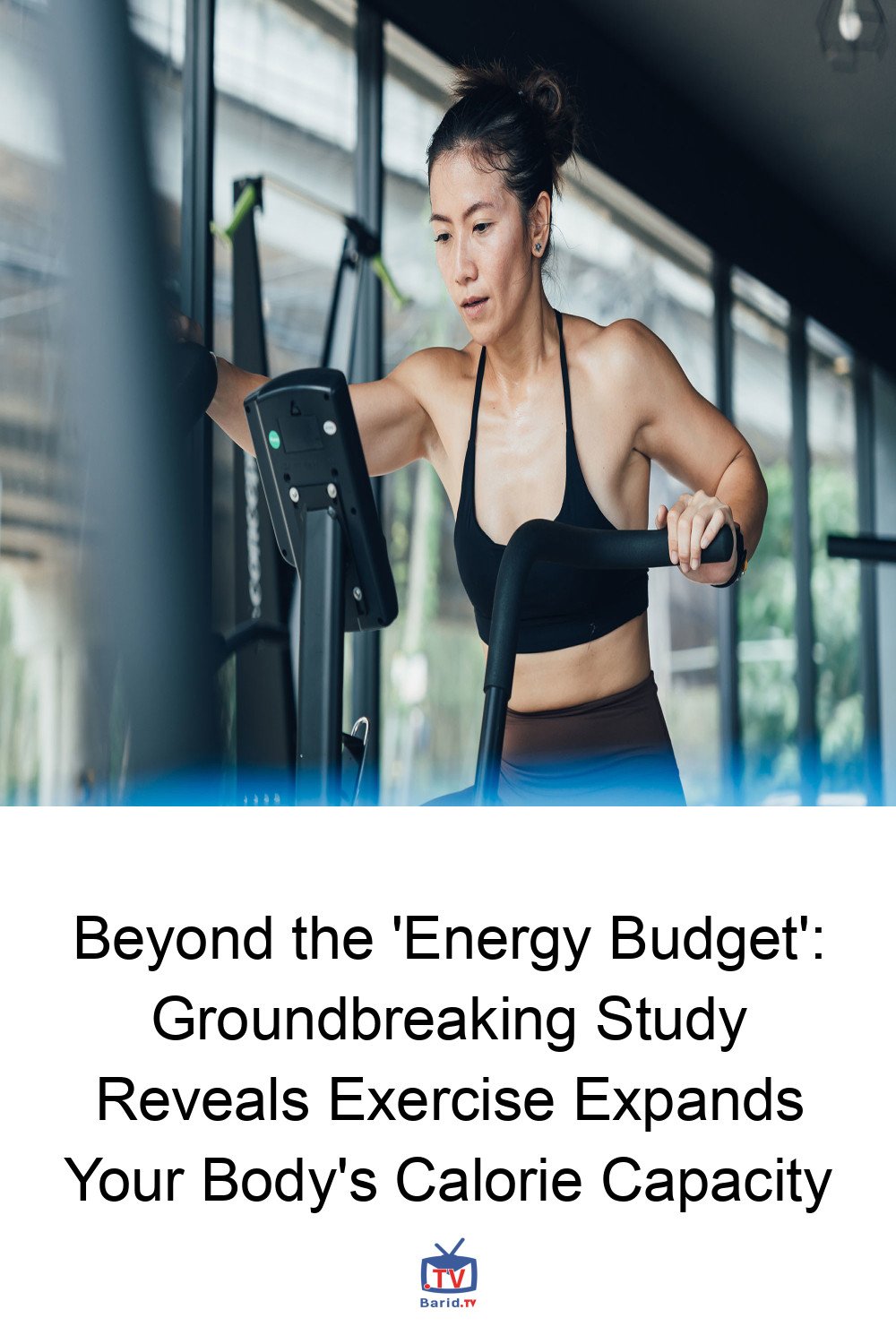
The Enduring Debate: Does Exercise Drain Your Energy Budget?
For years, scientists and fitness enthusiasts alike have pondered a fundamental question: does the human body operate on a fixed “energy budget”? Is there a ceiling to how many calories we can burn daily, with increased physical activity merely prompting our metabolism to conserve energy elsewhere? A groundbreaking new study has not only tackled this debate head-on but delivered a surprising and empowering answer that could redefine our approach to fitness and long-term health.
This isn’t just about calorie counting; it’s about understanding the very mechanics of our metabolism and how movement truly impacts our physiological capacity. Let’s delve into what the latest science reveals, why it matters for your workout routine, and how it can help you build more sustainable, energizing habits.
The Myth of the Fixed “Energy Budget”
The prevailing theory, known as “constrained energy expenditure,” posited that our bodies have a predetermined amount of energy they’re willing to expend each day. According to this model, if you ramp up your exercise, your metabolism would cleverly compensate by dialing down energy usage in other areas. This might manifest as suppressed immune function, reduced reproductive hormones, or a slowdown in thyroid activity. The implication was clear: there’s an inherent limit to how much you can boost your total daily energy expenditure through physical activity.
It sounded plausible, a neat evolutionary trick to conserve resources. However, new research suggests we can officially relegate this notion to the realm of myth.
Unveiling the Truth: A Direct Link Between Activity and Energy
Published in the prestigious Proceedings of the National Academy of Sciences, a study from researchers at Virginia Tech meticulously investigated the relationship between physical activity and overall energy expenditure. Their central question: does working out deplete the body’s “energy budget,” or does that budget actually expand with movement?
Over two weeks, 75 participants aged 19 to 63, representing a spectrum from sedentary individuals to ultra-endurance runners, were closely monitored. The researchers employed a sophisticated technique involving special forms of oxygen and hydrogen (known as doubly labeled water) in conjunction with urine samples to precisely estimate total energy expenditure – the total calories burned in a day. Physical activity levels were tracked using small, waist-worn sensors.
The findings were unequivocal: a direct, linear relationship exists between physical activity and total energy expenditure. Simply put, the more active you are, the more total energy your body uses. Full stop.
Crucially, the study detected no metabolic compensation. Researchers found zero evidence that the body reduces energy expenditure in other systems when exercise increases. Furthermore, there was no suppression of biomarkers; physical activity showed no association with changes in immune markers, reproductive hormones, or thyroid function – precisely the systems the “constrained energy” theory claimed would be down-regulated.
The “Adequately Fueled” Caveat
It’s important to note a key condition of the study: participants were “adequately fueled,” meaning none were in a calorie deficit. The researchers acknowledge that metabolic compensation *may* still occur in situations of under-fueling, but more research is needed to fully understand this potential dynamic.
Understanding Your Body’s Energy Blueprint
To grasp the significance of these findings, it helps to understand the components of your total daily energy expenditure (TDEE):
- Basal Metabolic Rate (BMR): This is the energy your body uses just to sustain basic life functions – breathing, blood circulation, maintaining body temperature, and organ function. It accounts for a substantial 60-70% of your total daily calorie burn.
- Thermic Effect of Food (TEF): The energy required to digest, absorb, and process the food you eat, typically around 10% of TDEE.
- Physical Activity: This encompasses both structured exercise and non-exercise activity thermogenesis (NEAT) – all the incidental movement throughout your day, from walking to fidgeting. This is the most variable component, ranging from 15-30% or more of TDEE, depending on your activity level.
The “constrained energy” theory suggested that increasing physical activity would lead to a compensatory reduction in BMR or NEAT. This new research, however, demonstrates that such a systematic reduction does not occur when individuals are adequately nourished. Your metabolism isn’t a fixed pie where one slice grows only if another shrinks. It’s a dynamic, responsive system that genuinely adapts and expands to meet the demands you place upon it through movement.
What This Means for Your Fitness and Health
This study offers a powerful message: your body is more resilient and adaptable than previously thought. Engaging in more physical activity doesn’t just burn calories in the moment; it genuinely increases your overall daily energy expenditure without compromising vital bodily functions. This insight has profound implications:
- Empowering Movement: It debunks the idea that extra exercise is futile beyond a certain point, encouraging us to embrace more movement without fear of metabolic backlash.
- Sustainable Health: Understanding that your body’s energy capacity expands with activity supports the pursuit of long-term, active lifestyles.
- Rethinking Energy Balance: While calorie input remains crucial, this study shifts the focus towards the expansive potential of calorie output through movement.
In conclusion, the notion of a rigid “energy budget” has been challenged. Instead, we can view our bodies as incredibly dynamic systems, capable of expanding their energy expenditure in direct response to physical activity. This isn’t just good news for your fitness goals; it’s a fundamental re-evaluation of how our bodies interact with movement, offering a more optimistic and empowering path to health and vitality.
For more details, visit our website.
Source: Link








Comments are closed.