
Learning to Feel Safe Resting After a Lifetime of People-Pleasing
For years, I thought exhaustion was a sign I lived fully and did my best that day. However, I was wrong. I was actually pushing myself to the limit, sacrificing my own needs for others.
Around me, it seemed everyone else could keep going—working late, saying yes to every request, holding it all together, and getting everything done. So I pushed harder. I drank more coffee, ignored the pounding in my chest, and told myself I’d rest “later,” as a reward.
Deep down, I wasn’t just tired from doing too much. I was tired from being someone I thought others needed me to be. I gave my everything, and nothing remained for me.
The Cost of Never Stopping
When rest feels unsafe, exhaustion becomes a way of life. The body breaks down. I developed a stress knot in my shoulder, poor posture, and constant fatigue.
The mind spirals. Anxiety grew louder, whispering that I wasn’t doing enough. The heart aches. Saying yes when I wanted no left me resentful and empty.
I thought if I could just be more disciplined, I’d manage. But discipline wasn’t the problem—my nervous system was.
Realizing Rest Is Part of Healing
The turning point came when I read about trauma and the nervous system. I learned that exhaustion and restlessness weren’t proof that I was lazy or broken.
They were survival responses. My body wasn’t fighting me—it was protecting me, the only way it knew how.
That realization softened something inside. For the first time, I saw my fatigue not as failure, but as evidence of how hard I’d been trying to survive.
Gentle Practices for Making Rest Safer
The change didn’t come overnight. But step by step, I began inviting rest back into my life—not as laziness, but as medicine.
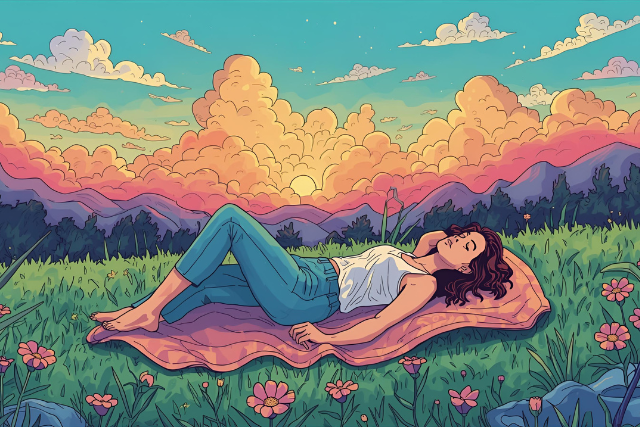
Here are a few things that helped: 1. Start small. Instead of trying to nap for an hour, I practiced lying down for five minutes.
2. Anchor with touch. When rest stirred anxiety, I placed a hand on my chest or stomach.
What I’ve Learned
Rest still isn’t always easy for me. Sometimes I lie down, and my chest buzzes like it used to, urging me to get back up.
But now I understand: these feelings don’t mean I’m failing at life. They mean my body is still unwinding old survival patterns.
And the more I practice, the more I see rest for what it truly is: A way to reset my nervous system. A way to honor my limits.
Closing Reflection
If you’ve ever avoided rest, told yourself you couldn’t afford to relax, or felt guilty when you tried, you’re not alone.
Many of us carry nervous systems that equate worth with usefulness and safety with exhaustion.
But what if the truth is the opposite? What if rest is not indulgence but healing? What if slowing down is not selfish but necessary?
You are not weak for needing rest. You are human. And in a world that pushes constant doing, choosing to rest might be the bravest thing you can do.
Source: Link